

Bidirectional Buck-Boost Converter Explained: How a Single 3.2V Battery Can Power a 12V System
In the rapidly evolving landscape of portable energy solutions, there's a growing demand for DC power architectures that are simpler, more efficient, and more flexible. Traditional 12V systems, which typically rely on multiple batteries connected in series, complicated wiring, and external charge controllers, often fall short. These conventional approaches tend to increase costs, compromise reliability, and add complexity to maintenance procedures.
The bidirectional buck-boost converter represents a paradigm shift in DC power system design. By enabling energy to flow in both directions while seamlessly stepping voltage up or down as needed, this advanced topology makes it possible for a single low-voltage battery cell to efficiently and safely power an entire 12V DC system. This article explores the fundamental workings of bidirectional buck-boost converters, examines why they've become essential to modern DC energy systems, and showcases how Unicell products are bringing this technology to practical applications ranging from DIY solar installations and recreational vehicles to emergency power systems and marine equipment.
What Is a Bidirectional Buck-Boost Converter?
A bidirectional buck-boost converter is essentially a smart voltage translator that allows energy to flow freely in both directions between devices of different voltages. Think of it as a two-way street for electricity.
In simple terms, it lets you:
Power your devices from a battery: If you have a 3.2V LiFePO₄ battery but need to run 12V gear, the converter boosts the voltage up—like pumping water uphill.
Charge your battery from various sources: If you're using a 12V solar panel to charge that same 3.2V battery, the converter bucks the voltage down to a safe charging level.
What makes this "bidirectional" capability so valuable is how it mirrors the way we actually use energy in real-world systems. Whether in an RV, a home storage setup, or a portable power station, you often need to charge, discharge, and power loads simultaneously or in quick succession.
For example, in a solar energy system:
- During the day, you might be charging your battery from solar panels while also powering appliances.
- At night or on cloudy days, you rely entirely on battery power.
A traditional unidirectional converter is like a one-way street—it only handles power flow in a single direction. A bidirectional converter creates a flexible two-way path, intelligently managing energy where and when it’s needed. This flexibility not only increases system efficiency but also simplifies design and improves overall reliability.
This is precisely the philosophy behind our Unicell series: smart, adaptable power conversion that works the way you do.
How Does a Buck-Boost Converter Work?
At its most basic level, a buck-boost converter is a DC-DC power converter that operates in two distinct modes: buck mode for stepping voltage down and boost mode for stepping voltage up. What distinguishes this topology from simpler buck or boost converters is its ability to maintain a stable output voltage even when the input voltage fluctuates above or below the target level. This characteristic proves particularly valuable in battery-based systems, where voltage naturally varies with the state of charge.
Traditional buck-boost converters, however, generally operate in only one direction. They're designed to allow power to flow exclusively from input to output, which significantly limits their utility in systems that require the same power pathway to handle both charging and discharging functions.
Why Single-Cell 3.2V Batteries Require Bidirectional Buck-Boost Conversion
Through years of designing and deploying off-grid and mobile power systems, I've learned that the most elegant solutions often come from rethinking fundamentals. One such insight is this: a single 3.2V LiFePO₄ cell paired with a bidirectional buck-boost converter frequently outperforms traditional 4S battery packs in reliability, simplicity, and design flexibility.Here’s why this approach matters, and how to implement it effectively.
Here's what that means in practice:
1. Voltage translation is mandatory - but how you do it matters
Your devices need 12V, but your single LiFePO₄ cell provides only 3.2V. While you could connect four cells in series to reach 12V, that approach creates a chain of problems: cell balancing requirements, single-point failure risks, and design inflexibility. The bidirectional converter solves this elegantly - boosting voltage during discharge to power your loads, and stepping it down during charging to safely replenish your battery from 12V sources like solar panels or car alternators.
2. One cell eliminates balancing headaches
With series-connected cells, you're constantly fighting voltage drift between cells. Even with expensive BMS systems, cells age differently and drift apart. With a single-cell system, there's nothing to balance. The simplicity translates directly to greater long-term reliability.
3. Failure points drop to a minimum
In a 4S battery pack, one failing cell disables your entire system. With a single-cell setup plus converter, you're dealing with just two critical components. If something goes wrong, diagnosis and replacement are straightforward - I've swapped a problematic cell in the field in under five minutes.
4. Real design freedom emerges
Need more capacity? Add another single-cell module in parallel. Want to upgrade your solar input? Our Unicell 100+PV handles up to 300W with integrated MPPT. This modular approach lets your system grow naturally without redesigning everything from scratch.
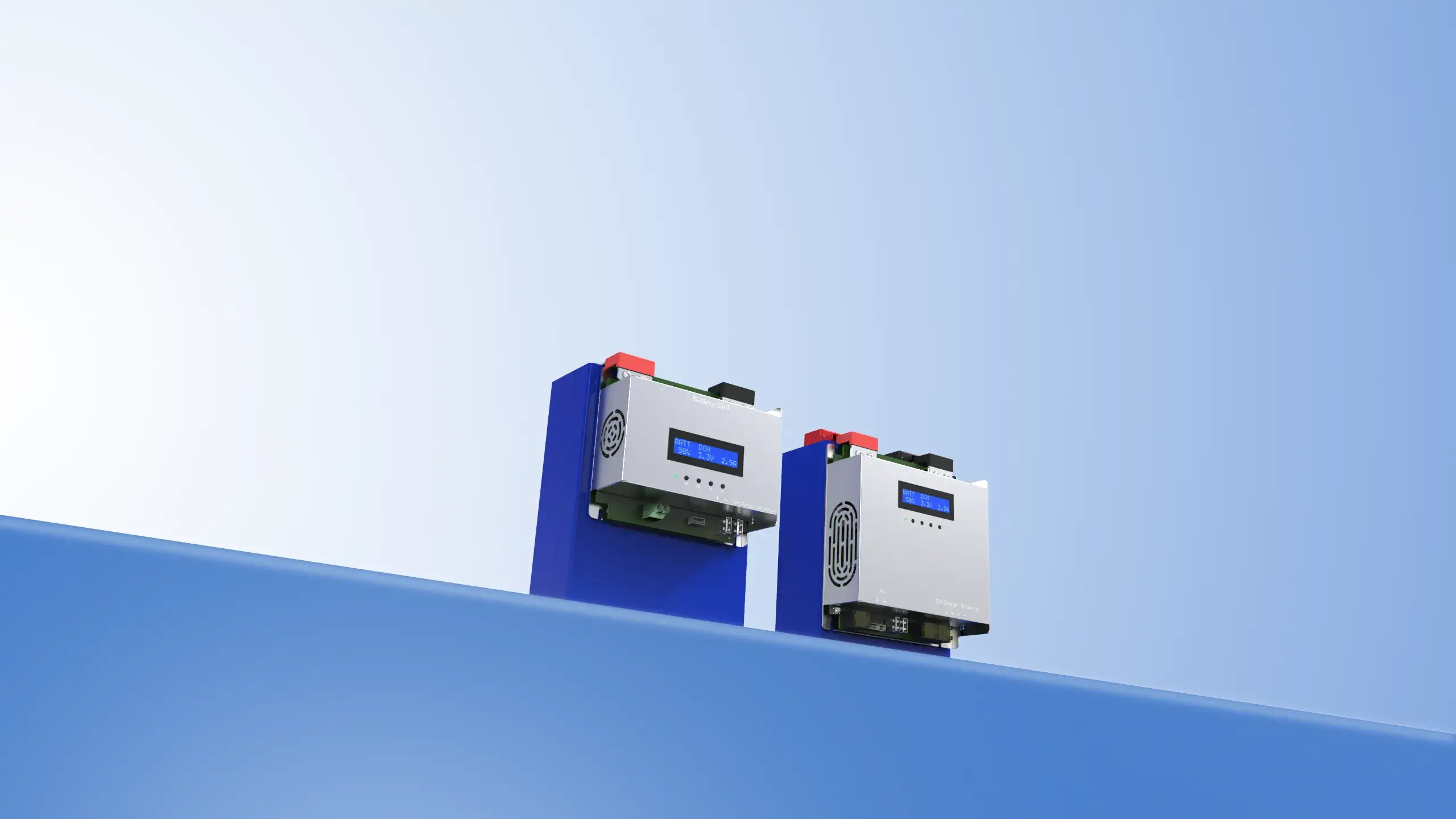
Why we built Unicell specifically for this purpose:
After testing numerous converters that fell short in real-world use, we developed Unicell 50 and Unicell 100+PV to provide reliable, purpose-built solutions:
- Unicell 50 delivers 150W continuous power (50A discharge), accepts 10-25V DC input including solar up to 200W, and handles all common charging methods.
- Unicell 100+PV provides 300W continuous output with built-in MPPT for up to 300W solar input - no external charge controller needed.
Both units work seamlessly with single 3.2V LiFePO₄ cells (typically 280Ah or 314Ah), include Modbus RS485 for monitoring, and operate silently without cooling fans. They're designed for the applications where single-cell systems excel: DIY power stations, emergency backup, RV DC appliances, marine systems, and portable power solutions.
For systems under 300W, a quality single LiFePO₄ cell paired with a reliable bidirectional converter often proves more dependable, more flexible, and easier to maintain than traditional 4S configurations. This isn't just theory - it's what we've validated through years of building systems for off-grid cabins, camper vans, and mobile applications.
Are DC Chargers Bidirectional?
Most DC-DC chargers commonly found in automotive, RV, and similar applications are not bidirectional. They are typically designed for a single function: accepting a higher-voltage input solely to charge a battery. These chargers cannot feed power back from the battery to loads or to the DC bus through the same circuitry.
As a result, systems relying on conventional DC-DC chargers often require additional components—such as inverters, load regulators, or separate discharge paths—to achieve complete power distribution. A true bidirectional buck-boost converter eliminates this limitation through a unified power stage architecture that seamlessly supports both charging and discharging within the same circuitry.
From an engineering perspective, this is made possible by intelligent MOSFET control and PWM management within a single power stage. The same components handle voltage step-up during discharge and voltage step-down during charging, eliminating the need for duplicate circuitry or mechanical switching. In practical implementations like our Unicell systems, this translates to measurable advantages: higher efficiency (typically 94-96% across both modes), reduced component count, and inherent synchronization between charging and discharging states. This integrated approach proves particularly valuable in applications where power direction changes frequently under real operating conditions, such as solar energy systems, mobile power stations, and RV power management.
The difference can be understood this way: traditional unidirectional chargers operate like one-way valves in a piping system—they only allow flow in a single direction. Bidirectional converters function as smart control valves that dynamically manage flow in both directions through the same conduit. This not only simplifies system design but also enhances reliability and reduces total cost of ownership by minimizing redundant components.
How to Design a Bidirectional Buck-Boost Converter (and Why Most Users Shouldn't)
Designing a robust bidirectional buck-boost converter from the ground up presents numerous engineering challenges. Key considerations include ensuring stable mode transitions, selecting appropriate high-current MOSFETs and inductors, implementing comprehensive protection against overcurrent, overvoltage, and reverse polarity conditions, and integrating efficient maximum power point tracking (MPPT) functionality for solar charging applications.
For most users—particularly DIY builders and system integrators who prioritize reliability and cost-effectiveness—utilizing a pre-engineered, thoroughly tested solution like Unicell proves far more practical than attempting to develop a custom design. These ready-made solutions have undergone extensive validation and optimization, saving users significant development time while ensuring robust performance across diverse operating conditions.
Unicell: A Practical Bidirectional Buck-Boost Solution
Unicell products embody a practical implementation of true bidirectional buck-boost architecture, specifically optimized for single-cell lithium batteries and 12V DC systems.

The Unicell 50 model charges a single 3.2V LiFePO₄ cell from multiple power sources including photovoltaic panels (up to 200W), 10-25V DC power sources, vehicle 12V systems, and USB/dual Type-C inputs. It efficiently converts 3.2V battery power directly to 12-14.4V DC output with a maximum discharge current of 50A and DC output power of 150W. With quiet operation, integrated MPPT charging control, and full support for bidirectional charge and discharge, this model is ideally suited for compact DIY systems, emergency power supplies, and portable DC applications.
For more demanding applications, the Unicell 100+PV supports up to 300W PV input through an independent MPPT channel while accepting 10-25V DC charging sources. It delivers regulated 12-14.4V DC output with a maximum discharge current of 100A and DC output power of 300W. Engineered for continuous operation in challenging environments, this model serves as an excellent solution for RVs, marine systems, off-grid installations, and applications requiring higher power DC appliances.
Key Advantages of Unicell's Bidirectional Buck-Boost Architecture
Both Unicell models share several core advantages that stem from their innovative bidirectional buck-boost design. These include true bidirectional power flow capability, an integrated 3.2V MPPT charging controller, support for multiple DC charging sources, low-noise operation, Modbus RS485 communication for system integration, exceptional cost-performance ratio, and the elimination of series-connected battery packs with their associated complexities. By seamlessly integrating charging, discharging, voltage conversion, and control functions into a single device, Unicell significantly simplifies DC power system design while enhancing reliability and performance.
Typical Applications
Unicell systems find practical application across diverse fields, including DIY solar and energy storage projects, RV and van-life DC appliance systems, emergency backup power solutions, electric kayaks and marine electronics, as well as small DC household and outdoor appliances. Their versatility and performance characteristics make them suitable for both professional and enthusiast applications where reliability, efficiency, and simplicity are paramount.
Conclusion
The bidirectional buck-boost converter has established itself as a foundational technology for modern DC power systems, enabling flexible energy flow, efficient voltage conversion, and simplified battery architectures—particularly when working with single-cell lithium batteries. By implementing this technology in practical, integrated products, Unicell demonstrates how theoretical advantages can translate into tangible benefits for users across various applications.
The ability to power standard 12V systems directly from a single 3.2V battery, while supporting solar charging, vehicle power integration, and multiple DC inputs, addresses fundamental challenges in portable energy system design. For users seeking compact, efficient, and cost-effective DC power solutions, Unicell exemplifies how advanced power conversion technology can move beyond theoretical concepts into practical, real-world applications that genuinely expand what's possible with single-battery energy systems.
FAQ
A bidirectional buck-boost converter eliminates the need for multiple 3.2V batteries in series. This reduces system complexity, removes the need for battery balancing circuits, lowers the risk of single-point failure, and offers greater design flexibility—all while enabling efficient power flow in both directions for charging and discharging.
Yes, when used with a bidirectional buck-boost converter such as Unicell, a single 3.2V LiFePO₄ battery can efficiently and safely power 12V systems. The converter boosts the battery voltage to a stable 12–14.4V output, ensuring compatibility with common 12V appliances, lights, and small electronics.
Unicell’s bidirectional converter integrates multiple input capabilities, including solar PV (with MPPT), 10–25V DC sources, and vehicle 12V systems. It automatically adjusts between buck and boost modes to safely charge the 3.2V battery, regardless of whether the input voltage is higher or lower than the battery voltage.
No. Unicell systems are designed as all-in-one solutions that simplify installation. They combine charging, discharging, voltage conversion, and system protection in a single unit, requiring no additional battery balancers or separate charge controllers—making them ideal for DIY and mobile applications.
This system is ideal for space-conscious and mobile applications such as DIY solar setups, RV/van power systems, portable emergency backups, marine electronics, and small off-grid appliances—anywhere reliability, simplicity, and efficient 12V power from a single 3.2V battery are needed.