

48V Lithium Batteries: From Golf Carts to Electric Bikes, How to Choose
Lithium batteries are an essential part of modern life, with wide applications in electric vehicles, power tools, electric bikes, electric scooter and more. When buying and using lithium batteries, we often encounter some problems. Here are five popular 48v lithium battery and 60v lithium battery questions answered:
What are the factors to consider when choosing a best 48V lithium battery for a golf cart?
Consider Voltage
When choosing a golf cart battery, voltage remains the primary performance determinant. Modern lithium-ion systems now deliver significantly higher energy density compared to traditional options, solidifying 48V as the preferred standard for performance-oriented carts. The most optimized configurations are:
• 36V Systems typically use lightweight 3.2V LiFePO4 cells (12 cells in series)
• 48V Systems feature 16-cell configurations with integrated smart BMS technology
• Voltage Efficiency differences have become more pronounced - contemporary 48V lithium packs achieve over 90% round-trip efficiency
Traditional configurations still apply:
Six 6V batteries (legacy lead-acid) = 36V system
Six 8V or four 12V batteries = 48V system
Advanced 48V systems demonstrate clear performance advantages:
✓ 33% lower current draw than equivalent 36V systems
✓ Full compatibility with modern high-power AC motor systems
✓ Native support for regenerative braking in most current cart designs
For optimal acceleration and range with today's battery technology, 48V lithium systems (particularly LiFePO4 chemistry) represent the ideal solution, offering extended service life exceeding typical usage cycles.
Avoid Used Batteries
Used golf cart batteries are cheap, but they don't have a long lifespan. Therefore, if you want to get the best value, avoid buying used batteries. Newer golf cart lithium ion batteries have a longer lifespan and more power, so they are the better choice.
Consider Capacity
The capacity of your golf cart is also an important factor. You should choose a battery based on the capacity of your golf cart. If your golf cart carries few passengers (fewer than 4 people), then a 36V battery is a good choice. On the other hand, if your golf cart carries more than 4 people, then you should consider buying a 48V lithium battery.
If your golf cart has a larger capacity, then you should buy a more powerful battery to provide enough power. The good news is that lithium ion golf cart batteries weigh almost half as much as traditional lead-acid batteries, which means they won't add too much weight to your golf cart.
Consider Warranty
Warranty is also an important factor. Golf cart batteries are a major investment, so you should make sure you are buying a battery that is high-quality, durable, and reliable.In general, the longer the warranty, the better the quality of the battery. Therefore, you should buy a golf cart battery with at least a 1-year warranty.

How long does a 48V electric scooter battery last?
The battery life of an electric scooter depends on a variety of factors, including battery type, capacity, motor power, rider weight, terrain, riding style, battery age, environmental conditions, and charging habits.
The most common type of battery used in 48V electric scooters is lithium-ion batteries, which have a longer lifespan and higher energy density. Lead-acid batteries are heavier, less efficient, and have a shorter lifespan.
Battery capacity is measured in amp-hours (Ah). A higher Ah rating means a larger capacity, which in turn means a longer range per charge. For example, a electric scooter battery 48V 100Ah has a capacity of 48V x 100Ah = 4800Wh = 4.8kWh. So, if the scooter consumes an average of 300Wh, it can last for 8 hours. This is just an estimate, and the actual time will need to be calculated based on the specific situation.
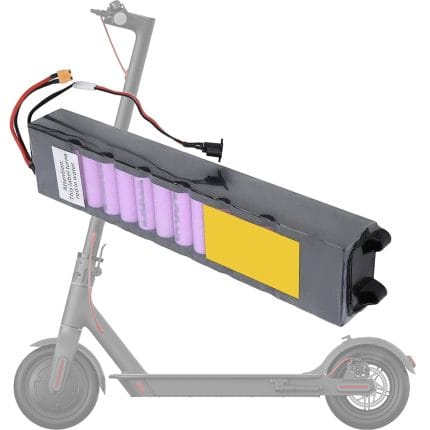
The higher the motor power, the more energy is consumed. Therefore, a more powerful motor will result in a shorter battery life.
The heavier the rider, the more energy is consumed. Therefore, heavier riders may experience a shorter battery life.
Hilly or uneven terrain requires the motor to provide more power, and will reduce the battery range. Additionally, aggressive acceleration and high speeds will further drain the battery.
Over time, the battery capacity will decrease. A new battery will provide better performance than an old battery with the same Ah rating.
Extreme temperatures, whether hot or cold, will affect the battery performance. Lithium-ion batteries, in particular, are very sensitive to temperature changes.
Proper battery charging and maintenance will affect its lifespan. Regularly charging and not letting the battery completely discharge will help to extend its lifespan.
On average, most electric scooters can travel 15 to 50 miles on a single charge. Some high-end models can even reach 60 miles or more of range.
What are the maintenance requirements for 60v electric bike battery?
The battery is an important component of a 60V electric bicycle battery and needs to be properly maintained to keep it in good working condition. Here are some tips for maintaining your battery :
First Charge: 60V electric bicycle batteries are partially charged when delivered, but it is recommended to fully charge them before use. This will ensure that the battery is at its full capacity from the start.
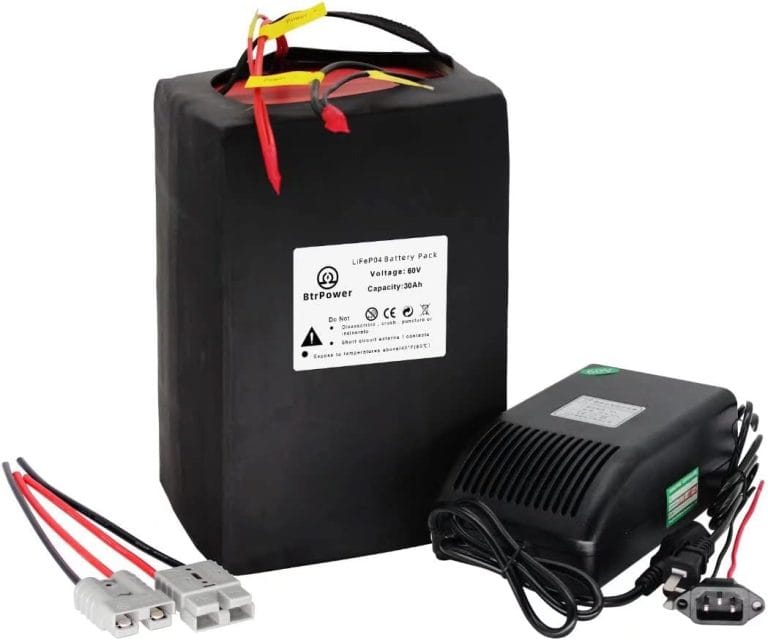
Charging Tips: Always use the original Bosch charger to charge your battery. Only charge the battery in a dry area with a working smoke detector. If possible, charge the battery at room temperature. After charging, disconnect the power to the battery and charger. Avoid regularly running the battery down to zero. The battery is equipped with a temperature monitor that allows it to be charged only within a temperature range of 0°C to 40°C. The battery can be charged in any state of charge. Interrupting the charging process will not damage the battery.
Storage: Make sure to store your electric bicycle in a cool, shady place. Electric bicycle batteries can be damaged by high temperatures, so avoid overheating and direct sunlight. During winter use (especially below 0°C), we recommend charging and storing the battery at room temperature before inserting it into the electric bicycle before riding. For longer-term storage, we recommend storing the battery at 30-60% charge. Store the battery in a cool, dry room. Do not store the battery near flammable or combustible materials. Store the battery in a room with a smoke detector.
Cleaning and Care: It is recommended to clean the battery with a damp cloth. The plug rod should be cleaned occasionally and lightly lubricated with industrial vaseline. The battery should be removed before cleaning the electric bicycle. To protect the electronic components, do not wash the battery directly with water or a high-pressure hose.
Repair: For safety reasons, defective, old, or "worn out" batteries cannot be repaired or updated. Lithium-ion batteries are complex, finely tuned systems with high energy content. If the battery is repaired, it is no longer possible to guarantee the proper functioning and optimal interaction of the battery management system. In addition, when the battery is reassembled, the shell seal can no longer be guaranteed.
What to do if an industrial battery pack overheats?
Batteries are essential to renewable energy storage technology, but they come with the risk of thermal runaway. This occurs when the heat generated by a industrial battery pack accumulates faster than it can be dissipated. Thermal runaway is a cascading reaction that is difficult to stop once it starts.
The effects of thermal runaway are severe. If left unchecked, the battery will overheat, and the casing may swell, melt, or explode due to the internal heat buildup. When the battery casing ruptures, it releases hydrogen sulfide gas, which has a pungent odor. Unattended thermal runaway can lead to fire, thermal explosion, sudden system failure, expensive equipment damage, and even personal injury.
Battery thermal runaway is a serious safety hazard that can lead to fire, explosion, and other damage. We can effectively reduce the risk of thermal runaway by taking some measures in the design and development phase.
Cell arrangement
Cell arrangement is one of the key factors in preventing thermal runaway. Heat accumulation along the battery pack is a major concern. Therefore, the battery pack should always be able to mitigate this.
Arranging the cells helps to distribute the temperature more evenly between them. This means that the heat is dissipated from each cell, without generating a heat sink. When the cells are placed together in evenly spaced rows and columns, the heat sink can withstand higher temperatures.
Battery management system (BMS)
A BMS can monitor the temperature and other parameters of a solar industrial battery pack, and take action if there is a risk of thermal runaway. A BMS can help prevent thermal runaway by:
Preventing overcharging or overdischarging, which can cause the battery temperature to rise.
Detecting battery short circuits, which can cause heat to accumulate rapidly.
Activating cooling mechanisms, such as ventilation or heat sinks.
Ventilation
Ventilation can help to remove heat from the battery pack. The battery pack should have sufficient vents to allow hot air to escape.
How can I extend the lifespan of a 48V 100Ah lithium battery?
48V 100Ah Lithium-ion batteries and 51.2V 50Ah lithium battery are the most common type of battery used in modern electronic devices. They have high energy density and long battery life, but they are also susceptible to damage. Here are some tips for extending the lifespan of a 48v 100Ah lithium-ion batteries :
Avoid overcharging or overdischarging
Ideally, a 48V100Ah lithium-ion battery should be used within a 20% to 80% charge range. Overcharging or overdischarging can cause chemical changes within the battery, which can shorten its lifespan. If you need to fully charge the battery, stop charging when it reaches 80%.

Avoid using fast charging
Fast charging generates more heat than standard charging. Heat can accelerate battery aging. If you need to fast charge, try to minimize the frequency of fast charging.
Avoid exposing the battery to high temperatures
High temperatures can accelerate battery aging. Store the battery in a cool, dry place, and avoid direct sunlight.
Avoid completely discharging the battery
Lithium-ion batteries do not have a charging memory, so they do not need to be completely discharged. Completely discharging the battery can cause chemical changes within the battery, which can shorten its lifespan.
Regularly inspect the battery
If you find any abnormalities with the battery, such as swelling, deformation, or leakage, stop using it immediately.
Storing the battery for long periods of time
If you need to store the battery for a long period of time, charge it to about 50%. Then, store it in a cool, dry place, and avoid direct sunlight.