

How to Maximize Your Lithium-ion Battery Lifespan Through Daily Use
Lithium-ion batteries have become the lifeblood of our modern technological world, powering everything from smartphones to electric vehicles. While most users understand the importance of proper charging techniques, many overlook how daily usage habits significantly impact battery longevity. How you use your battery between charging sessions is just as crucial as how you charge it. By understanding and implementing proper usage practices, you can significantly extend your battery's service life while maintaining optimal performance.
Understanding Discharge Rates and Their Impact
The rate at which you discharge your battery plays a fundamental role in determining its lifespan. High discharge rates force lithium ions to move aggressively between electrodes, causing structural stress and accelerating capacity loss. This phenomenon can be compared to different exercise intensities - while sprinting quickly exhausts the system, jogging maintains sustainable performance. When you consistently demand high power output from your battery, the increased internal resistance forces it to work harder to maintain voltage levels, generating excess heat and accelerating the aging process. While new batteries may handle high loads reasonably well, their resilience diminishes as cycle count increases due to steadily rising internal resistance.
Solutions:
Understand your device's power requirements in relation to battery capacity
Avoid sustained discharge rates exceeding 1C (where 1C represents the current that would discharge the battery in one hour)
Choose battery models with high discharge capabilities for high-power devices
Reduce simultaneous operation of multiple high-consumption applications
Practice smooth acceleration rather than rapid acceleration for electric vehicles
Install battery monitoring applications to track discharge patterns
Maintain gentle discharge habits to extend battery life and improve safety
The Critical Role of Temperature Management
Temperature represents one of the most significant factors affecting battery performance and longevity. In cold conditions, electrode materials contract, slowing ion movement while reduced electrolyte conductivity further limits performance. This explains why devices drain faster in winter - the battery must expend extra energy to maintain operational voltage. Conversely, high temperatures initially improve conductivity but ultimately degrade electrode integrity and accelerate chemical aging through increased parasitic reactions. Different battery chemistries respond uniquely to temperature extremes, making thermal management crucial regardless of your specific battery type.
Solutions:
Implement both active and passive temperature management strategies
Avoid prolonged exposure to direct sunlight or hot vehicles
Store devices in inner pockets or use insulated cases in cold weather
Utilize preconditioning features for electric vehicles in extreme weather
Ensure proper ventilation during high-performance tasks
Install batteries in temperature-controlled environments for energy storage systems
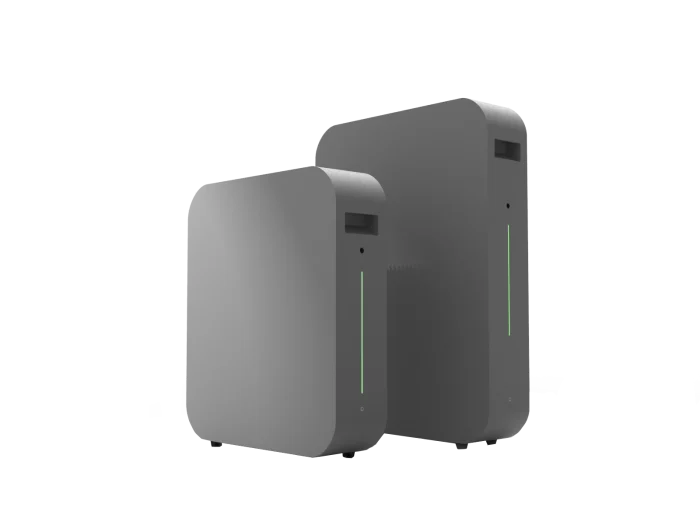
Consider devices with advanced thermal management systems (Batterlution PowerGo AC-coupled battery storage system)
Maintain battery temperatures between 15°C and 35°C for optimal performance
Optimizing Depth of Discharge for Maximum Cycles
The relationship between Depth of Discharge (DoD) and cycle life is both exponential and profound. Using less of your battery's capacity between charges dramatically increases the total number of cycles you can expect. A battery might deliver approximately 1,000 cycles at 100% DoD, while reducing discharge depth to 50% can double or triple this number, and operating at 30% DoD can yield 5,000 cycles or more. This occurs because complete charge-discharge cycles cause significant electrode expansion and contraction, leading to mechanical fatigue and accelerated degradation.
Solutions:
Change your perspective on battery "full charge" and "complete discharge"
Develop the habit of charging when battery level reaches 40-50%
Set charge limits to 80-90% instead of always charging to full capacity
Utilize built-in charging timers for electric vehicles
Avoid complete discharge cycles for "calibration" purposes
Maintain charge at 50-60% for long-term storage
Implement scheduled charging to complete just before use

The Importance of Cell Balancing in Multi-Cell Packs
In any battery pack containing multiple cells connected in series, natural imbalances inevitably develop over time due to manufacturing variations and differing aging patterns. These disparities worsen with each cycle, reducing overall capacity and potentially causing premature failure of the weakest cells. The reality is that your battery pack is only as strong as its weakest cell, and without proper balancing, you're essentially limiting all cells' performance to match the poorest performer.
Solutions:
Select battery packs with active balancing BMS
Perform periodic maintenance cycles to recalibrate cell voltages
Avoid consistent partial charging that may mask balance issues
Invest in independent balance chargers for DIY battery projects
Check individual cell voltages regularly
Use professional equipment to check cell voltage differences when capacity decreases
Remember that well-balanced battery packs provide more consistent performance
Monitoring State of Health for Predictive Maintenance
State of Health (SoH) provides crucial insights into your battery's current condition and remaining useful life. This parameter, typically expressed as a percentage of original capacity, serves as an early warning system for performance degradation. Most lithium-ion batteries are considered to have reached end-of-life when their capacity drops to 70-80% of the initial rating, beyond which degradation typically accelerates.
Solutions:
Choose devices with built-in SoH monitoring capabilities
Use third-party diagnostic tools for systems without built-in monitoring
Establish baseline capacity measurements for comparison over time
Plan battery replacement when SoH drops below 80%
Implement regular testing schedules for mission-critical applications
Make informed decisions about device usage based on reduced capabilities
Monitor internal resistance values alongside capacity measurements
Managing Calendar Life Alongside Cycle Life
Many users focus exclusively on cycle life while overlooking calendar life - the irreversible degradation that occurs over time regardless of use. Even a brand-new battery sitting on a shelf experiences chemical aging that gradually reduces its performance capabilities. This understanding is particularly crucial for backup systems and seasonal equipment that experience extended storage periods.
Solutions:
Store unused batteries at approximately 50% state of charge
Maintain storage temperatures around 15°C in dry conditions
Perform partial cycles every three months for unused devices
Avoid storing batteries in fully discharged state
Use maintenance chargers for large installations during extended inactivity
Implement regular "Reference Performance Tests" every 6-12 months
Keep detailed records of capacity fade trends over time
Addressing Transient High Loads and Voltage Stress
Beyond managing continuous discharge rates, protecting against instantaneous high-current demands is equally important. The sudden inrush current experienced during motor startup or power surges can cause micro-fractures in electrode particles and accelerate degradation of critical internal components. Similarly, while avoiding absolute voltage limits is well understood, the duration a battery spends at high voltage stress levels proves equally significant.
Solutions:
Select batteries with high pulse current ratings
Incorporate soft-start circuits in system designs
Utilize smooth power management systems in electric vehicles
Implement charging algorithms that adjust float voltage based on usage patterns
Avoid keeping devices at 100% charge for extended periods
Use charge limiting features when possible
Set charging timers to complete just before needed use
Building Foundation with Proper SEI Layer Formation
The Solid Electrolyte Interphase (SEI) layer that forms on the anode during initial cycles serves as the cornerstone of long-term battery health. A stable, compact SEI prevents ongoing electrolyte decomposition and active lithium loss. Abusive conditions during early use can create an unstable SEI that continuously reforms, permanently consuming active materials and increasing resistance.
Solutions:
Avoid high discharge rates during initial use
Prevent exposure to temperature extremes in new batteries
Perform several complete charge-discharge cycles at moderate rates (0.5C or less)
Avoid rapid charging during the formation stage
Follow manufacturers' break-in recommendations
Refrain from demanding high-performance tasks during initial cycles
Allow proper SEI layer formation for long-term stability
Leveraging Data for Predictive Analytics
Modern battery management systems offer capabilities far beyond basic voltage and temperature monitoring. The true value emerges from analyzing historical performance trends, including capacity fade rates, DC internal resistance progression, and temperature patterns during standardized operations. An accelerating capacity fade trend or a sudden increase in internal resistance often provides early warning of developing issues.
Solutions:
Utilize applications providing detailed battery performance insights
Establish regular checkpoints to review performance trends
Set alerts for sudden changes in key parameters
Invest in battery management software with analytical capabilities
Use applications like AccuBattery or coconutBattery for consumer devices
Monitor both capacity and internal resistance trends
Make data-driven decisions about replacement and maintenance
Implementing Comprehensive Battery Care Strategy
Successfully extending battery life requires integrating multiple principles into a cohesive operational philosophy. This includes matching power demands to battery capabilities, maintaining stable operating temperatures, establishing appropriate charge/discharge thresholds, implementing regular system checks, and fully utilizing available monitoring tools.
Solutions:
Conduct regular audits of battery usage patterns
Implement smart charging routines
Establish temperature management protocols for all devices
Educate all users on proper battery handling practices
Utilize technological tools for continuous monitoring
Review and adapt strategies based on collected performance data
Maintain consistency in battery care practices
Understand that occasional abuse can cause disproportionate damage
Maximize return on investment through comprehensive care approach