

OEM Battery vs. ODM Battery: What’s the Difference?
In simple terms, ODM battery stands for "Original Design Manufacturer" and involves manufacturers designing and producing lithium batteries based on the customer's specific needs. This is similar to ordering a dish at a restaurant; you provide the recipe (your requirements), and the chef cooks the food for you (the manufacturer produces the battery according to your requirements). ODM manufacturers have independent intellectual property rights for the design, allowing them to customize the product based on your needs.
On the other hand, OEM battery stands for "Original Equipment Manufacturer." In this case, the customer provides the complete design and specifications for the battery, including the blueprint and ingredients (material choices). The OEM manufacturer is responsible for production only, working strictly according to the provided design and without any intellectual property rights to it.
ODM = Design + Production
OEM = Production
Decision Matrix: Which Path is Right for You?
The choice between OEM and ODM is more than a cost-benefit analysis; it's about forming a partnership that aligns with your vision.
If this is a top priority for you... | Lean towards OEM Battery | Lean towards ODM |
|---|---|---|
Intellectual Property (IP) | Owned by the client. A core asset of your product. | Owned by the manufacturer. You receive a license or right to use. |
Design Authority | Fully led by you. From cell selection to mechanical layout. | Led by the manufacturer. You choose from existing platform solutions. |
Development Time & Cost | Longer and higher. Requires full design, testing, and certification cycles. | Shorter and lower. Based on mature designs, mainly involving adaptation and certification. |
Flexibility & Uniqueness | Very high. Can meet unique performance, size, or safety requirements. | Limited. Constrained by the manufacturer’s existing technology platforms. |
Ideal Use Case | The battery is a key competitive differentiator for your product, and no existing market solution meets your needs (e.g., premium medical devices, specialized industrial equipment, flagship consumer electronics). | Time-to-market and cost-efficiency are priorities, and standard performance meets most of your requirements (e.g., generic energy storage systems, standard power tools, mainstream consumer electronics). |
6-Stage OEM Development Framework
A professional OEM battery development project follows a phased-gate process designed to manage risk, ensure quality, and maintain clear communication between your team and the manufacturing partner.
Stage 1: Requirements Definition & Feasibility Assessment (2-4 Weeks)
This foundational phase converts your product vision into precise engineering parameters and establishes project viability.
Critical Activities:
Technical Specification Development: Defining electrical parameters (nominal voltage, capacity, C-rate, efficiency targets), mechanical constraints (maximum dimensions, weight, interconnect method), and performance requirements (cycle life, operating temperature range, shelf life).
Safety & Compliance Planning: Identifying mandatory certifications for target markets (UN38.3, UL/IEC standards) and any application-specific safety protocols.
Initial Feasibility Review: A joint technical assessment of specifications against current cell technology, manufacturing capabilities, and cost targets.
Key Deliverables: Product Requirements Document (PRD) and Feasibility Study Report.
Stage 2: Conceptual Design & Simulation (4-8 Weeks)
Engineering teams transform requirements into detailed designs, utilizing simulation tools to validate concepts before physical prototyping.
Core Engineering Work:
Cell Selection & Sourcing Strategy: Comprehensive evaluation of cell chemistry (NMC, LFP, LTO), form factor (cylindrical, prismatic, pouch), and supplier options based on energy density, power capability, cost, and supply chain stability.
Pack Architecture Design: Determining module configuration, mechanical structure, thermal management strategy (passive, active air, or liquid cooling), and interconnection design.
BMS (Battery Management System) Development: Designing hardware architecture (AFE, microcontroller, protection circuits) and core firmware algorithms for state estimation (SOC/SOH), cell balancing, and communication protocols (CAN, RS485, etc.).
Virtual Validation: Conducting Finite Element Analysis (FEA) for structural integrity, Computational Fluid Dynamics (CFD) for thermal management, and electrical simulation to predict performance.
Key Deliverables: 3D CAD models, electrical schematics, simulation reports, and initial Bill of Materials (BOM).
Stage 3: Prototyping & Design Validation (8-16 Weeks)
The design moves from virtual to physical through iterative prototyping and rigorous testing.
The Prototyping Cycle:
Alpha Prototype Build: Manufacturing of functional engineering samples (typically 5-20 units).
Comprehensive Design Validation Testing (DVT):
Performance Testing: Capacity verification, DC internal resistance (DCIR), pulse power characterization, and efficiency mapping.
Environmental & Reliability Testing: Thermal cycling, mechanical vibration/shock per relevant standards (e.g., IEC 60068-2-64), and humidity resistance.
Abuse Testing: Overcharge, short circuit, crush, nail penetration, and thermal runaway propagation tests (as required for safety certification).
Design Iteration: Based on test data, the design is refined. Most projects require 2-3 prototype iterations to meet all performance and safety targets.
Key Deliverables: Functional prototypes, comprehensive Design Validation Test Report, and finalized design files.
Stage 4: Certification & Regulatory Compliance (8-20 Weeks, often overlaps with Stage 3)
Achieving mandatory safety certifications is critical for market access and must be planned from the earliest stages.
Primary Certifications by Market:
Global Transport: UN 38.3 (mandatory for all lithium battery shipments)
North America: UL 2054 (household & commercial batteries), UL 2580 (EV batteries), or UL 1973 (stationary storage)
Europe: IEC 62619 (industrial), IEC 62133-2 (portable devices), and compliance with the EU Battery Directive
International: CB Scheme provides a foundation for many national certifications
Stage 5: Pilot Production & Process Validation (4-8 Weeks)
This phase validates the manufacturing process and ensures consistent quality before full-scale production.
Critical Manufacturing Readiness Activities:
Production Line Setup: Finalizing and debugging assembly jigs, welding parameters, and automated test equipment.
Process Documentation: Creating detailed work instructions, process flow diagrams, and quality control checkpoints.
Pilot Run: A limited production batch (typically 50-500 units) built on production equipment to:
Validate process capability (Cp/Cpk analysis)
Generate units for long-term reliability testing
Supply early samples for your production line integration testing
Process FMEA: Finalizing the Process Failure Mode and Effects Analysis to mitigate manufacturing risks.
Key Deliverables: Pilot production units, Process Validation Report, and complete manufacturing process documentation.
Stage 6: Ramp-Up & Sustaining Engineering
The partnership transitions to volume manufacturing with a focus on quality control and continuous improvement.
Quality Management: Implementation of Incoming Quality Control (IQC), In-Process Quality Control (IPQC), and Outgoing Quality Control (OQC) procedures. Statistical Process Control (SPC) is often employed for critical parameters.
Supply Chain Management: Ensuring stable supply of cells and critical components through dual-sourcing strategies and inventory planning.
Sustaining Support: The OEM partner provides ongoing failure analysis (FA), yield improvement support, and manages Engineering Change Orders (ECOs) for minor design revisions.
Project Timeline, Investment, and Strategic Considerations
Realistic Development Timeline
A complete OEM battery development cycle, from initial requirements definition to volume production, generally spans 9 to 18 months. Projects involving innovative cell formats or advanced thermal management systems typically fall toward the longer end of this range.
Understanding the Cost Structure
Pursuing an OEM battery solution involves upfront investment, broken down into the following key components:
Non-Recurring Engineering (NRE) Costs: Fixed expenses covering the full development cycle, including system design, prototyping, testing, and certification.
Tooling and Equipment Investment: Costs associated with custom molds, specialized welding fixtures, and dedicated testing equipment.
Compliance and Certification Fees: Direct payments to accredited testing laboratories and certification bodies to ensure market准入.
Recurring Unit Cost at Volume: The per-unit cost during mass production, encompassing cells, components, assembly, and operational overhead.
Evaluating the Overall Investment Value: The true value of a custom OEM battery extends beyond per-unit pricing. A comprehensive assessment should consider the Total Cost of Ownership (TCO) and the strategic advantages it delivers:
Enhanced Product Differentiation: A seamlessly integrated, proprietary power system can serve as a compelling unique selling proposition.
Optimized Performance Integration: Tailor-made solutions maximize overall product efficiency and elevate the end-user experience.
Mitigated Long-Term Risk: Full control over the technology and supply chain enhances transparency and reduces future operational vulnerabilities.
Lifecycle Planning Flexibility: Provides a structured foundation for future product iterations, upgrades, and potential second-life applications.
OEM Battery Solutions for Plug-and-Play Solar Power Systems
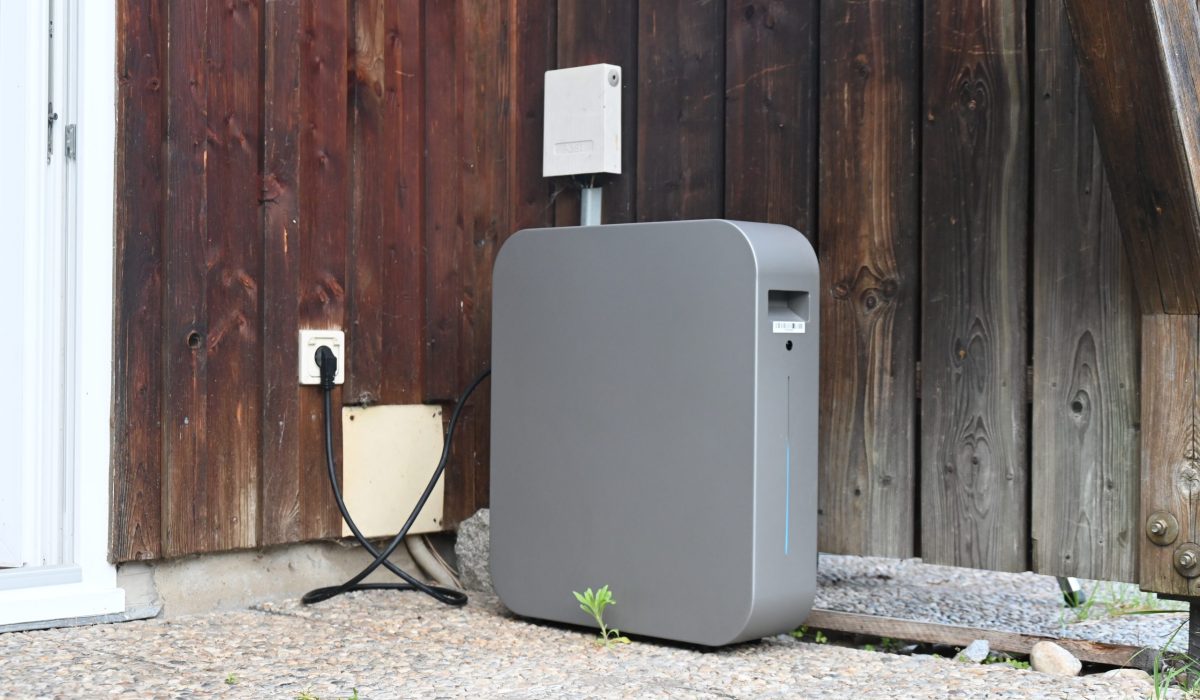
The PowerGo Series exemplifies Batterlution's flexible manufacturing approach — offering this smart AC plug-in battery ESS as both a ready-to-brand OEM battery solution and a fully customizable ODM platform. Designed for simplicity, it operates without the complexity of an MPPT solar input, delivering true plug-and-play energy storage. With built-in protocols like MODBUS RTU, MODBUS TCP/IP, and MQTT API, it seamlessly integrates into your existing ecosystem, empowering control through your own software or devices. This is how we build OEM battery systems that adapt to your vision, not the other way around.
Professional Insight: The Smart Middle Ground
Beyond Black and White: The Hybrid Strategy
In practice, many savvy companies choose a hybrid approach. For instance, they might build upon a reliable ODM battery platform for its speed and proven hardware, while investing in a deeply customized Battery Management System—a strategy that blends ODM efficiency with OEM battery-level optimization.
This approach requires a partner with both robust ODM platforms and deep OEM battery engineering capabilities—flexibility that is crucial for modern product development.
Conclusion & Next Steps
Your Success Starts with the Right Partnership
The goal remains the same, whether you choose a fully custom OEM battery, ODM, or a hybrid path: to power your product in the most effective way possible.
We understand the weight of this decision. Our role is to provide clarity and support, offering everything from ODM platform selection to deep OEM battery customization as your trusted battery technology consultant.
Ready to power your innovation? Here’s how we can help:
If you have clear requirements: Contact us for initial OEM battery or ODM solution matching.
If you’re still exploring: Schedule a free consultation with our experts to discuss your strategy.