

How to Choose Between AC-Coupled and Hybrid Inverters for Your Solar System with Battery Storage
When planning a home battery storage system or a compact balcony solar system, one key decision is whether to use an AC-coupled or hybrid inverter setup. Since solar panels generate DC power and batteries store energy as DC, the choice of inverter significantly impacts how energy flows and is utilized in your system.
From an Energy Conversion Perspective
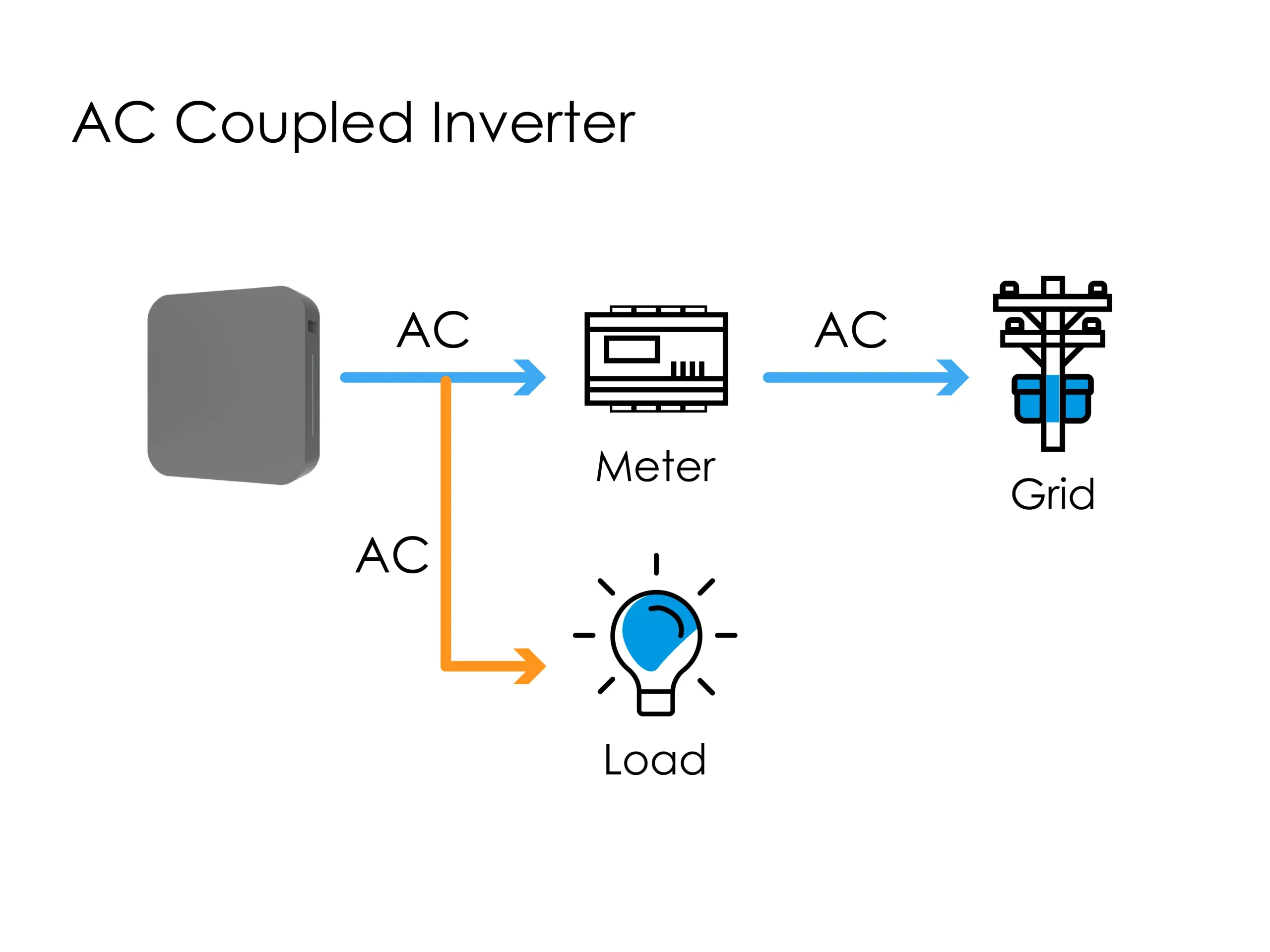
In an AC-coupled system, DC electricity from solar panels is converted to AC for household use. Any excess energy is then converted back to DC via an AC-coupled inverter and battery setup for storage. During a power outage, the stored DC power is inverted again to AC to support your home’s loads.
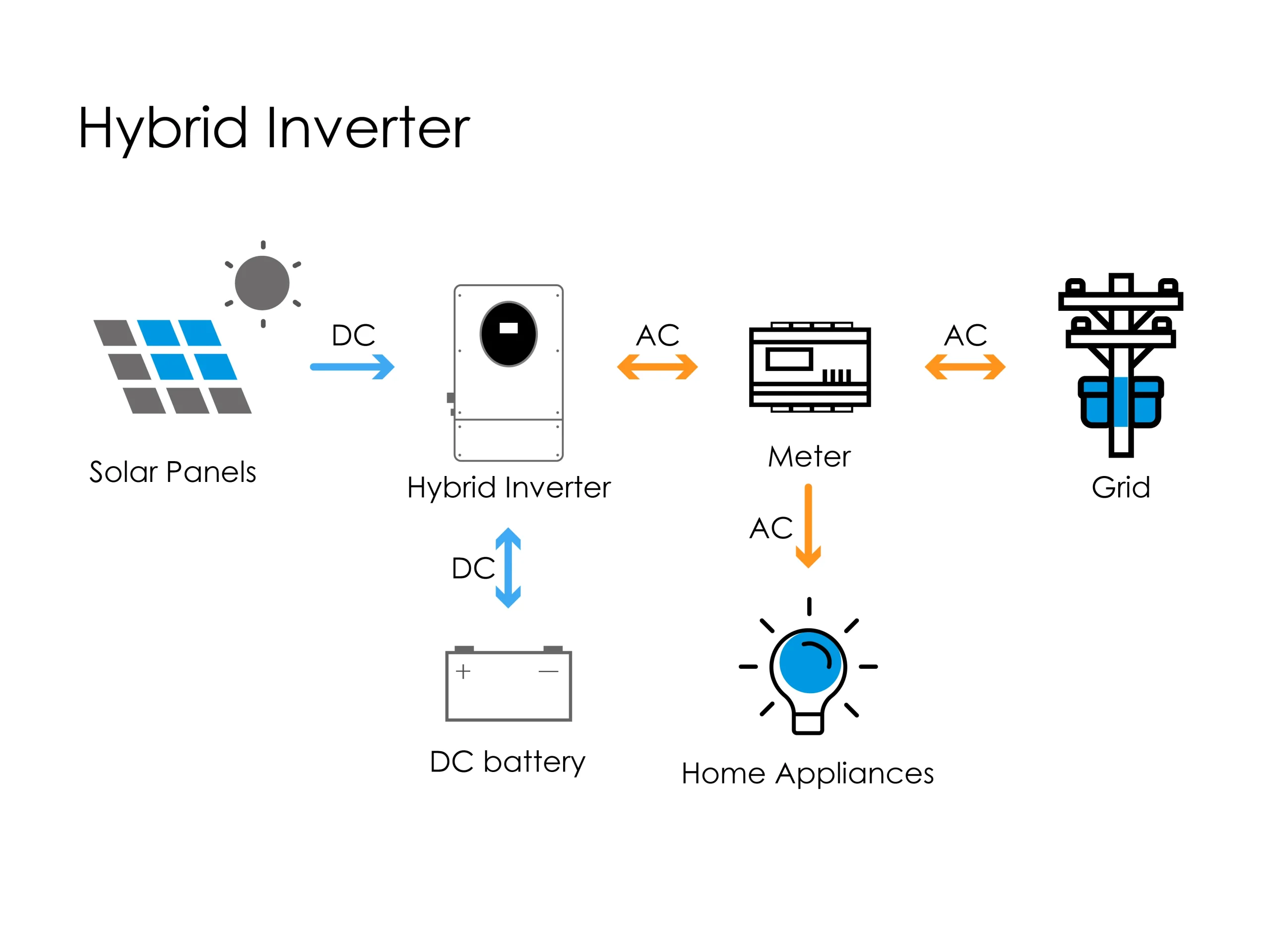
A hybrid inverter, however, integrates both AC and DC coupling in one device. It can directly channel DC solar power to a battery—minimizing conversions—and supports both grid-tied and off-grid operation, making it a versatile core for any solar system with battery storage.
Grid Connection Flexibility
If your home is already tied to the grid and you’re adding storage later, an AC-coupled system on the load side offers a simple and effective upgrade path. It works seamlessly with existing grid-tied solar setups.
On the other hand, if you are building a new off-grid system or want the ability to operate independently, a hybrid inverter is the better fit. It provides built-in off-grid capability, making it ideal for areas with unreliable grid power or for homeowners seeking energy independence.
Efficiency Comparisons
Although both systems deliver strong performance, AC-coupled systems typically involve more conversion stages—from DC to AC and back to DC—which can lead to slightly higher energy losses.
Hybrid inverters, by contrast, allow DC power from solar panels to be stored directly into the battery. This reduces the number of conversions, improving overall efficiency—especially important for maximizing the usefulness of your home battery storage system.
System Expandability
If future expansion is a priority—such as adding more batteries or integrating additional energy sources—AC-coupled systems generally offer greater flexibility. They can be easily retrofitted to existing solar installations, including smaller setups like a balcony solar system.
While hybrid inverters are more all-in-one, their expansion options may depend on the specific model and manufacturer.
By evaluating your energy goals, grid connection status, and future expansion plans, you can confidently decide between an AC-coupled vs hybrid inverter. We recommend consulting with a professional to ensure your solar system with battery storage is optimized for performance, efficiency, and growth.
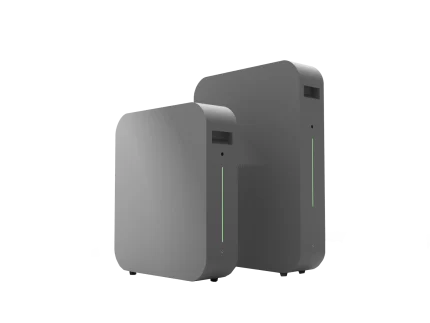
PowerGoSeries: Untangle Your Energy. Simply Plug In to Power Up
PowerGo lets you add storage to any solar system in hours. With true plug-and-play installation and smart app control, start saving on energy bills immediately. No complex setup, no rewiring—just clean power when you need it.
AC-Coupled vs Hybrid Inverters: Are Their Connection Methods the Same?
No, the connection methods for AC-coupled vs hybrid inverters differ fundamentally in a solar system with battery storage. Understanding these distinctions is crucial when planning your home battery storage system or balcony solar system.
An AC-coupled inverter (also called a bidirectional inverter) converts AC power back to DC for storage. For example, when used with a 48V battery pack, it first performs DC/DC conversion before charging the battery. Similarly, when grid power charges the battery, it undergoes AC/DC conversion. This makes AC-coupled systems ideal for retrofitting existing setups, especially when implementing AC couple on load side configurations.
In contrast, a hybrid inverter simplifies connections by eliminating DC/DC conversion when charging batteries from solar panels. It primarily handles DC/AC conversion during peak demand. This fundamental difference extends to operational scenarios: hybrid inverters can directly power loads or charge batteries from solar panels in off-grid settings, while supporting bidirectional power flow in grid-tied systems.
Whether you choose an AC-coupled inverter and battery setup or a hybrid solution depends on your existing infrastructure and energy needs. Both approaches offer distinct advantages for integrating battery storage with your solar energy system.
Do AC-Coupled and Hybrid Inverters Both Require Solar Panel Connections?
Whether AC-coupled vs hybrid inverters require direct connections to solar panels fundamentally depends on the presence of built-in MPPT (Maximum Power Point Tracking). This technology continuously optimizes power extraction from solar panels under varying light conditions, maximizing energy harvest.
Hybrid inverters typically integrate MPPT controllers and must be directly connected to solar panels. They provide an all-in-one solution for managing solar generation, battery storage, and power conversion.
In contrast, AC-coupled inverters don't require direct solar panel connections. Instead, they interface with existing solar installations on the AC side, making them particularly suitable for:
Retrofitting energy storage to existing balcony solar systems or rooftop arrays
Applications with space or budget constraints
Scenarios where grid charging during off-peak hours meets backup power needs
This characteristic makes AC-coupled systems an ideal choice for retrofit projects, offering simpler installation and lower costs. While they don't manage solar generation directly, they work efficiently with existing home battery storage systems by using AC power from either the grid or solar inverters.
When planning your solar system with battery storage, choose a hybrid inverter for new integrated installations, while the AC-coupled solution offers greater flexibility and cost-effectiveness for expanding existing photovoltaic systems.
Which is the best choice for installing AC coupled vs Hybrid inverters?
In order to better compare and contrast AC-coupled vs. hybrid inverter options, I have compiled all their specifications in the following table.
Device type | AC-coupled | Hybrid Inverter |
Function | Grid-grid only | Off-grid and on-grid |
Conditions | Suitable for existing solar systems | Suitable for complete solar systems |
Conversion efficiency | It is necessary to convert DC generated by PV panels to AC for integration into the grid, and then AC from the grid is converted to DC for storage in the battery, which results in more energy conversions and higher energy loss. | All-in-one reduces the number of exchanges of power from DC to AC and back to DC, reducing energy loss |
Cost | Composed of PV inverter and storage inverter, simple structure, lower cost. | Integration of PV, storage and load, higher cost. |
Installation | Components and accessories are relatively small, easy to install, familiar with the electrical power, and then self-installation. | More components and wiring, complex installation, recommended for professional installation. |
Compatibility | Different brands of inverters may use different communication protocols, and also need to consider the voltage and current as well as the wiring method, so please consult a professional engineer for information before installation. In general, AC-coupled are more compatible than hybrid-coupled inverters. | |
Lifespan | Approx. 10 years | Approx. 10 years or more |
No Rewiring Needed: The Batterlution AC Coupling System - Easily Add Storage to Your Existing Solar
You already have a rooftop or balcony solar system installed, and now you want to add batteries. Does this mean replacing all your equipment and dealing with complex rewiring?
The Batterlution AC Coupling System is designed precisely for homeowners like you. It connects directly to your existing solar installation without modifying the original wiring, significantly reducing installation time and cost, and effortlessly upgrades your home to an integrated solar-plus-storage system.
Why Choose the Batterlution AC Coupling System?
Plug-and-Play, Seamless Upgrade
The system is engineered for "retrofit" scenarios. It functions like a high-capacity power bank for your balcony solar system or rooftop array, connecting via the AC side and ensuring compatibility with most existing solar inverters—all without complicated equipment changes or rewiring.
Safe & Durable, LiFePO4 Battery
At the heart of this home battery storage system is a high-performance lithium iron phosphate battery. It offers enhanced safety, long cycle life, and delivers reliable backup power during nighttime or grid outages.
Clear Insight, Smart Control
Through the dedicated Batterlution mobile app, you can easily monitor your system's real-time energy production, storage, and consumption. Flexibly adjust your power usage patterns—such as prioritizing battery power during peak rate periods—to enable intelligent energy management and reduce electricity bills.
In Summary,if you are looking to add storage to your existing solar system with battery storage in a cost-effective and hassle-free way, avoiding major construction work, the Batterlution AC Coupling System is your ideal solution. It empowers every household to step smoothly into the era of smart energy.