

When choosing a battery, we often struggle with deciding on the right capacity. What capacity best suits your home needs? What are the differences between various battery sizes? More importantly, how long will a 5kw battery last and how can you easily integrate storage without complex modifications? Whether facing unexpected blackouts, seeking reliable 5kwh battery backup, or wanting to store excess solar energy for self-use instead of feeding it back to the grid at low rates, an efficient solution is key. We can accurately calculate based on the actual load of your appliances. A product like the Batterlution PowerGo AC-Coupled All-in-One Unit, with its flexible 2.5kWh and 5kw battery capacity options, is designed to meet these precise needs seamlessly.
Currently, Home batteries range from 1 kWh to 5 kwh, up to 10 kWh. In fact, the technology of existing energy storage batteries available on the market has matured significantly. This means you can purchase a battery with any capacity that fits your needs. For homes with a complete photovoltaic system, a 10 kWh or even larger energy storage battery is often used. However, for many European households looking for a plug-and-play solution to maximize solar self-consumption and avoid complicated installation, a 5kwh battery system like the PowerGo All-in-One hits the perfect balance.
Understanding 5kwh Battery Performance: How Long Will a 5kw Battery Power a House?
What does 5kwh mean for homeowners? Essentially, a 5kwh home battery can deliver 5 kilowatts of power for one hour. But the real question is: how long will a 5kwh battery last in practical terms? Let's examine the 5kw lithium battery backup time in different scenarios.
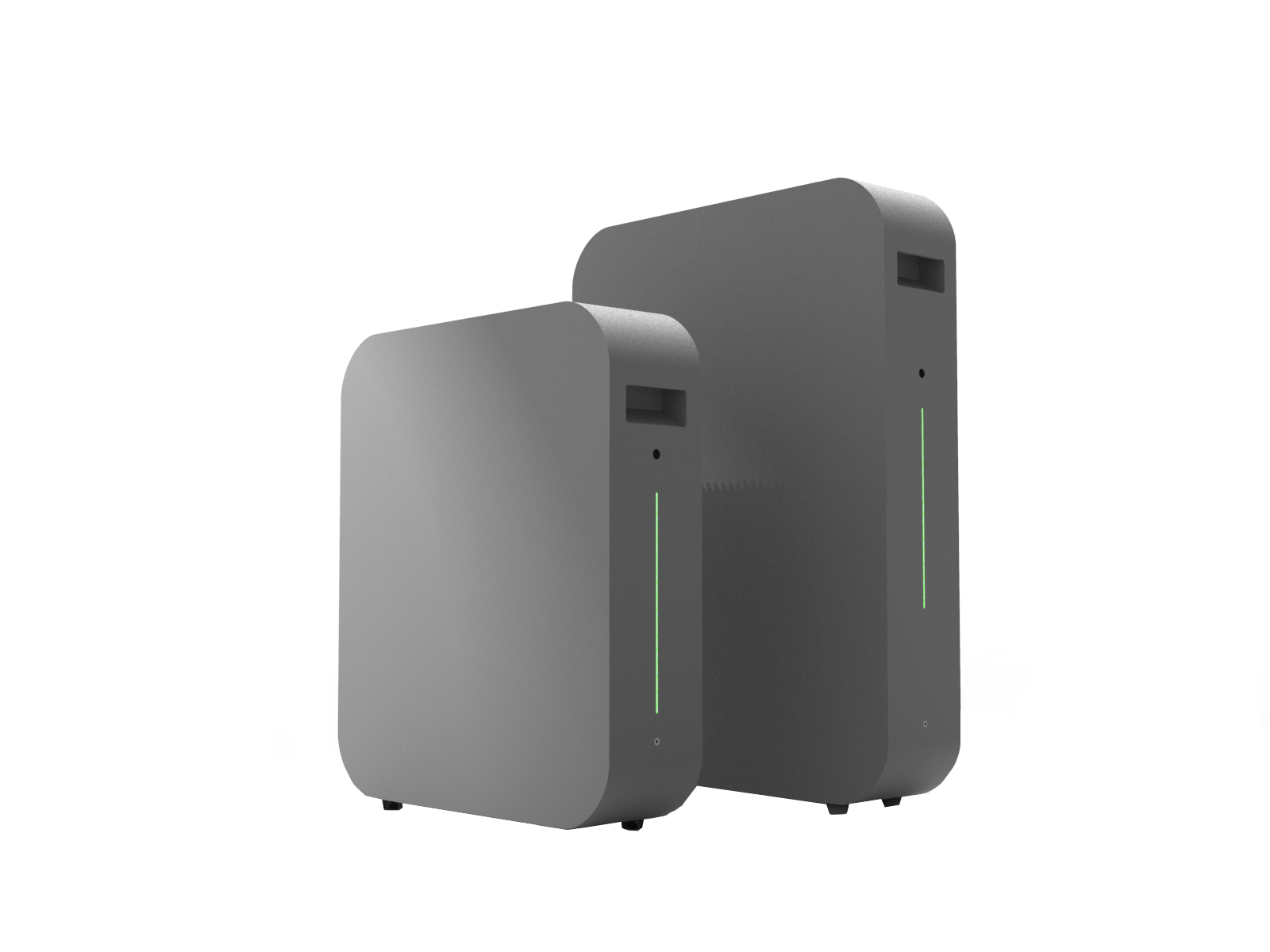
AC Battery Characteristics
5 kWh
For example, a standard 5kwh battery can deliver 5000W of continuous power for 1 hour. In a typical home AC plug-in application, a unit like this supports an 800W discharge rate for over 6 hours, making a 5kwh solar battery an ideal size for daily energy shifting.
If you need to power essentials like a refrigerator, lights, router, and phones for 8-12 hours during an outage, this capacity is ideal. The Batterlution PowerGo 5kw battery model is built for this scenario.
48V / 51.2V
This is the internal nominal voltage of the battery pack itself (e.g., a 5kwh batterie), not the output voltage supplied to your appliances. Critically, all-in-one units like the PowerGo come with an integrated inverter, delivering ready-to-use AC power directly to your home outlets, eliminating external conversion hardware and complex setup.
The charge and discharge current of a battery is usually rated at 0.5C or 1C. It's crucial to understand that a larger current isn't always better for a 5 kwh battery, as higher currents can generate more heat and potentially shorten the overall battery lifespan.
When choosing a batterie 5kwh in the European market, always check for critical certifications like CE, UN 38.3, and EMC. Ensure the battery system has a physical master switch to immediately disconnect power in an emergency. Additional safety layers include:
•Micro fire protection measures
•Self-protection modes
•Status alert modes
•Error modes
These features are essential for the safe operation of any 5kwh solar battery storage system.
Why PowerGo 5kWh is different from High-Voltage Systems?
When researching a 5kWh home battery, many users are often matched with High-Voltage (HV) energy storage systems. While HV systems are powerful, they aren't always the best fit for every household. Here is why the PowerGo 5kWh series stands out as a more accessible alternative:
Feature | Traditional High-Voltage Systems | Batterlution PowerGo (Low-Voltage) |
|---|---|---|
Installation | Requires professional electricians & grid permits. | Plug-and-play; DIY installation in 15 mins. |
System Voltage | Typically 200V - 400V+ (Higher risk). | Safe 48V / 51.2V DC internal voltage. |
Compatibility | Often locked to specific high-voltage inverters. | AC-Coupled Universal Compatibility (works with any micro-inverter). |
Scenario | Fixed whole-house backup (Complex & Costly). | Balcony Solar & Apartment Storage (Flexible & Portable). |
Initial Cost | High entry price + expensive labor costs. | Affordable 5kWh battery price with zero installation fee. |
The Technical Difference: Efficiency & Safety
Most high-voltage lithium batteries are designed for large-scale solar arrays requiring complex DC-to-DC conversion. In contrast, the PowerGo 5kWh plug-and-play storage system utilizes an AC-coupled all-in-one architecture.
This means you don't need to rewire your home's distribution board. By focusing on a 48V LiFePO4 chemistry, the PowerGo minimizes the risk of high-voltage electrical arcs, making it the safest 5kWh solar battery for residential balconies and indoor use. If you are looking for reliable 5kW battery backup without the headache of a construction project, the transition to low-voltage, modular storage is the smarter move for urban energy independence.
How Long Can a 5 kWh Battery Power a Home as a Backup Power Source?
Determining the runtime of a 5kWh battery involves more than simple division. To provide a scientific estimate, we must account for Battery Efficiency (typically 85-95%) and the Depth of Discharge (DoD). For instance, a LiFePO4 battery for solar systems usually allows an 80-90% DoD, meaning you have approximately 4kWh to 4.5kWh of usable energy.
Household Load Estimation & Runtime Scenarios
In a real-world backup scenario, how long a 5kWh solar battery lasts depends on the simultaneous "load" or power draw:
- h=5000Wh/(400+100+20+15+100)W≈8h
Appliance Type | Power Consumption (Watts) | Estimated Runtime (on 5kWh Battery) |
|---|---|---|
Critical Load (Fridge, Router, LED Lights, Fan) | 300W - 500W | 8 – 12 Hours (Ideal for overnight backup) |
Medium Load (Fridge + TV + Laptop + Microwave) | 1000W - 1500W | 3 – 4 Hours |
Heavy Load (Electric Stovetop or AC Unit) | 3000W+ | ~1 Hour (Use sparingly during outages) |
Factors Affecting Your 5kWh Battery Performance
When evaluating the actual performance of a 5kWh solar battery, the nominal capacity is merely a theoretical ceiling. Real-world usable energy is dictated by a complex interplay of variables—ranging from microscopic electrochemical reactions to macroscopic power conversion losses.
1. Power Conversion Efficiency: Inverter & Tare Loss
Batteries store energy as Direct Current (DC), while household appliances require Alternating Current (AC).
- Inversion Loss: The process of DC-to-AC conversion typically incurs an energy loss of 8% to 15%. Consequently, a 5kWh DC charge may only yield 4.25kWh to 4.6kWh at the output terminal.
- Tare Loss (Standby Consumption): Even with no heavy appliances running, the inverter itself consumes 20W to 50W to maintain its internal circuitry. In low-load scenarios (e.g., powering only a router), this "parasitic" drain represents a higher percentage of total consumption, significantly shortening the expected runtime.
2. Depth of Discharge (DoD) and Chemical Stability
Different battery chemistries impose strict limits on how much energy can be safely extracted:
- LiFePO4 (Lithium Iron Phosphate): A premium 5kWh lithium battery generally allows for a 80% to 95% DoD. This translates to 4kWh – 4.75kWh of safe, usable energy without compromising cell integrity.
- Lead-Acid Batteries: Despite a 5kWh rating, the recommended DoD is often capped at 50%. Discharging beyond this point leads to plate sulfation, meaning the functional capacity is effectively only 2.5kWh.
3. Discharge Rates: The Peukert Effect
A battery's available capacity is inversely proportional to the discharge current (C-Rate).
- Low-Rate Discharge (C-Rate < 0.2C): When powering only lights and fans, the battery performs near its rated capacity.
- High-Rate Discharge (C-Rate > 0.5C): Simultaneously running heavy loads like induction cooktops or air conditioners increases internal resistance heating ($P=I²R). This reduces the efficiency of the electrochemical reaction, causing the battery to yield less than its 5kWh total energy.
4. BMS Protection Logic & Cell Balancing
Modern 5kWh solar batteries are governed by a Battery Management System (BMS).
- Low Voltage Disconnect (LVD): To prevent permanent cell damage, the BMS will terminate output when the voltage hits a specific threshold. Under heavy loads, "voltage sag" occurs, which may trigger an early shutdown even if residual energy remains.
- Cell Balancing: If individual cells within the pack have mismatched voltages, the BMS will limit the entire system's output to match the weakest cell—a common issue in poorly maintained or aging units.
5. Non-Linear Impact of Environmental Temperature
Temperature dictates the kinetic activity of the electrolyte.
- Cold Conditions (< 0°C): Internal resistance spikes and lithium-ion migration slows down. At freezing temperatures, the effective capacity of a 5kWh battery can drop by 20% to 30%.
- Heat Exposure (> 45°C): While chemical activity temporarily increases, high heat accelerates "Capacity Fade" (irreversible degradation), shortening the battery's overall cycle life.
6. Battery Aging and State of Health (SOH)
Capacity is dynamic, not static.
- After 3,000 cycles, a LiFePO4 battery may have an SOH (State of Health) of 80%. In this state, a "full charge" physically only represents 4kWh of energy, regardless of what the display indicates.
7.Scientific Prediction: The Runtime Formula
To achieve a high-precision estimate for your backup power strategy, utilize the following engineering formula:
- Actual Runtime(Hours)=Total Capacity (5000Wh) x DoD x Efficiency/Average Load (Watts)
For households with existing solar panels, the Batterlution PowerGo All-in-One solves a critical problem: it stores your surplus solar energy for use at night, dramatically increasing your energy independence. The best part? It requires no rewiring of your existing PV system. The PowerGo is a completely independent unit. Simply plug it into any standard European AC wall socket to connect your home's power to the storage system instantly.
Optimizing Your Balcony Energy Storage (5kWh): A Scenario-Based Guide
While the technical specs of a 5kWh battery are impressive, real-world efficiency depends on how you integrate it into your specific living environment. For most European urban dwellers, a balcony energy storage 5kWh setup is the most practical way to combat rising electricity prices without a full roof installation.
Maximizing ROI with a Plug-and-Play Battery for Solar
The secret to getting the most out of a plug and play battery for solar is "Time-Shifting." By using the PowerGo system, you can capture the peak solar generation between 11:00 AM and 3:00 PM—energy that would otherwise be "wasted" or fed back to the grid for minimal credit—and discharge it during the evening peak (6:00 PM – 10:00 PM).
Pro Tips for Balcony Setup:
- Micro-Inverter Alignment: Ensure your 5kWh balcony energy storage is paired with a micro-inverter that matches your local grid limit (e.g., 600W or 800W in Germany).
- Temperature Management: Although LiFePO4 cells are robust, placing your unit in a shaded area of the balcony will maintain the 5kwh battery lifespan and ensure consistent discharge rates during hot summer months.
- Modular Expansion: If your energy needs grow, look for a plug and play battery for solar that allows for easy capacity upgrades. Starting with a 5kWh foundation is ideal for most 2-3 person households.
By choosing a dedicated 5kWh balcony solar battery like the PowerGo, you eliminate the need for complex mounting. You simply connect your panels, plug the unit into a standard AC socket, and start saving. This "Zero-Construction" approach is why many are switching from traditional fixed storage to flexible plug and play battery for solar solutions.
5 kWh Battery Backup for Cars: Is It Worth It?
A typical electric vehicle's energy consumption varies significantly depending on the model and driving conditions, usually ranging between 15 kWh/100 km and 25 kWh/100 km.
For this analysis, we assume a moderate energy consumption rate of 20 kWh per 100 kilometers. Using a 5kwh battery as a supplemental power source, we can calculate its potential range extension. The formula to calculate the required energy for driving 40 kilometers is:
● Required Energy = (Energy Consumption per km) × Distance = (20 kWh / 100) × 40 = 8 kWh
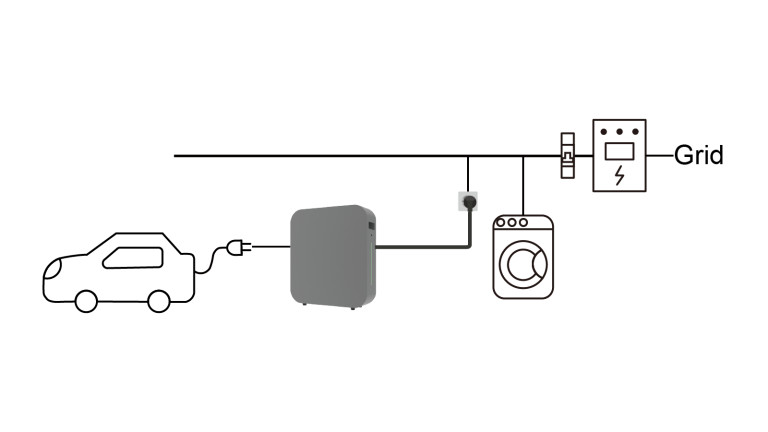
In summary, if your electric vehicle consumes 20 kWh/100 km, you would need approximately two 5kwh solar battery units to cover a daily 40 km commute. A single 5kwh battery alone would not meet the full energy demand for this distance. While a batterie 5kwh can provide valuable emergency backup power for short trips or auxiliary systems, it's important to evaluate your actual range requirements before considering such a 5kwh batterie solution for automotive use.
Dedicate your 5kwh battery investment to home energy needs. The primary design goal of the PowerGo is to provide reliable, quiet, and emission-free backup power for your household, not to act as a primary EV range extender.
How to Choose Between a 5kwh Battery and Larger Home EV Storage
1. According to the Home's PV System
● The typical scale of a household photovoltaic system ranges from 3 kW to 10 kW.
● The matching energy storage battery system scale would be 5 kW to 15 kW. For many homes, integrating a 5kwh solar battery provides a foundational storage capacity that can be expanded as needed.
Is your solar system under 5kW? Starting with a 5kwh battery is a smart move. The Batterlution PowerGo offers both 2.5kWh and 5kWh lithium battery options, allowing you to choose the perfect entry point for your budget and needs, with potential for future expansion.
2. Based on the Daily Energy Consumption of the Household Electric Vehicle
● Small energy storage systems, such as a 5kwh battery, are suitable for lower power demands and shorter electric vehicle charging times. This makes a batterie 5kwh an economical entry-level solution.
● Large energy storage systems, such as a 15 kWh battery, can store more solar energy and support longer power supply times, including extended electric vehicle charging needs. For households with higher consumption, a larger system outperforms a standalone 5kwh solar battery.
5kwh Solar Battery vs Generators: A Comprehensive Comparison for Home Backup
Due to the different characteristics of power supply from energy storage batteries and generators, it's difficult to directly compare them to determine the best option. The best choice depends on the specific needs of the household backup power.
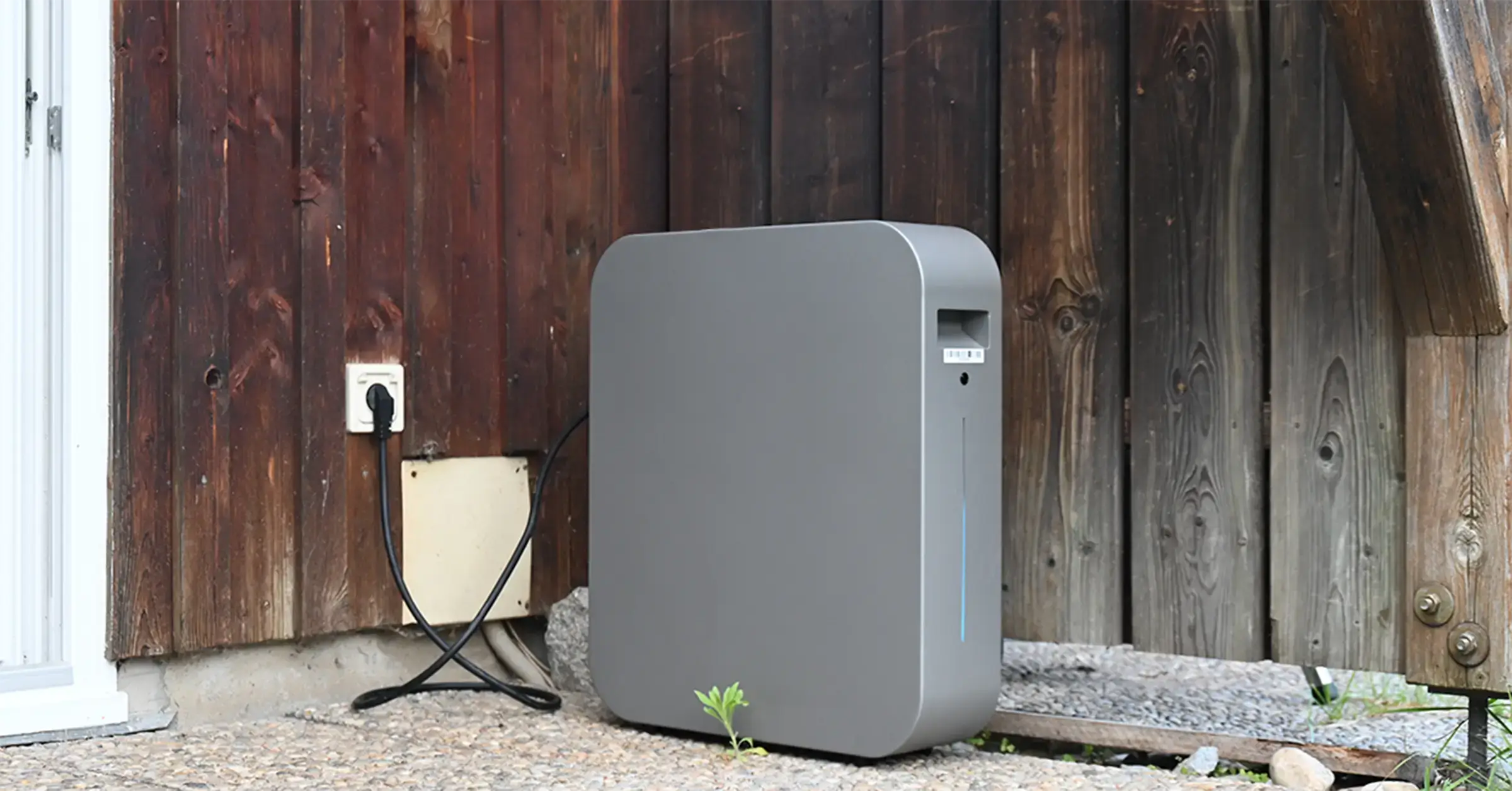
Energy Storage Battery:
• Duration: For an average household, a 5kwh battery or a 5-10 kWh energy storage system can provide power for several hours up to a whole night, depending on the number and power of the appliances used.
• Charging requirements: Once a 5kwh solar battery is depleted, it needs to be recharged through the solar photovoltaic system, the grid, or other means. If there are several consecutive cloudy days, charging may be affected.
Generator:
Duration: Generators can continue working as long as there is a fuel supply, providing power support for extended outages. This is crucial in areas prone to long-term power outages.
Fuel supply: The supply and storage of fuel are considerations. If there’s a fuel shortage, the operation of the generator will be affected.
Energy Storage Battery:
A 5kwh solar battery produces no emissions, does not pollute the indoor or outdoor environment, and does not generate noise. It is an environmentally friendly option, suitable for quiet residential areas.
Generator:
Emissions and Noise: Generators emit exhaust gases (e.g., carbon monoxide, carbon dioxide) when running, and their noise may disturb households and neighbors. This may not be suitable for environmentally sensitive areas.
Energy Storage Battery:
The initial installation cost of a batterie 5kwh or other energy storage systems is relatively high.
However, the 5kwh battery's lifespan is generally long, and maintenance costs are low. These batteries can reduce household electricity bills by storing energy generated from solar panels, thereby decreasing grid dependence.
Generator:
The initial purchase and installation cost of generators are usually lower than a 5kwh solar battery system.
But the cost of fuel is a continuous expense, particularly in the case of long-term or frequent use, which could lead to increased operating costs.
Energy Storage Battery:
Suitability: A 5kwh battery is suitable for all homes as a backup power source. It can provide seamless power during outages and is ideal for environmentally conscious households. Systems like a batterie solaire 5kw can also be used for daily energy management.
Future Prospects: With advancements in battery technology, the cost-effectiveness of 5kwh solar battery systems will continue to improve, attracting more users in the future.
Generator:
Suitability: Generators are suitable for homes in areas with long-term outages or those needing to power high-demand devices like air conditioners or heating systems.
Future Prospects: Although generators remain necessary in some scenarios, their environmental impact limits them to occasional use compared to cleaner options like the 5kwh battery.
How Long Does a 5kWh Battery Last in Real-World Conditions?
The theoretical runtime of a 5kWh lithium battery is calculated by dividing capacity by load, but real-world performance is dictated by efficiency and discharge depth. While a standard 5kW battery backup offers a nominal 5,000Wh, the usable energy is typically 4,000Wh to 4,500Wh after accounting for an 80-90% Depth of Discharge (DoD) and inverter conversion losses.
Estimated Runtime by Load Profile:
- Essential Loads (300W – 500W): Expect 8 to 14 hours of continuous power. This covers critical devices like a refrigerator, Wi-Fi router, LED lighting, and fans—ideal for overnight protection.
- High-Demand Loads (1000W – 2000W): The 5kWh battery storage runtime decreases to 2 to 4.5 hours. This scenario typically includes heavy appliances like a microwave, coffee maker, or a small air conditioning unit.
Conclusion
For most European users seeking a quiet, clean, low-maintenance solution that integrates effortlessly into their existing home (especially with solar), investing in a high-quality 5kwh battery system like the Batterlution PowerGo All-in-One is a smart, forward-thinking choice. When comparing the 5 kilowatt lithium battery price against long-term benefits and the convenience of plug-and-play installation, the value proposition becomes clear. It eliminates the biggest headache—complex installation—making energy independence simpler than ever. > [Ready to achieve energy independence without the hassle? Click here to learn more about the PowerGo and get a personalized quote!]
FAQ
What is the main advantage of a plug-and-play 5 kWh battery like the PowerGo?
The primary advantage of the PowerGo 5kwh battery is its unparalleled flexibility and ease of installation; as a fully independent, AC-coupled unit, it requires no complex wiring and can be activated simply by plugging it into any standard European wall outlet, allowing you to have a fully functional batterie 5kwh system operational in minutes, anywhere with AC power, with full control via its dedicated mobile app.
Can I add a PowerGo 5 kWh battery to my existing home solar system?
Absolutely, the PowerGo 5kwh solar battery is specifically designed for seamless integration with existing solar systems without any need for modification; its AC plug-in design means it independently connects to your home’s circuit at the outlet level, allowing it to store excess solar energy that would otherwise be sent back to the grid, effectively upgrading your home to solar storage with zero disruption.
Where can I typically use a plug-in 5 kWh battery in my home?
The plug-and-play nature of the PowerGo 5kwh battery makes it suitable for multiple locations; key variables are your access to a wall outlet and your power needs, enabling you to place it in a garage to provide backup for a workshop and EV charging station, in a utility room to support key home circuits, or even in a home office to ensure uninterrupted power for computers and networking gear, all while monitoring via the app.
How does the PowerGo app enhance the experience of a 5 kWh battery?
The PowerGo app transforms the 5kwh battery into an intelligent energy manager by providing real-time data on energy flow, state of charge, and power consumption; this allows you to set custom charging schedules from the grid during off-peak hours or automatically discharge during peak times for savings, and receive instant alerts, putting complete control of your batterie 5kwh in the palm of your hand.
Is professional installation required for the PowerGo 5 kWh battery?
No, the PowerGo 5kwh solar battery is engineered for a true DIY setup that requires no professional installation; the key to its simplicity is the standard European plug, meaning you can autonomously manage your energy storage by simply placing the unit, plugging it in, and configuring your preferences through the intuitive PowerGo app without any technical expertise or electrician visits.
What makes the PowerGo a different type of 5 kWh home battery?
The PowerGo redefines the 5 kwh battery category by combining full 5kwh solar battery capacity with ultimate user freedom; unlike traditional hardwired units that are permanently fixed to one location, this batterie 5kwh offers the unique capability of being relocatable—you can start by using it in your home and later decide to move it to a vacation property or reposition it within your house as your energy needs evolve, all without any installation costs.
The 5.12kWh Advantage: How Much Extra Power?
For users considering specific high-density models, such as a 5.12kWh LiFePO4 battery, the slightly higher nominal voltage provides a distinct edge. A 5.12kWh battery lasts approximately 5-10% longer than a standard 5kWh unit. In practical terms, this adds an extra 45–60 minutes of runtime for essential loads, providing a critical buffer during extended outages.
Maximizing Performance with Solar Charging
This is where 5kWh home battery systems truly excel. When integrated with a solar PV array, your 5kWh solar battery transitions from a static backup to a dynamic energy reservoir. By recharging via solar panels during daylight hours, the system can sustain essential household functions indefinitely, achieving true energy independence without grid reliance.