
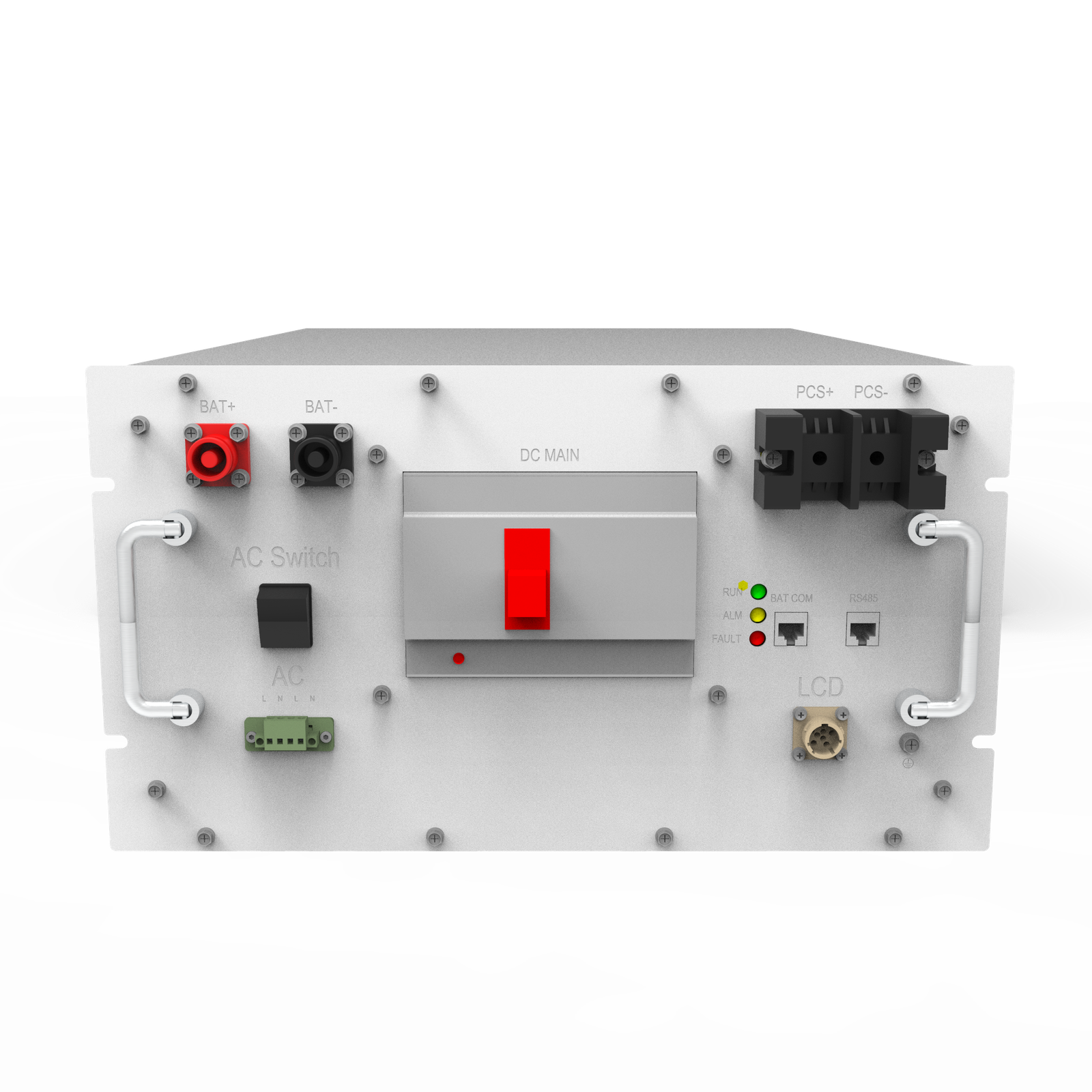
60kWh rackable customized battery system
Batterlution 60 kWh Energy Storage System (ESS) represents a cutting-edge commercial energy storage solution designed for versatile applications. Comprising six sets of battery units, each housing batteries capable of storing up to 10.75 kWh of energy, this system boasts a total capacity of 60 kWh. The battery units are meticulously constructed using 105Ah LiFePO4 cells, arranged in a configuration of 2 parallel and 16 series connections, resulting in a nominal voltage of 51.2V per unit. Integral to the system’s efficiency is a Battery Control Unit (BCU) responsible for the intelligent management and regulation of stored energy.
One of the remarkable features of this ESS is its seamless compatibility with a wide range of 3-phase Power Conversion Systems (PCS). This adaptability renders the system suitable for both on-grid and off-grid setups, where it shines as a reliable and high-performing energy storage solution. Whether integrated into the grid for peak demand management and renewable energy harnessing or deployed off-grid for reliable backup power, this ESS empowers businesses to optimize energy consumption, mitigate costs, and contribute to grid stability.
Features

Simple Setup

Security and Dependability

Effortless Handling and Upkeep
Application Scenario
Energy Storage Systems (ESS) offer a multifaceted solution to various energy-related challenges across commercial, industrial, and remote settings. These systems provide a range of benefits, from cost savings through peak demand mitigation and load shifting to enhancing grid stability through frequency regulation. ESS also play a vital role in ensuring uninterrupted operations during emergencies, supporting renewable energy integration, and enabling the growth of electric vehicle infrastructure.
The ability of ESS to adapt to diverse applications, including microgrid implementation, demand response participation, and providing off-grid power, underscores their versatility and importance in today's evolving energy landscape. As the demand for sustainable and efficient energy solutions continues to grow, Energy Storage Systems emerge as a key enabler for a more resilient, cost-effective, and environmentally friendly energy ecosystem. Their deployment holds great promise in shaping a greener and more reliable energy future for a wide range of industries and communities.
- Peak Demand Mitigation:
Deploy the ESS to strategically release stored energy during peak demand periods, significantly reducing peak demand charges and overall energy costs for commercial facilities. - Renewable Energy Integration:
Integrate the ESS with solar panels or wind turbines to store excess renewable energy generated during sunny or windy periods and utilize it during low-energy production times. - Load Shifting for Cost Savings:
Store energy during off-peak hours when electricity rates are lower and discharge it during high-demand, high-cost hours, resulting in substantial cost savings. - Grid Frequency Regulation:
Utilize the rapid response capabilities of the ESS to help stabilize the grid by providing frequency regulation services, enhancing overall grid reliability. - Emergency Backup Power:
Ensure continuous operations during power outages by using the ESS as a reliable backup power source for critical equipment and systems, enhancing business resilience. - Microgrid Implementation:
Incorporate the ESS into microgrid systems, enabling localized energy distribution and minimizing reliance on the main grid during disruptions. - Demand Response Participation:
Participate in demand response programs, where the ESS can be used to reduce energy consumption during peak load times, helping to balance the grid. - EV Charging Infrastructure:
Integrate the ESS into electric vehicle (EV) charging stations to manage charging demand, optimize energy usage, and provide backup power for EV owners. - Remote Off-Grid Power:
Deploy the ESS in remote locations or off-grid setups to provide consistent and sustainable power for remote facilities, such as telecom towers or remote research stations. - Industrial Processes:
Use the ESS to ensure consistent power supply for critical industrial processes, safeguarding against interruptions that could lead to production downtime.
Product Advantage
- Peak Demand Management:
The ESS enables effective peak demand shaving, reducing costly demand charges by releasing stored energy during peak usage periods, leading to substantial cost savings. - Cost Optimization:
By storing energy during off-peak hours and discharging it during high-cost peak hours, the ESS helps optimize energy consumption and minimizes energy expenses. - Grid Stabilization:
The ESS contributes to grid stability by providing fast-response frequency regulation and voltage support, enhancing the overall reliability of the electrical grid. - Renewable Energy Utilization:
Integrating with renewable energy sources, the ESS stores excess energy during high generation periods for use when renewable sources are less productive, ensuring continuous power availability. - Energy Independence:
In off-grid or remote settings, the ESS ensures reliable power supply, reducing reliance on external sources and enhancing energy autonomy. - Backup Power:
The ESS serves as a dependable backup power source during grid outages or emergencies, safeguarding critical operations and preventing disruptions.
- Load Flexibility:
Businesses can dynamically manage energy consumption by shifting loads and utilizing stored energy, adapting to changing energy market conditions. - Environmental Impact:
By optimizing energy usage and integrating renewables, the ESS helps reduce carbon emissions and contributes to sustainability goals. - Enhanced Resilience:
The ESS fortifies business continuity by providing uninterrupted power, mitigating risks associated with power outages and disruptions. - Customization:
The ESS’s adaptability and compatibility with different applications and setups allow for customized energy solutions tailored to specific business needs. - Demand Response Participation:
The ESS enables participation in demand response programs, providing an additional revenue stream by adjusting energy consumption in response to grid signals. - Scalability:
Businesses can expand their energy storage capacity by adding more units, accommodating future growth and changing energy demands.
Product Specification
HV DC unit specifications
Electrical Capacity | 1000V 160A | Maximum Battery DC Voltage | 1000Vdc |
|---|---|---|---|
Maximum Current | 160A | Communication | CAN, RS485 optional |
Monitor | External linked, for all rack battery information display | Main switch | Yes |
Working power | 230Vac | Parallel function | Optional, need to define before place order |
Weight | 30kG | Dimensions (mm) | Standard 19' rack mounted, 446 x 245 x 587 |
Accessories | Cables and touch screen monitor |
Pack specifications
Capacity | 10.75kWh | Cell Amount | 32 pcs |
|---|---|---|---|
Cell Connection | 2P16S | Nominal Voltage | 51.2V |
Ah Value | 210Ah | Maximum Discharge Current | 0.7C |
Maximum Charge Current | 0.7C | BMS | High voltage BMS integrated |
Charge Method | CV/CC/CP | Protections | Yes |
Dimensions | W446mm D587mm H245mm | Weight | 85kg |
Model | Customized rack 60 | Nominal Energy | 64.5kWh |
Usable Energy | 61.4kWh | Battery Pack Amount | 6 |
Voltage | 307.2V | Voltage Working Range | 268.8V-345.6V |
Nominal Current | 147A | Racking Parallel | Yes (please define before placing order) |
HV DC unit | Yes | Monitor | Yes, external linked and installed |
Dimensions | Customized |