

What is UNICELL Single-Cell Storage Solution
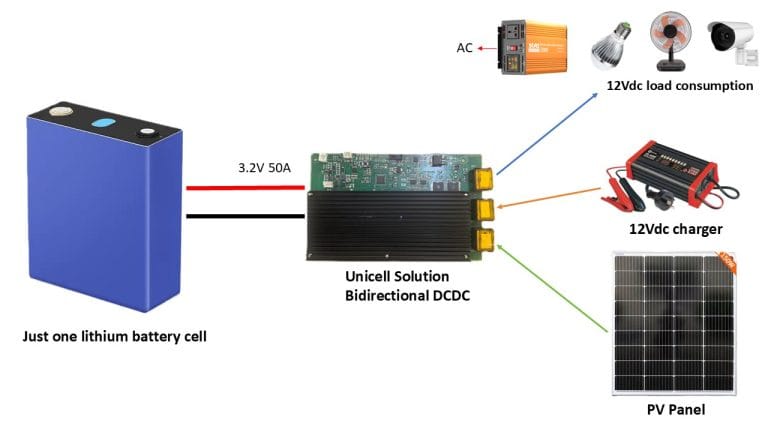
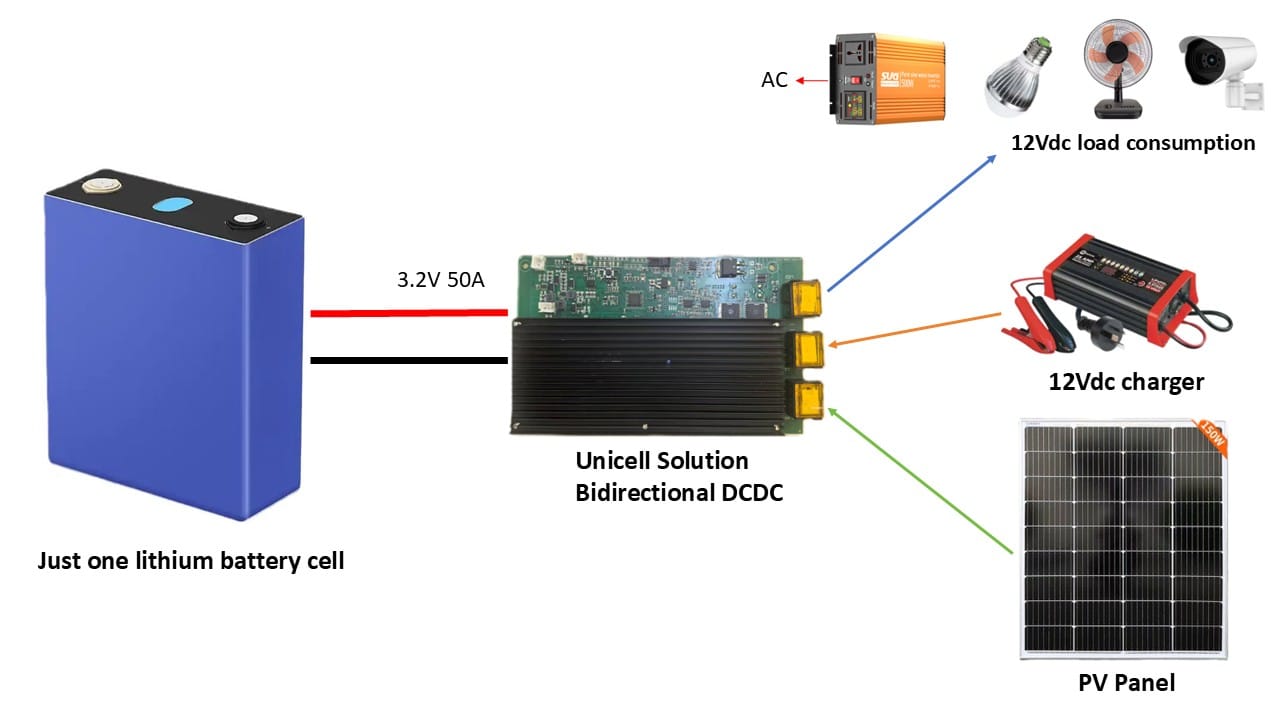
The UNICELL single-cell storage solution is an advanced, versatile energy storage system built around a single 3.2V LiFePO4 battery cell. Unlike traditional 12V or 24V battery packs that rely on multiple cells in series and require complex Battery Management System (BMS) balancing, UNICELL uses a bidirectional DC-DC converter for efficient charging and discharging.
During discharge, the system boosts 3.2V to 12V to power standard 12V loads. During charging, it operates in buck mode, allowing safe recharge from a 12V DC source or a solar panel via MPPT (Maximum Power Point Tracking) charging.
This single-cell energy storage design simplifies system layout, lowers costs, improves safety, and delivers a compact, flexible solution ideal for home backup power, portable power banks, outdoor energy systems, and off-grid storage applications.
Why Portable Battery Bank Solutions Are Evolving into Single-Cell Storage Solutions
With the rapid adoption of electric vehicles, LiFePO4 batteries have become the mainstream technology in the energy storage market. Improvements in performance, longer cycle life, and lower costs make large-capacity prismatic lithium battery cells a better choice than cylindrical cells.
Specifically, 280Ah and 314Ah LiFePO4 prismatic cells are increasingly popular and affordable, offering nearly 1kWh capacity—ideal for single-cell storage solutions.
The single-cell storage approach offers multiple advantages:
- Simplified BMS: No cell balancing or consistency management is required, improving system reliability.
- Lower cost: Fewer components reduce both battery celland BMS costs, making it highly cost-effective.
- Faster assembly: Simplified wiring reduces labor and production time.
- Scalable and practical: Perfect for portable energy storageand off-grid applications in emerging markets.
Advantages Over Traditional Battery Packs
The UNICELL single-cell storage solution clearly outperforms traditional 12V/24V battery packs in several key areas:
- Simplicity:Only one LiFePO4 cell is required; no series cell balancing. The BMS is straightforward, enhancing reliability.
- Cost Efficiency:Fewer components reduce both battery and BMS costs.
- Safety:Overcharge and overdischarge protection is managed with simple software logic. Fewer cells mean fewer potential failure points, lowering thermal runaway
- Portability:Compact and lightweight, ideal for home backup power, portable power banks, outdoor activities, and off-grid storage applications.
Traditional 12V/24V Battery Pack Design
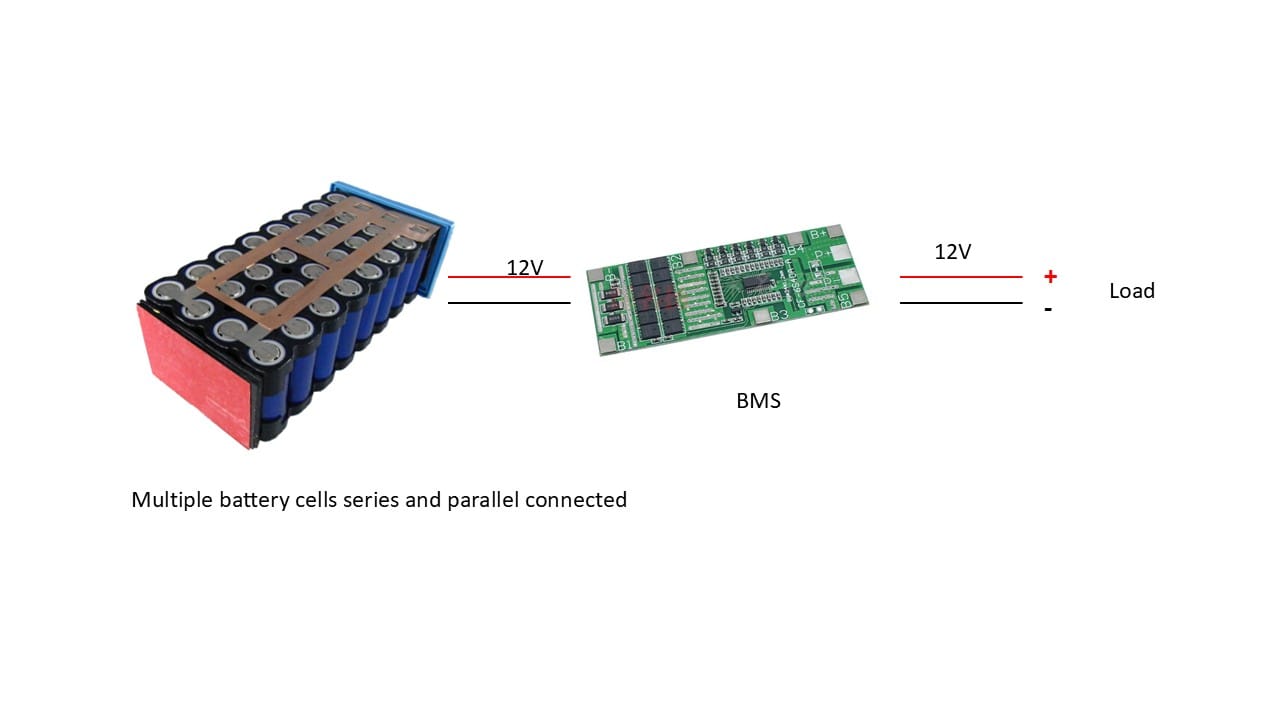
How Series-Connected Cells Work
Traditional 12V and 24V battery packs are built by connecting multiple lithium cells in series. While this increases output voltage, it requires a complex BMS for cell balancing, overcharge protection, and safe operation.
Challenges of Traditional Packs
- High cost:More cells plus sophisticated BMS design increase material and production costs.
- Reliability concerns:Dependence on many cells and BMS components means one cell failure, loose wiring, or faulty components can compromise the entire pack.
- Safety risks:Multiple cells increase the likelihood of overcharge, overdischarge, and thermal runaway.
- Poor portability:Traditional 12V/24V lithium battery packs are bulky and heavy, limiting usability for portable energy storage or off-grid applications.
Comparison
VS
Feature | Traditional 12V/24V Battery Pack | UNICELL Single-Cell Storage Solution |
|---|---|---|
Cell Configuration | Multiple lithium cells in series | Single 3.2V LiFePO4 cell |
BMS Requirement | Complex Battery Management System (BMS) | Simple BMS with fewer wires and calculations |
Cost | High (more cells + advanced BMS design) | Lower (fewer components + simplified BMS) |
Reliability | Dependent on many cells; one failure impacts the pack | High reliability, fewer failure points |
Safety | Higher risks of overcharge, overdischarge, thermal runaway | Safer operation with simple software control |
Portability | Heavy and bulky | Compact, lightweight, ideal for portable power banks and off-grid applications |
Charging Method | Standard DC source or inverter | Bidirectional DC-DC converter with buck charging and MPPT solar charging |
Use Cases | Traditional backup batteries, industrial systems | Home backup power, outdoor energy storage, off-grid solutions |
Why UNICELL is a Game Changer
The UNICELL single-cell storage solution redefines portable and home energy systems. By combining a single 3.2V LiFePO4 prismatic cell with a bidirectional DC-DC converter, UNICELL eliminates the complexity of traditional 12V/24V battery packs while delivering reliable power output.
It is ideal for a wide range of applications:
- Home backup power:Compact, affordable, and reliable during outages.
- Portable power banks:Lightweight for mobile use, providing safe and efficient portable energy storage.
- Outdoor activities:Suitable for camping, RVs, and marine use due to portability and long cycle life.
- Off-grid storage solutions:Practical and low-cost for storing solar energy in regions with unstable electricity using MPPT solar charging.
With its simplicity, safety, cost efficiency, and portability, UNICELL is a true breakthrough in single-cell energy storage systems.
Conclusion
The UNICELL single-cell storage solution represents a major advancement in modern energy storage systems. Using a single 3.2V LiFePO4 prismatic cell with a bidirectional DC-DC converter, it simplifies system design and reduces costs compared to traditional 12V/24V battery packs.
Its key advantages—simplicity, cost efficiency, safety, and portability—make it ideal for home backup power, portable energy storage, and off-grid solar applications.
As demand for sustainable, affordable power solutions grows, UNICELL demonstrates how single-cell energy storage can be a game changer, offering a scalable alternative to conventional battery pack designs.