

Bidirectional AC-DC Converters: Principles and Applications
Bidirectional AC-DC converters (also referred to as bidirectional AC/DC converters or bidirectional AC-to-DC converters) offer several advantages, including high energy conversion efficiency, high power density, compact size, and low harmonic content, minimizing disturbances to the grid or load. These sophisticated bidirectional converters are essential for modern energy management.
A fundamental component within this system is the bidirectional DC-DC converter. A fundamental question is: what is a bidirectional DC-DC converter? It is a power electronic circuit that can regulate the flow of energy between two DC sources or a DC source and a DC bus in both directions, efficiently stepping the voltage up or down as required by the application. This functionality is crucial for managing the charge and discharge cycles of the battery within a bidirectional ac dc converter system.
This leads to the core question: what is the operating principle of the bidirectional charge and discharge module?
How Energy Flow Reverses: The Logic Behind Bidirectional Conversion
The operating principle of a bidirectional ac dc converter is not merely about moving electricity; it is about intelligent synchronization and phase control. At its core, this module functions as a bidirectional ac to dc voltage source converter, which actively monitors the grid's phase and frequency in real-time.
When charging, the system operates in "Rectification Mode," where the MOSFET bridge rectifies AC input while the bidirectional ac to dc converter stabilizes the output voltage for the battery. In discharge mode, the process is inverted: the system acts as a high-precision Bidirectional Power Supply, transforming DC into a synchronized AC sine wave through Pulse Width Modulation (PWM). This dual-mode flexibility allows the power to flow "to" or "from" the battery based on load demand or grid signals, making it an indispensable tool for micro-grids and smart energy management.
To execute this dynamic energy reversal, the Core System Composition must be built with high-performance components:
Core System Composition of a Bidirectional Converters
AC connection terminal: Connects to the grid, providing or receiving AC power.
Rectifier: This unit, implemented with a MOSFET bridge, functions as a bidirectional rectifier. Through controlled switching of the MOSFETs, it converts AC power to DC power.
DC-DC converter: This component is essentially a bidirectional DC-DC converter that regulates DC voltage, achieving step-up or step-down functions.
Inverter: Similarly constructed with a MOSFET bridge, this unit serves as the bidirectional inverter, converting DC power back to AC power. The design of this bidirectional inverter circuit is critical for performance.
Battery: Stores electrical energy.
- Control unit: This is the brain of the bidirectional converters, controlling overall operation, monitoring parameters in real-time, and managing communication signals.
Isolation transformer: Isolates the battery from the grid for safety.
Filter: Filters harmonics to improve output waveform quality.
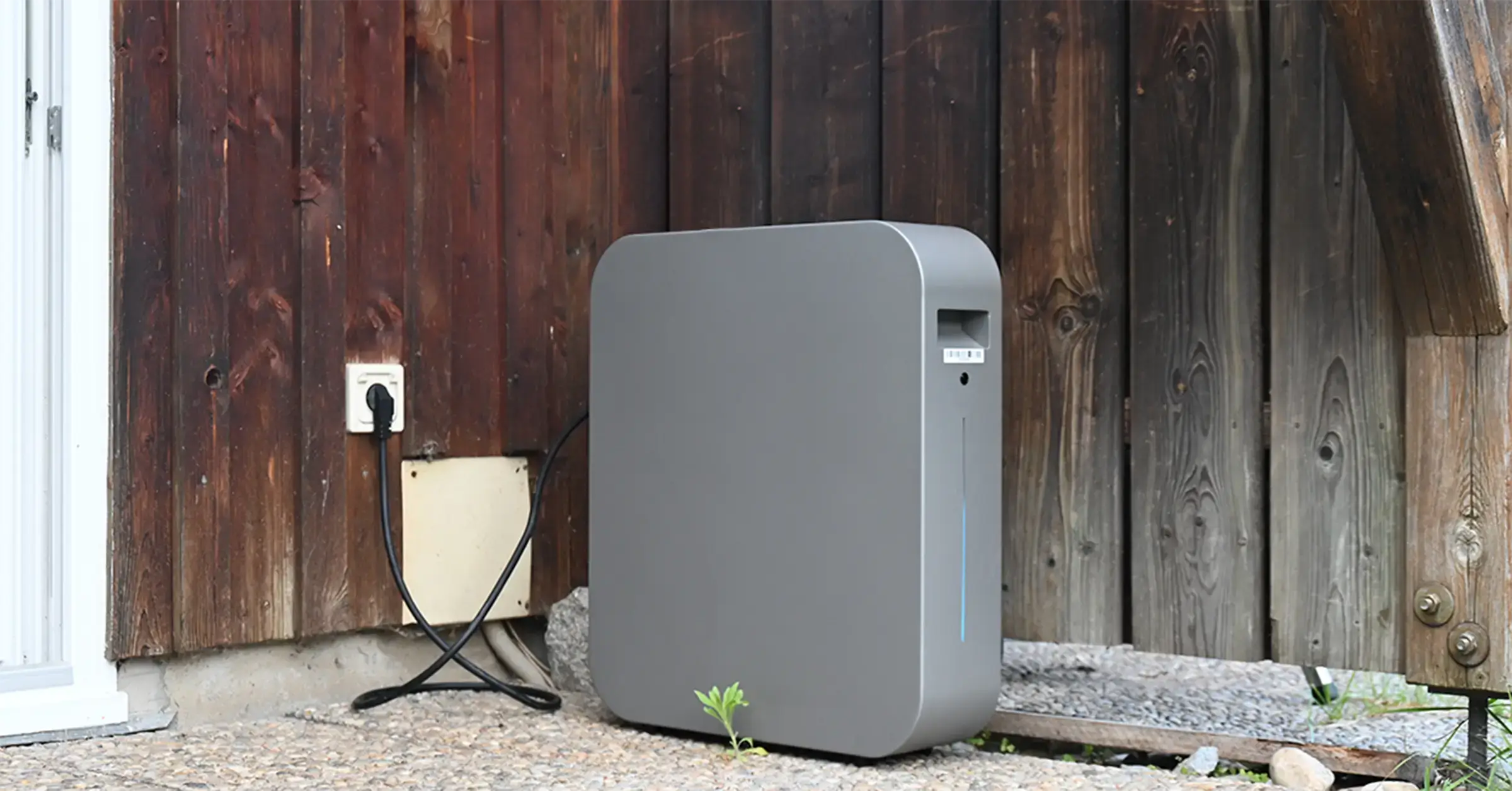
PowerGo Series: Bridging the "Last Mile" of Bidirectional Power Conversion
Eliminate the constraints of bulky, traditional power systems. The Batterlution PowerGo Series integrates advanced bidirectional DC-AC converters to streamline charge and discharge logic into a single, compact unit. Featuring an AC-coupled modular design, it directly addresses critical pain points such as difficult micro-grid expansion, inefficient peak shaving, and slow off-grid emergency response. As a high-performance bidirectional power supply, PowerGo delivers seamless switching and zero-loss energy flow, ensuring your power conversion is smarter and more responsive.
Why Your Infrastructure Needs a High-Efficiency Bidirectional Power Supply
Why settle for one-way efficiency when you can master total energy control? While individual components define the structure, the true value lies in how a modern bidirectional ac dc converter harmonizes these parts into a single, powerhouse unit. Transitioning from basic hardware to real-world performance requires more than just parts; it requires a strategic Bidirectional Power Supply architecture that eliminates the "efficiency gap" found in traditional setups.
By leveraging the capabilities of bidirectional ac to dc voltage source converters, operators gain three game-changing advantages:
Synchronized Grid Interaction: Unlike static systems, these converters actively "handshake" with the grid, ensuring seamless frequency matching and zero-latency switching.
Redefined Power Density: By merging rectification and inversion, you slash the hardware footprint by up to 40%, optimizing space in micro-grid and EV charging cabinets.
Thermal Intelligence: Advanced bidirectional ac to dc converter designs minimize heat dissipation during heavy-duty cycling, directly extending the lifespan of your battery investment.
These strategic benefits set the stage for the sophisticated Working Logic that drives every charge and discharge cycle:
Working Logic and Key Applications
The entire system, functioning as a set of highly efficient bidirectional ac to dc voltage source converters, finds extensive applications in energy storage systems, such as electric vehicles, solar energy storage systems, and wind energy storage systems. Through optimized design and control algorithms, these bidirectional converters ensure efficient and stable system operation.

Operational Mode 1: AC to DC Charging (Rectification)

AC Input: The process begins with AC input.
- Rectification: AC power is converted to DC by the rectifier. In this mode, the system operates as an AC DC bidirectional converter.
Pulse-Width Modulation (PWM) Generation: The controller monitors the AC power and generates the most suitable PWM signals.
PWM: Adjusts the MOSFET switching frequency and pulse width to stabilize the rectified DC output.
Filtering: The DC power is filtered to remove high-frequency ripple, resulting in a purer DC output.
Voltage Regulating: The stabilized DC power is adjusted by the DC-DC converter to the battery's required voltage for charging. The controller adjusts the duty cycle based on the battery's SOC to control the charging current.
The PWM signal is the key to realizing AC-DC conversion in a bidirectional ac dc converter, generated by three critical components: the controller, the control algorithm, and the PWM generator.

Operational Mode 2: DC to AC Discharge (Inversion)
- Voltage Regulating: During battery discharge, the DC power is stepped up or down by the DC-DC converter to match the grid voltage.
Pulse-Width Modulation (PWM) Generation: The controller, employing PLL technology, detects grid parameters in real-time and generates synchronized PWM signals.
PWM and Inversion: Using PWM control, the MOSFET switching is adjusted to convert DC to AC, synchronizing the output with the grid. This process is managed by the bidirectional inverter circuit.
Filtering: Used to eliminate harmonics, making the output AC waveform closer to a sine wave.
Isolation transformer: Provides safety isolation as the converted AC power is fed back to the grid, completing the DC/AC bidirectional power flow. The controller adjusts the inverter's duty cycle based on grid load and battery SOC.
The grid-connected control algorithm is mainly for the lock ring network control PLL. By sampling and processing the grid voltage, he accurately tracks the frequency and phase of the grid, provides the benchmark for the inverter PWM modulation according to the sampled reference signal, and ensures that the voltage and current output of the inverter are consistent with the phase of the grid.
AC coupled: Open source bidirectional charge and discharge battery
The system features an AC-coupled, open-source bidirectional charge and discharge battery. Bidirectional charging and discharging enables grid peak shaving, load leveling, and efficient demand-side management.
Convenient output
High conversion efficiency
Building block design
Open Hardware
- Intelligent Control
How to Choose Your Next Bidirectional Power Supply
Selecting a bidirectional ac dc converter goes beyond comparing spec sheets; it’s about ensuring system harmony and operational longevity. To avoid the common pitfalls of equipment mismatch, use these four expert-vetted criteria to evaluate your options—and see how the PowerGo Series sets the benchmark in each category.
1.Evaluate Coupling Flexibility: Is it AC-Coupled?
Most users struggle with integrating new storage into existing grids. The most efficient choice is an AC-coupled, open-source bidirectional charge and discharge battery system.
The PowerGo Edge: Unlike DC-coupled alternatives that require re-wiring, the PowerGo Series’ AC-coupled architecture allows for Plug and play integration into any existing infrastructure, making it the ideal Bidirectional Power Supply for rapid micro-grid deployment.
2.Assess Conversion Precision: Look for Voltage Source Stability
In micro-grid applications, your converter must act as a stabilizer. Prioritize bidirectional ac to dc voltage source converters that utilize high-frequency PWM and PLL synchronization to ensure the output waveform is indistinguishable from the utility grid.
The PowerGo Edge: PowerGo delivers high conversion efficiency and ultra-low harmonic content, protecting sensitive healthcare or industrial equipment from power fluctuations during bidirectional charging and discharging.
3. Demand Scalability: Does it Use a Building Block Design?
Energy needs are rarely static. Buying a fixed-capacity unit often leads to "stranded assets." Always look for a Building block design that allows you to scale power and capacity independently
The PowerGo Edge: The PowerGo is built on a modular philosophy. Its Open Hardware compatibility and stacking capabilities mean you can start small and expand your capacity as your demand-side management requirements grow.
4. Audit the Brain: Intelligent Control vs. Basic Monitoring
A "dumb" converter can damage your batteries. Your bidirectional ac dc converter must feature Intelligent Control that actively communicates with the Battery Management System (BMS) to optimize SOC (State of Charge).
The PowerGo Edge: PowerGo features an integrated smart brain that enables automated grid peak shaving and load leveling, providing Convenient output management through an intuitive interface.
PowerGo Series vs. Conventional Bidirectional Systems: A Performance Breakdown
If you are looking for a solution that truly enhances energy efficiency, the table below demonstrates why the PowerGo Series is the best investment for your infrastructure:
Criteria | Conventional Systems | Batterlution PowerGo Series |
|---|---|---|
Coupling | Complex DC-Coupling requiring re-wiring | AC-Coupled (Plug & Play) |
Topology | Basic Bidirectional Conversion | Bidirectional AC to DC Voltage Source Converter |
Scalability | Fixed capacity, difficult to upgrade | Building Block Design (Modular Expansion) |
Control | Basic on/off switching only | Intelligent Control (Active SOC Management) |
TCO | Multiple units, high maintenance | Integrated Bidirectional Power Supply (Minimal Maintenance) |
Conclusion
In summary, the transition from traditional power systems to a sophisticated bidirectional ac dc converter architecture is no longer just an option—it is a necessity for modern energy resilience. By integrating high-performance bidirectional ac to dc voltage source converters, industries can achieve a seamless flow between AC and DC power, unlocking the full potential of renewable energy and battery storage.
The Batterlution PowerGo Series exemplifies this evolution, offering an all-in-one Bidirectional Power Supply that combines high conversion efficiency with a user-friendly, modular building block design. As grid demands become more complex, adopting an AC-coupled, intelligent solution ensures that your infrastructure remains scalable, efficient, and ready for the challenges of tomorrow’s energy landscape.
FAQ
The primary advantage is its “Grid-Forming” capability. Unlike standard converters, these bidirectional ac to dc voltage source converters can actively stabilize grid frequency and phase. This allows for seamless transitions between grid-tied and off-grid modes, making them essential for micro-grid stability and reactive power support.
An AC-coupled system, like the PowerGo Series, offers much higher installation flexibility. It can be directly integrated into existing AC infrastructures (Plug and Play) without the need to modify existing solar inverters or complex DC wiring, significantly reducing labor costs and system downtime.
It functions as an intelligent gateway. During low-demand periods, the system acts as a bidirectional ac to dc converter to charge the batteries with cheap grid power. During peak hours, it reverses the flow to discharge stored energy back into the load or grid, effectively balancing demand and reducing electricity costs.
Yes, the PowerGo Series features Open Hardware and Intelligent Control protocols. This allows it to communicate flawlessly with various third-party Energy Management Systems (EMS), supporting flexible, open-source bidirectional charge and discharge battery configurations for diverse industrial applications.