
System controls and DC optimizer and CT are all applied to solar systems
Explore the expertise in solar energy, from system controllers and power regulating units to DC optimizers and built-in DC. By breaking down their concepts one by one, truly understand and apply these terms.
Part 1: the PV system controller
What is control system controller?
Within a PV system, the system controller mainly refers to the device used to control and manage battery charging and discharging to ensure the health of the battery and prolong its life. The most common system controller is the charge controller.
How does system control work?
The basic function of the charge controller is to prevent the battery from overcharging. When solar panels generate electrical energy (DC) and store it in the battery, the charge controller monitors the battery's voltage.
When the voltage reaches a certain value, it will reduce the energy flow into the battery, aiming to protect the battery and prevent overcharging. Likewise, when the battery voltage is below a certain value, it will also induce current into the battery, ensuring that the battery can supply power when there is no sunshine or insufficient light.
What kind of applications do system controllers play in PV systems?
There's a type of charge controller called the Maximum Power Point Tracker (MPPT), which is a more advanced charge controller. The MPPT controller can monitor the power of the solar panels in real-time and "track" the maximum power point by adjusting the input voltage, allowing the solar panels to always operate at the maximum power, thereby improving the efficiency of the entire system.
In short, the system controller plays a very crucial role in the PV system and is a key component in maintaining a stable system operation.
Part 2: Power regulating unit
What is a power conditioning unit(PCU)?
PCU is assembled from a solar charge controller, an inverter and a grid charger. It is mainly used to charge the battery pack or load through solar energy or power grid, and also has the function of continuously monitoring the solar energy output, battery voltage and load power supply status.

What are the main functions of a PCU?
DC-AC Inversion: It converts the direct current produced from batteries or solar panels to alternating current.
Frequency Regulation: It ensures that the frequency of the output power matches the grid frequencies.
Voltage Regulation: It ensures that the voltage of the output power is within a safe and effective range.
Power Factor Correction: It minimizes the total harmonic distortion of the system.
Part 3:Current Transformer Principle
Current Transformers (CT) is according to the principle of electromagnetic induction, you can measure the current size through the wire and cable.
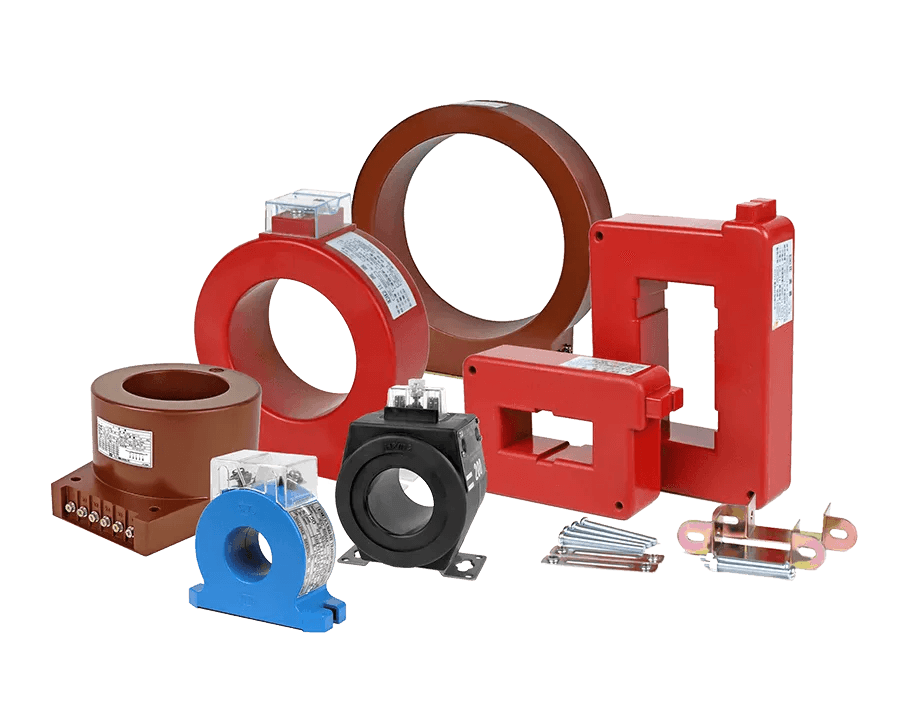
Current Transformer in PV system
In PV systems, CT are typically used to monitor the working current of various circuits and whether protective devices can work normally.
The current transformer CT is often used with the inverter of the photovoltaic system. His main task is to transmit the measured AC data in the electric box to the inverter, so that the inverter is more intelligent to control the photovoltaic energy storage system. It is the ac power supply used to convert the DC power supply on the solar panel to the load. The main function of the current transformer here is to
Part4: Battery For Solar Plant Clipping
What is a solar clipping?
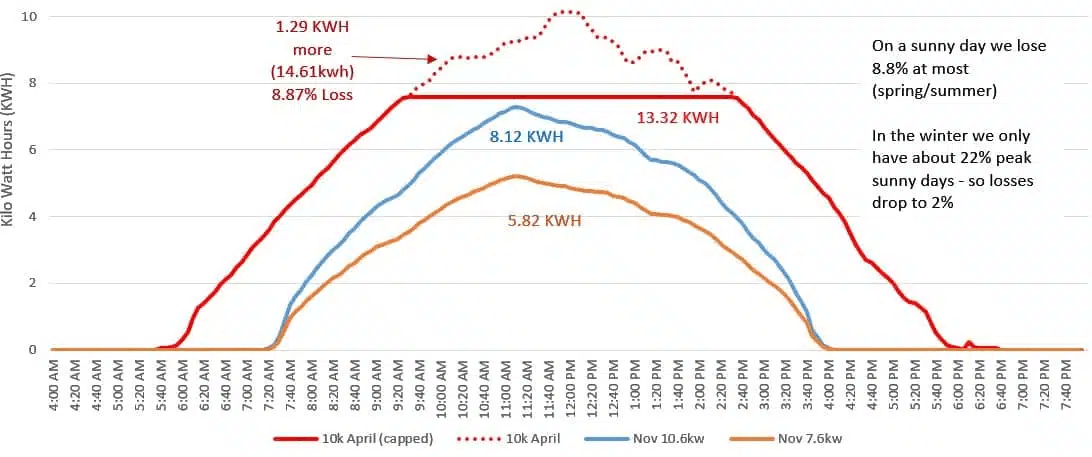
Solar clipping is a phenomenon that occurs when the power provided by solar panels exceeds the capacity that the inverter can handle.
Curtailment occurs when a solar photovoltaic (PV) system generates more electricity than the local grid or infrastructure can effectively handle. To prevent overloading the grid or Three-phase imbalance of the power grid.
Solar Clipping in PV system
While reduce some power generation might sound disadvantageous, it is often seen as a good thing.
This is because the entire PV installation generates the maximum amount of power during the sunniest hours, which might exceed the inverter's maximum power, but this is a temporary situation. In most of the time, the panels will not have enough radiation, and will not exceed the inverter's maximum power. Therefore, the advantage is that brief output limitations do not significantly alter the overall generation of solar power.
Part 5: DC optimizer
A DC optimizer can minimize the impact of shading on the efficiency of individual solar panels. allowing every PV module to independently yield its best performance and reduce the mismatch impact of PV modules.
- Advantage:Adding a DC optimizer between the PV module and the inverter can prevent the entire system from lagging due to the decreased performance of a module, while also tracking the performance of each module. It responds to changes in module ageing, pollution, and shadow shading, maximizing overall system benefits.
- limitations: A DC optimizer cannot function independently and must be paired with inverter. Additionally, as each solar panel requires an individual DC optimizer, the installation cost for this system is higher than that of traditional string systems.

Part 6: Built In DC
In PV systems, "Built-in DC" likely refers to built-in direct current power sources or devices. Solar panels, the core components of a PV system, produce direct current (DC) through the PV effect, which is a significant reason why solar energy is a DC power source.
One possible application scenario is the energy storage devices used in grid-connected PV systems. Such devices usually have built-in DC-AC (Direct Current to Alternating Current) power inverters, and some are equipped with Maximum Power Point Tracking (MPPT) charge controllers. They can directly convert the DC generated by solar panels into AC (Alternating Current) used for household appliances. They can also store electricity for reserves and provide a stable power supply during power outages or other situations.
In PV systems, the built-in power source usually refers to the solar panels as they convert solar energy into electrical energy or direct current (DC) via PV effect. Devices like DC optimizers and inverters process this current for optimizing and utilizing the electrical energy.
Part 7: DC arc
What is a DC arc?
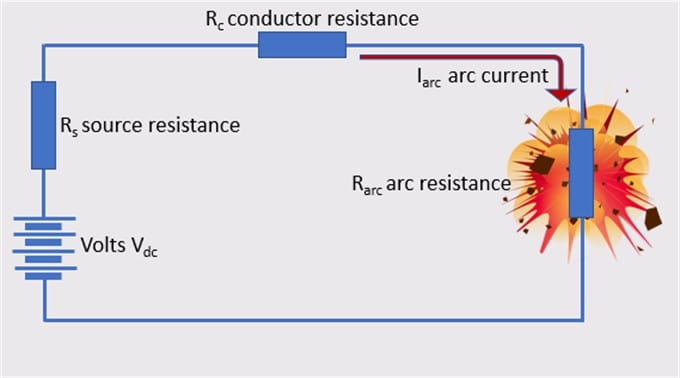
DC Arcing, also known as Direct Current Arc Faults, is a severe power problem that occurs in power systems, especially in DC systems, such as PV systems.
DC Arcing is a phenomenon that occurs in PV systems, particularly when the system voltage exceeds 80 volts. They can generate enough heat to start fires. DC arcs are caused by discontinuity in the DC current due to grounding faults, poor contact, line shorts, or equipment faults, resulting in arcing in the air or other mediums.
How to Solve DC Arcing Problems in PV Systems?
- Review and Inspect System Design: Check the entire PV system design, including string configurations, cable sizes, grounding methods, etc. Improper design, such as excessively long lines or insufficient wire diameter, may lead to DC arcing.
- Optimize Installation Process: Use good engineering practices to reduce incorrect wiring, loose joints, and inappropriate protective device issues. This includes using the correct accessories, such as DC circuit protectors with lateral protective sheaths and load disconnect devices.
- Regular Inspection and Preventive Maintenance: PV systems should be regularly and thoroughly examined to identify and resolve potential problems, such as corrosion, hot spots, or wire breakage. These can all lead to DC arcing.
- Use of Arc Fault Circuit Interrupters: Arc fault detectors or DC arc circuit breakers can detect and isolate potential DC arcs. Many PV inverters and combiner boxes have integrated this type of device. This is a passive protection measure that can immediately cut off power after a fault occurs, thus preventing further extension of the arc.