

The Safety Status of Large Battery Energy Storage System (BESS) Containers
For large-scale on-grid, off-grid, and micro-grid energy storage, containerized battery storage systems are commonly used, with thousands of cells connected in series or parallel. These cells have thin layers of diaphragm insulation between the negative and positive electrodes, relying on insulating materials and electrical switches for isolation. However, at high temperatures, these insulating materials may become carbonized, leading to conductivity, and isolating switches or tube electronics may malfunction under reverse high voltage or surges. Over extended periods and multiple charge-discharge cycles—especially during overcharge, over-discharge, or overheating—cells can suffer short-circuit failure, resulting in safety risks and potentially initiating a chain reaction that could lead to fire or explosion if robust safety measures are not in place.
Addressing these safety challenges by enhancing insulation strength could raise the cost of battery storage systems, making large-scale applications less feasible. Thus, containerized energy storage safety solutions require an integrated approach in system design, material selection, and security measures, balancing safety and cost. Key safety technologies in use include modular energy storage solutions, aerogel thermal insulation, traditional electrical protection systems, advanced thermal management, and efficient fire safety systems.
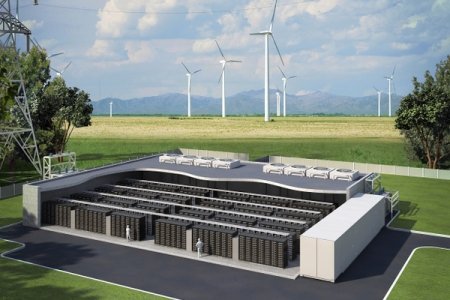
Under the global strategic policy of reduction of "carbon emission", to solve the energy situation for the renewable power grid, with the increase of capacity of solar and wind generation, the requirements of grid frequency regulation, peak shifting, and the "power increase" driven by resource demand. Therefore, the lithium-ion BESS (battery energy storage system) is not only to improve the energy utilization rate of the power system, but also play an important role in the use of the power from grid. With the increasing install scale, the security of safety design of lithium-ion battery storage system also adds to the ongoing focus.
Fire protection for battery energy storage system(BESS)
1. Modular battery storage technology
The first-generation lithium battery simply connects the battery packs in series into clusters, and the second-generation lithium battery adds some intelligent battery management units on the basis of the first-generation lithium battery. However, a series of problems such as the high voltage of the DC bus in the lithium battery system and the risk of battery insulation, the uneven discharge between clusters, and the inability to mix the echelon batteries cannot be completely solved, which puts a question mark on the safe and stable application of the lithium battery. New modular energy storage, each battery module corresponds to a BMS battery management system, equipped with multiple functions such as electrical and physical double isolation, automatic exit of faulty modules, battery insulation failure warning, etc., to ensure the safety and reliability of lithium batteries.
2. Aerogel
Aerogel is a solid material with nano porous network structure and filled with gaseous dispersion medium in the pores, which is the lightest solid in the world. Aerogel is recognized as the lightest known solid material in the world, and it is a new generation of high-efficiency and energy-saving thermal insulation materials. Aerogel has the characteristics of high flame retardant performance, light volume and low consumption, and has become the best choice for power battery cell insulation materials. It has been adopted by battery companies and new energy vehicle manufacturers. Aerogel fire and heat insulation material is used between the cells and the upper cover of the module and PACK. The safety design at the module level is mainly about isolation, which is the heat insulation and fire insulation design of the module. The thermal runaway management of the module mainly relies on the aerogel between the single cells. The aerogel is encapsulated by PET, and the overall thermal conductivity is small, which can well delay the heat transfer between the cells level of security.
3. Electrical Protection of Battery Energy Storage System
Protections of Battery Energy Storage System: DC side is divided into DC energy storage unit protection zone, DC connection unit protection zone and confluence zone; AC side is divided into AC filter protection zone and transformer protection zone. There are overlapping parts between adjacent protection zones, ensuring that all electrical equipment is within the protection scope. The division of the protection zone is closely related to the configuration of the relay protection. On the one hand, the types of electrical equipment in the protection zone are different, and the characteristics of electrical and non-electrical quantities after a fault are different; on the other hand, the coordination of adjacent protection zones varies with protection. There are also huge differences in divisions. Therefore, the configuration and coordination of the protection of the BESS are based on the protection zone.
Protection configuration of DC energy storage unit: over-voltage protection, thermal protection and over-current protection, voltage and current change rate protection, charging protection; DC connection unit protection configuration: configuration of fuse, low-voltage DC circuit breaker, low-voltage DC isolation switch and mid-span Battery protection, for multiple battery energy storage units, the DC connection units should be connected as far as possible to avoid loss of more power supply capacity in the event of failure; bidirectional converter (PCS) protection configuration: input and output side overvoltage protection, over-frequency and under-voltage protection Frequency protection, phase sequence detection and protection, anti-islanding protection, overheat protection, overload and short circuit protection.
4. Lithium Battery Thermal Managementm
In order to fulfill the environmental conditions of the project site and the normal use of the battery pack and supporting equipment under the operating conditions of the system, the container conducts thermal management control through the following aspects, mainly including air conditioning (HVAC), thermal management design, thermal insulation layer, etc.. Thermal management system for the temperature in the container can ensure the proper operation of the battery pack and supporting electrical equipment.
The temperature control scheme in the container is as follows: the temperature of each set point in the container is monitored in real time through the temperature probe. When the temperature of the set point is higher than the set start temperature of the air conditioner, the air conditioner operates the refrigeration function, and the special air duct is used to control the temperature of each set point in the container. The interior of the container is cooled, and when the temperature reaches the lower limit of the set value, the air conditioner stops working. When the temperature of the set point is lower than the set start temperature of the air conditioner, the air conditioner operates the heating function, and heats the interior of the container through a special air duct. When the temperature reaches 15°C, the air conditioner stops working.
During the operation of the lithium battery, due to the existence of the internal electrochemical reaction and the influence of the increase of the ambient temperature, the temperature of the inner cavity of the battery will increase and the reaction will be intensified; while in the alpine area, due to the influence of the low temperature of the environment, the reaction speed in the battery will also be reduced. The former can lead to thermal runaway that can cause premature battery failure and safety issues, and the latter can also reduce the battery's charge-discharge capacity and efficiency.

During the operation of lithium batteries, the presence of internal electrochemical reactions and the influence of elevated ambient temperatures will cause the temperature of the battery's internal cavity to rise and the reactions to intensify
BESS Container design-- Safety and Fire Suppression
Fire suppression devices are integrated in the container, and most of them adopt a structure of no less than three levels, including early warning, alarm and action, and fire-fighting system devices, including detection controllers, fire control boxes, sound and light alarm bells/lights, temperature and salt fog sensors, SF6 gas fire extinguishing device.
Compared with lead-acid batteries, lithium batteries of the same volume have higher density and more energy storage. After deflagration and fire, the flame will be jet-like, and the temperature of the fire source will be higher. At the same time, a large amount of toxic and harmful gases will be released, so there are more potential safety hazards. When fighting a lithium battery fire, firstly, put out the open flame in time to avoid the rapid spread of the fire; secondly, reduce the thermal runaway reaction rate, so that the heat generated by the internal thermal runaway reaction of the lithium battery is released in an orderly manner; The fire reignited and spread rapidly.
Specialized Fire Suppression Agents
Aerosol automatic fire extinguishing device is a new type of hot aerosol fire extinguishing device for lithium-iron battery energy storage systems, which is a breakthrough product in the field of fire protection with ultra-high fire extinguishing efficiency and reliability.
When a fire occurs, the fire-extinguishing agent is activated by electric activation or temperature-sensing activation, and a large amount of sub-nano-scale solid-phase particles and inert gas mixtures are rapidly produced, which are completely submerged in the form of high-concentration smoke. It acts on every corner of the fire, and through the multiple functions of chemical inhibition, physical cooling and diluting oxygen, the fire is quickly and efficiently extinguished, and it is non-toxic to the environment and personnel.
Aerosols can also achieve three-level fire protection for large scale battery storage system, using single battery racks as protection units, using centralized gas detection and sampling analysis, and detecting changes in the chemical composition of lithium batteries in real time through the detectors preset in each battery PACK box.
The chip analyzes and calculates the changes of various parameters, and conducts effective early fire suppression and prevention for the cells in the battery box to prevent the battery thermal runaway expansion of the lithium battery and the explosion of the energy storage cabinet.
gas fire-fighting device for lithium batteries
The gas fire extinguishing system provides non-conductive and residue-free solutions. These systems often use inert gases or cleaners that can fairly rapidly reduce oxygen levels around the fire or absorb heat to extinguish the flame without leaving any harmful residue that could damage the battery system.
Once the smoke sensor and temperature sensor detect the high temperature fire fault signal, the container can notify the user through sound and light alarm and remote communication, and at the same time, cut off the running lithium battery storage system. After 30 seconds, the fire fighting device released gas to extinguish the fire. Significant instructions are required on the escape door in the container: Please leave the container within 30S after the fire alarm signal sounds.
Real-Time Detection and Automated Response in BESS
The saying ‘prevention is better than cure’ is especially relevant in managing fire risks. Early detection and automated response systems form the backbone of this preventive strategy, enabling the identification of potential fire hazards before escalation while also taking immediate suppression actions to minimize damage and ensure safety. These monitoring systems include temperature, smoke, and gas sensors to detect issues like overheating, short circuits, or gas emissions from battery cells. When a risk is detected, the automated response system quickly activates, controlling the fire source or containing potential threats. Additionally, these systems can implement isolation measures to prevent spread and ventilation controls to clear smoke and hazardous gases.
To maximize efficiency, early detection and automated response systems are often integrated with the Battery Management System (BMS). This integration minimizes response delays, ensuring smoother operational flow. The BMS is essential for monitoring the overall health and performance of the battery, and its integration with fire detection and suppression systems provides a coordinated approach to risk management. This setup enables real-time decision-making based on comprehensive data—from battery performance indicators to environmental conditions—ensuring timely and appropriate responses to detected risks.