

You have solar panels on your roof — or on your balcony — and you are watching most of that clean energy flow straight to the grid for a feed-in tariff that barely covers the cost of a coffee. Meanwhile, your electricity bill climbs every quarter. The solution is battery storage. But the question that stops most homeowners: do I need to replace my entire solar system to add a battery?
The answer, for the vast majority of people, is no. AC-coupled inverters exist precisely to solve this problem. They let you add battery storage to any existing solar setup — without touching your solar panels or solar inverter — by connecting on the AC side of your system.
This guide explains exactly how AC coupling works, why the "efficiency" argument against it is largely a sales myth, how it handles blackouts, what constraints you need to know, and how to choose the right system. We will also show you where the Batterlution PowerGo fits into the picture — and why its all-in-one design changes the retrofit calculation entirely.
What is an AC Coupled Inverter?
Think of an AC coupled inverter as a sophisticated "energy traffic controller" for your home. Unlike a DC-coupled system where solar panels send power through a single inverter, an AC-coupled setup creates a more intelligent, two-layer energy management system.
At its core, an AC coupled inverter (also called a bidirectional inverter or AC-coupled battery inverter) is a device that:
- Converts excess AC electricity from your home circuit back into DC to charge a battery
- Converts stored DC battery power back into AC when you need to use it
- Connects at the switchboard level — not at the solar panel level
Because it operates on the AC side, your existing solar inverter is completely untouched. The two inverters — your solar inverter and the AC-coupled battery inverter — work in tandem, each doing its own job independently.

Key Definition
AC coupling = adding battery storage without replacing your solar inverter.
The AC-coupled battery inverter plugs into your home's AC circuit. Your solar panels and solar inverter stay exactly as they are.
DC-Coupled vs AC-Coupled: Understanding the Architecture
Before going further, it helps to understand the two fundamental ways a battery can be connected to a solar system.
DC-Coupled Systems
In a DC-coupled system, the solar panels connect directly to a hybrid inverter that manages both solar input and battery charging on the DC side. Power travels from panels → DC bus → battery, with only one DC-to-AC conversion step at the output. This is the most efficient architecture for new installations built from scratch.
AC-Coupled Systems
In an AC-coupled system, the solar panels connect to a standard solar inverter (DC to AC). Any surplus AC electricity then flows to a separate AC-coupled battery inverter, which converts it back to DC for storage. When you need the energy, the battery inverter converts it back to AC for your home. Two inverters, connected at the AC level — but critically, your existing solar inverter is reused rather than replaced.
AC Coupled | DC Coupled / Hybrid | |
|---|---|---|
Best for | Retrofit — existing solar system | New build — starting from scratch |
Solar inverter | Keep existing unit | Replaced by hybrid inverter |
Installation complexity | Low — plug-in possible | High — full DC rewiring |
System cost (retrofit) | Lower — one new unit | Higher — full system replacement |
Blackout protection | Yes — with island mode | Yes — built-in |
Dynamic tariff ready | Yes — with open API | Depends on manufacturer |
How Does an AC Coupled Inverter Work? Three Operating Modes
An AC-coupled system operates across three distinct modes depending on solar generation, battery state, and grid status:
Mode 1 — Sunshine and Savings (Daytime, Grid Connected)
During the day, your solar panels generate DC electricity. Your solar inverter converts this to AC for your home. Any surplus — power your home is not using at that moment — flows automatically to the AC-coupled battery inverter, which converts it back to DC and stores it. Any further excess beyond battery capacity is exported to the grid for a feed-in tariff.
Priority order: self-consumption first → battery charging second → grid export last. This is how you stop giving away cheap solar energy.
Mode 2 — Blackout Resilience (Grid Failure)
If the grid fails, the AC-coupled battery inverter's isolation relay immediately disconnects your home from the street grid — in compliance with anti-islanding grid standards. The inverter then creates a synthetic 50 Hz AC waveform, forming a local microgrid within your home.
Your existing solar inverter detects this synthetic waveform, treats it as a healthy grid reference, and continues operating normally. The result: your solar panels keep charging the battery and powering your home even during a grid outage. On a sunny day, a well-sized AC-coupled system can sustain itself indefinitely through a blackout.

Mode 3 — Smart Energy Management (Dynamic Tariff Operation)
When connected to a Home Energy Management System (HEMS) or a dynamic tariff platform, the AC-coupled battery inverter adds a third operating mode: automated price-responsive charging and discharging.
The system reads real-time electricity price signals and automatically charges the battery when spot prices are low (often near zero or negative at midday in high-solar markets) and discharges during evening peak hours when prices spike. This transforms your battery from a simple backup device into an active bill-reduction tool.
The Frequency Shift Communication Protocol
One technical detail most guides skip: during a blackout, how do two inverters from different manufacturers coordinate without a direct digital link?
The answer is Frequency Shift Power Control (FSPC). The battery inverter uses the microgrid's AC frequency as a communication channel:
- 50.0 Hz → battery has capacity, solar inverter runs at full power
- 50.2–51.0 Hz → battery approaching full, solar inverter throttles output
- Above 51.5 Hz → battery full, solar inverter cuts output immediately
This is why most mainstream solar inverters (SMA, Fronius, SolarEdge, GoodWe, Huawei, Kostal) are compatible with AC-coupled batteries out of the box — they already respond to frequency deviation as standard grid protection behaviour
The Efficiency Myth: Does AC Coupling Waste Power?
This is the most common objection raised against AC coupling — usually by salespeople who sell DC-coupled or hybrid systems exclusively. The pitch sounds technical: "AC coupling involves extra conversion steps, so you lose 10–15% more energy than a DC-coupled system."
The statement is technically accurate. Here is why it almost never matters economically.
The Numbers in Context
In Europe, solar feed-in tariffs are now 6–12 cents/kWh in most markets — and falling. In Germany, the guaranteed rate for systems under 10 kW dropped to 8.03 ct/kWh in 2025. In the Netherlands, net-metering is being phased out by 2027. Grid electricity at peak hours costs 30–45 cents/kWh.
When your battery is full and you generate surplus solar, the alternative to AC-coupled storage is exporting at 8 cents. An 8% round-trip efficiency loss on AC coupling means you store 4.6 kWh instead of 5 kWh per cycle. The energy difference is worth roughly 3 cents at export rates — less than one cent per hour of generation.
Over a full year, the efficiency gap between AC and DC coupling might cost you €30–80 in unrealised solar harvest. Compare that to the €2,000–5,000 premium of replacing your working solar inverter with a full hybrid system to capture that gain. The payback period on the additional hardware cost from efficiency gains alone runs to decades.

Bottom Line on Efficiency
DC coupling is more efficient. AC coupling is more economical for retrofits.
The efficiency argument for replacing a working solar inverter almost never makes financial sense. Run the numbers for your own feed-in tariff before accepting an efficiency-based sales pitch.
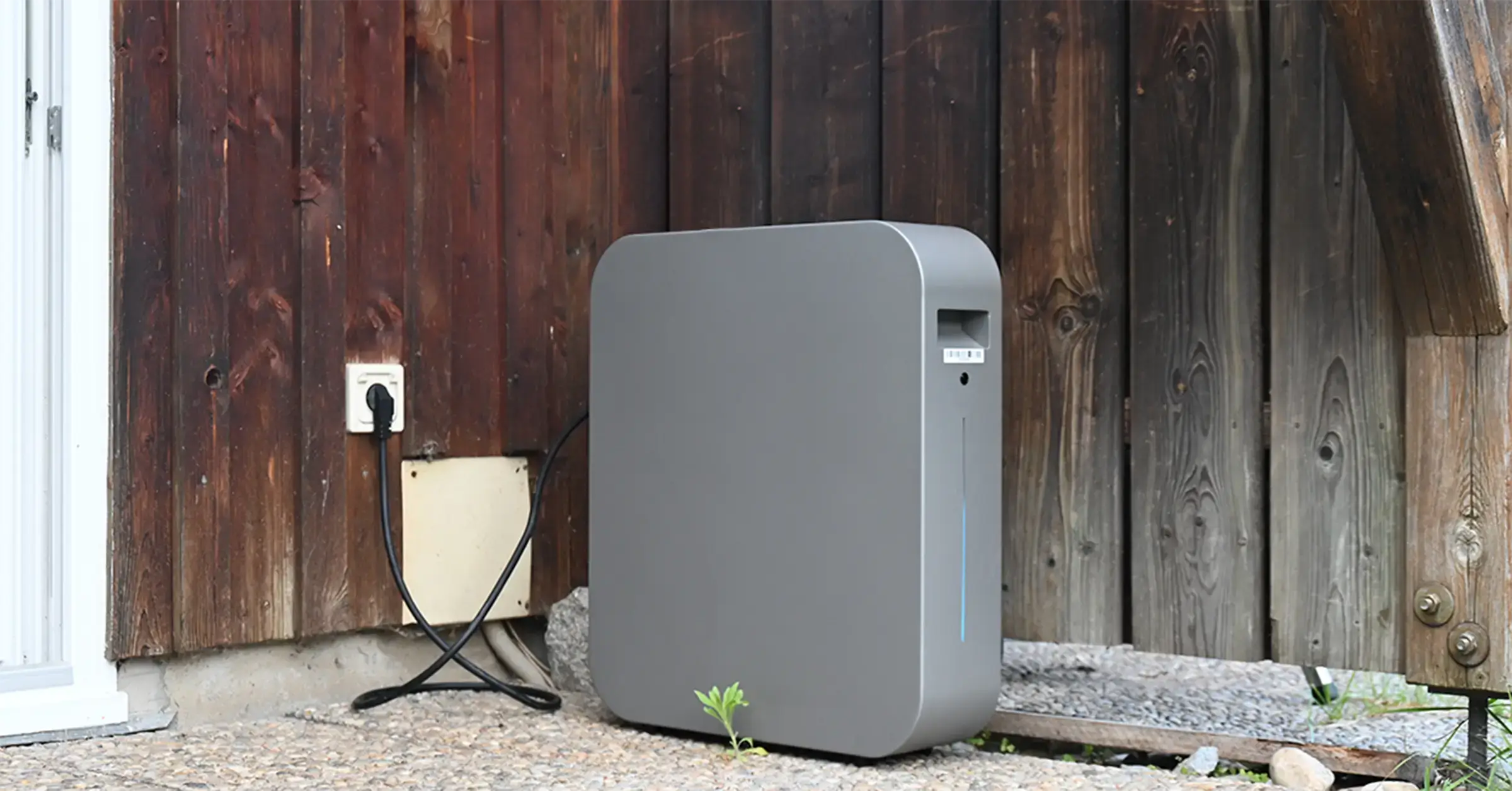
PowerGo 2,5kWh & 5,0kWh
PowerGo offers flexible capacity options with 2.5kWh and 5kWh models, including a 5kWh off-grid version. This standalone AC battery storage system works right out of the box - simply plug in to power devices with 1600W AC output or use 800W grid-tied output to save on electricity bills. Perfect for retrofit expansion, it integrates easily with existing solar systems. All models feature safe LFP battery technology for reliable home energy management.
Ask for pricingThe Factor 1.0 Rule: The One Technical Constraint You Must Know
This is a genuine technical limitation — not a theoretical one — and it affects system sizing decisions.
Factor 1.0 Rule
The peak AC output of your existing solar inverter must not exceed the rated capacity (in VA or watts) of your AC-coupled battery inverter.
Why: During a blackout, the battery inverter is solely responsible for maintaining voltage and frequency in the home microgrid. If the solar inverter pushes in more power than the battery inverter can absorb or redirect to loads, the microgrid becomes unstable.
Example: The Batterlution PowerGo has an 800W AC output. In island/backup mode, it can reliably support a solar inverter generating up to ~800W. For a larger solar array, the FSPC frequency-shifting protocol will throttle solar output to match the battery inverter's capacity.
In practice, this means:
- The PowerGo 2.5 kWh and 5 kWh units are ideal for balcony solar systems (600–800W), small rooftop arrays (1–2 kW), and critical-load backup circuits
- For households with larger 5–10 kW solar systems wanting full-house backup, multiple PowerGo units can be linked via RS485 cluster control
- For daytime grid-connected self-consumption and dynamic tariff operation, the Factor 1.0 rule does not apply — the grid absorbs any power difference
Key Benefits of AC-Coupled Inverters
Despite the extra conversion step, AC-coupled systems offer distinct advantages that make them the right choice for a large segment of the market:
1. Retrofit Simplicity
No changes to your solar panels, no replacement of your solar inverter, no DC rewiring. An AC-coupled battery inverter connects to a standard AC circuit. For a plug-and-play unit like the PowerGo — rated below 800W and compliant with European regulations for compact grid-tied storage — installation can take as little as five seconds.
2. Compatibility with Any Solar Inverter
Because the AC-coupled battery connects at the switchboard level and communicates via universal frequency-shifting signals, it works with virtually any grid-tied solar inverter: SMA, Fronius, SolarEdge, GoodWe, Huawei, Kostal, Growatt, Enphase IQ8, and more. No proprietary communication cables or firmware modifications required.
3. Blackout Protection with Ongoing Solar Recharging
Unlike a simple UPS or backup generator, an AC-coupled system in island mode continues to harvest solar energy during a blackout. As long as the sun is shining, your battery recharges — extending backup duration indefinitely on sunny days. Your critical appliances — fridge, lighting, router, phone charging — stay on without interruption.
4. Dynamic Tariff and HEMS Integration
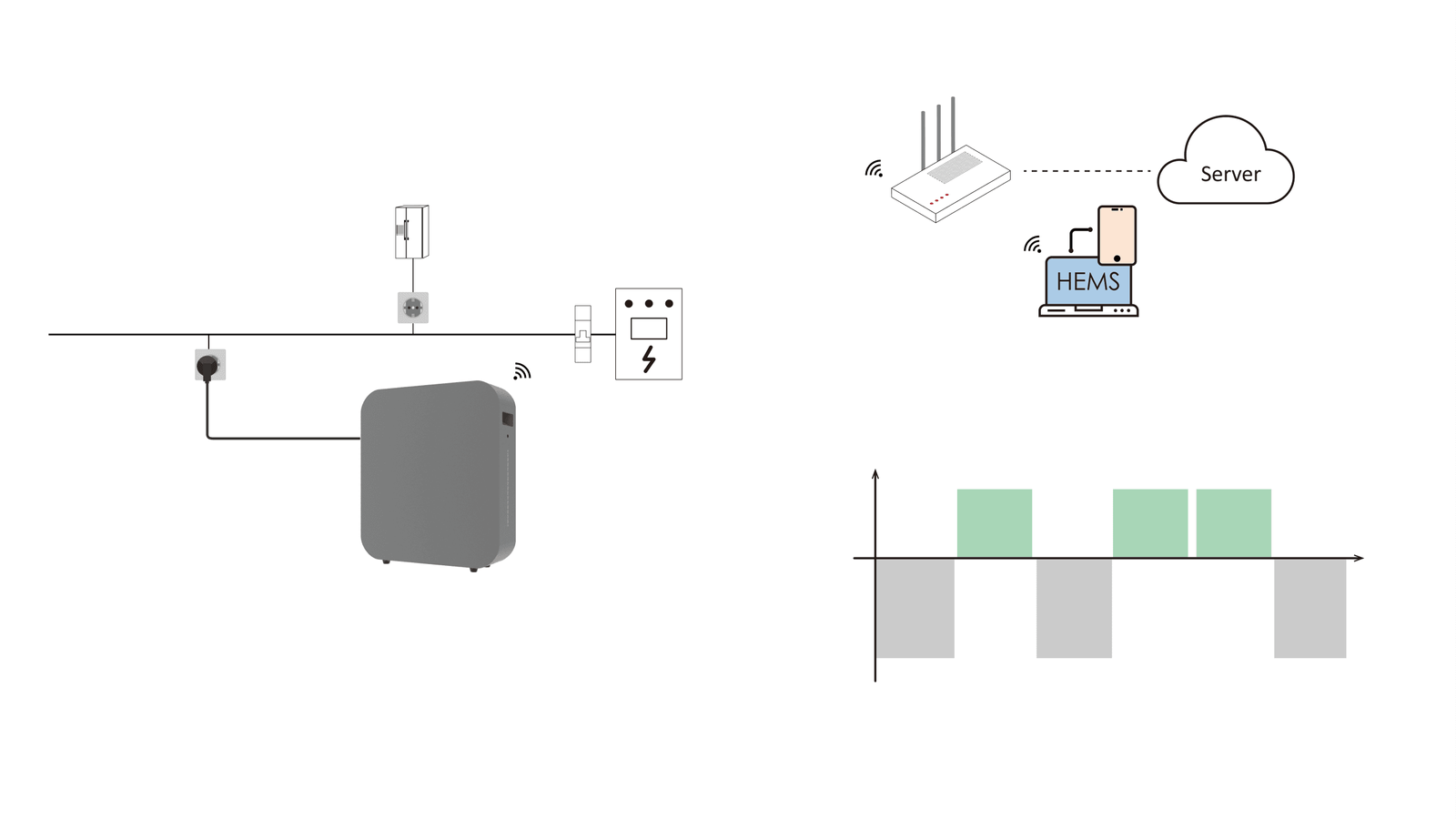
Open communication protocols — Modbus RTU, Modbus TCP/IP, MQTT API — allow the PowerGo to integrate directly with Home Energy Management Systems (HEMS) and dynamic tariff platforms. Whether you use Home Assistant, openHAB, ioBroker, or a commercial HEMS, the PowerGo can automate charge and discharge decisions based on real-time electricity prices, CT clamp monitoring, and household consumption data.
5. Grid Balancing and Demand Response
In markets where demand response programmes are available — including Germany, Netherlands, and parts of Australia — AC-coupled battery systems can participate in grid-balancing schemes, providing additional revenue or bill credits in exchange for flexible charge/discharge scheduling.
6. Scalability Through Clustering
Rather than a single large battery, multiple PowerGo units can be linked via RS485 for coordinated cluster control — allowing households to scale storage capacity incrementally without full system replacement. Each unit retains its own inverter and BMS, providing redundancy alongside expanded capacity
Introducing the Batterlution PowerGo: AC Coupling Reimagined as a Single Unit
Traditional AC-coupled systems require two separate purchases and installations: a battery inverter-charger unit and an external battery pack, wired together by an electrician. The Batterlution PowerGo takes a fundamentally different approach.
All-in-One Design
The PowerGo integrates the AC-coupled bidirectional inverter, battery management system (BMS), and LiFePO4 battery cells into a single enclosure. There is no separate battery to wire. There is no external BMS to configure. You connect one unit to an AC outlet — and it works.
Specification | PowerGo 2.5 kWh | PowerGo 5 kWh | |
|---|---|---|---|
Battery capacity | 2.5 kWh | 5 kWh | |
Battery chemistry | 48V / 51.2V LiFePO4 | ||
AC output (continuous) | 800W pure sine wave | ||
AC input (max charging) | 1,200W | ||
Installation | Plug-and-play — 5 seconds | ||
Connectivity | Bluetooth, WiFi, Ethernet | ||
Communication | Modbus RTU / TCP, MQTT API, RS485 | ||
Smart device support | Shelly EM, Shelly Plug, CT module, Eco Tracker | ||
Open source | Local network / Cloud / RS485 cluster | ||
Certifications | VDE-AR-N 4105, EN50549, IEC62619, IEC62109 | ||
What the PowerGo Is Designed For
The PowerGo is not a whole-home hybrid inverter replacement. It is intentionally designed as an entry-level and mid-size AC-coupled retrofit solution for the tens of millions of European homeowners who already have a working solar system and want to stop giving away free electricity.
- Balcony power stations — 600–800W array, perfect power match
- Small rooftop solar (1–3 kW) — maximise self-consumption without any system changes
- Critical load backup — keep fridge, router, and lighting on during blackouts
- Dynamic tariff optimisation — automated MQTT/Modbus-driven charge/discharge on Tibber, aWATTar, Octopus Agile, Amber Electric
- Open HEMS integration — native Home Assistant, openHAB, ioBroker compatibility
- Cluster expansion — link multiple units via RS485 for larger storage without full system redesign
5-Second Installation
The PowerGo connects via a standard Schuko plug (subject to European electrical regulations for sub-800W grid-connected storage).
No electrician. No DC wiring. No separate battery cabinet. Plug in, open the app, set your tariff preferences, and start saving.
Always verify the plug-and-play installation regulations in your specific country before self-connecting any grid-tied device.
Who Should Choose an AC-Coupled System?
AC coupling is not the right solution for every situation. Here is a clear framework:
Your Situation | Best Approach | Why |
|---|---|---|
Existing solar system, want to add battery | AC Coupled (PowerGo) | No inverter replacement — lowest retrofit cost |
Balcony solar / apartment system | AC Coupled (PowerGo 2.5 kWh) | True plug-and-play, perfect power match |
Building new solar + storage from scratch | DC Coupled / Hybrid | Single inverter, highest efficiency |
Dynamic tariff / HEMS automation is priority | AC Coupled with open API | MQTT + Modbus purpose-built for this |
Blackout backup for critical loads | AC Coupled (PowerGo) | Island mode + solar recharging during outage |
Large 3-phase commercial installation | Hybrid or DC Coupled | 800W AC-coupled unit not suited to this scale |
Off-grid new build, no grid connection | Off-grid inverter system | AC coupling requires a grid or grid reference |
European Market: Regulations, Tariffs, and the Storage Opportunity
The Changing Feed-In Tariff Landscape
The economic case for AC-coupled battery storage has never been stronger in Europe. Feed-in tariffs that once made solar export profitable have declined sharply across all major markets:
Country | Solar FIT (2025) | Peak Grid Price | Storage Potential |
|---|---|---|---|
Germany | ~8 ct/kWh | 30–40 ct/kWh | High — 4–5× arbitrage ratio |
Netherlands | Declining (saldering ends 2027) | 28–38 ct/kWh | Very High |
UK | 4–7 ct/kWh (SEG) | 25–40 ct/kWh | High |
Italy | ~10 ct/kWh | 25–35 ct/kWh | Medium–High |
Spain | 5–8 ct/kWh | 20–30 ct/kWh | Medium |
Australia | 5–10 ct/kWh | 30–45 ct/kWh | High |
Balcony power station Regulation and the 800W Threshold
Germany and Austria have established a simplified regulatory framework for plug-in solar and storage devices — the =balcony power station category. Systems below 800W output qualify for streamlined grid notification procedures rather than full grid-connection permitting.
The PowerGo's 800W AC output is precisely aligned with this threshold, placing it in the most accessible regulatory category in the largest European solar market. Similar frameworks are being adopted across the Netherlands, Belgium, and other EU member states.
Grid Standards Compliance
The PowerGo carries VDE-AR-N 4105 and EN50549 certification — the two foundational European grid connection standards for low-voltage generation and storage units. IEC62619 (battery safety) and IEC62109 (power converter safety) certifications are also included.
Buying Guide: 6 Questions Before You Purchase an AC-Coupled Battery
1.Is my solar inverter compatible with frequency shifting (FSPC)?
Check your inverter datasheet for 'island mode', 'off-grid support', 'frequency shift', or 'microgrid mode'. Most inverters sold in Europe and Australia from 2012 onwards support this. Contact Batterlution for a free compatibility check.
2.Does my solar array size fit within the Factor 1.0 constraint for backup operation?
The PowerGo is rated at 800W output. If your solar inverter can output more than 800W (most rooftop systems can), FSPC will throttle solar output during island mode. For full daytime grid-connected self-consumption, there is no constraint — the grid absorbs the difference. Assess whether full-house backup or just critical-load backup is your priority.
3.What are the plug-and-play installation rules in my country?
Germany and Austria have clear sub-800W simplified procedures. Other countries vary. Always verify with your local grid operator before self-installing any grid-connected device, even one rated below 800W.
4.How long will my battery last during a blackout?
Estimate your critical load: fridge (~100–150W) + LED lighting (~30–60W) + router (~15W) + phone charging (~20W) = roughly 200–350W for most households. At 300W draw, the PowerGo 2.5 kWh provides ~7 hours of backup, plus unlimited extension if solar is generating during daylight.
5.Am I on a dynamic tariff, or should I consider switching?
If you are on a flat-rate tariff, you will benefit from self-consumption optimisation only. If you are on TOU or dynamic pricing (Tibber, aWATTar, Octopus Agile, Amber Electric), the PowerGo's MQTT and Modbus integration unlocks automated peak-valley arbitrage — a significant additional saving on top of self-consumption.
6.What is the realistic payback period for my situation?
At a typical German price differential (buying at 35 ct/kWh peak, storing solar that would have been exported at 8 ct/kWh), a 2.5 kWh daily cycle saves approximately €200–350 per year. Combined with dynamic tariff arbitrage savings, payback periods of 4–7 years are realistic for the PowerGo. With battery costs continuing to fall, the economics improve each year.
Conclusion: Is an AC Coupled Inverter Right for You?
If you already have solar panels and are losing money to low feed-in tariffs, an AC-coupled system is the most direct and cost-effective way to change that. You keep your existing solar investment intact, avoid unnecessary hardware costs, gain genuine blackout protection with ongoing solar recharging, and unlock automated savings through dynamic tariff integration.
The efficiency argument against AC coupling is technically real but economically marginal. For the vast majority of retrofit situations across Europe and Australia, the simpler, cheaper AC-coupled approach outperforms the alternative on every financial metric that matters.
The Batterlution PowerGo takes this further by eliminating the final barrier: installation complexity. With inverter, BMS, and battery in one plug-in unit, it makes AC-coupled storage as accessible as plugging in any other home appliance — without sacrificing the open-protocol flexibility that serious energy managers demand.
Get Started with PowerGo
- Check compatibility: confirm your solar inverter supports FSPC / island mode
- Choose your capacity: PowerGo 2.5 kWh for balcony solar / critical backup; 5 kWh for rooftop solar / larger overnight storage
- Verify local installation regulations for sub-800W plug-in storage in your country
- Set up HEMS integration: ask for our MQTT and Modbus setup guide for Home Assistant
- Start saving: configure your tariff schedule in the Batterlution app and let the system optimise automatically
Explore further: AC-Coupled vs Hybrid Inverters — A Deep Dive | Dynamic Tariff Optimisation with PowerGo | PowerGo Product Page
*Disclaimer: Feed-in tariff rates, grid connection regulations, and subsidy programmes change frequently and vary by country. All figures cited are indicative as of early 2025. Verify current requirements with a qualified installer and your local grid operator before purchasing or installing any grid-connected energy storage system. This article is for informational purposes only and does not constitute financial, legal, or engineering advice.
FAQ
Yes, absolutely. The Batterlution PowerGo is an independent AC-coupled storage system designed for universal compatibility.
- Universal Compatibility: It charges and discharges through a standard AC power outlet, making it compatible with any existing solar inverter brand, including SMA, Fronius, SolarEdge, Huawei, and micro-inverters.
- No Communication Needed: The system operates independently and does not require a proprietary data link or complex wiring to your current solar setup.
- True Plug-and-Play: You can add battery storage to your rooftop or balcony solar system in seconds by simply plugging the unit into an AC socket.
- Minimal Intervention: Your existing solar installation remains untouched and continues to operate normally while the PowerGo manages energy storage on its own.
Yes. The PowerGo is designed with an open ecosystem and is compatible with most open-source home automation and HEMS platforms.
- Open Protocol Support: It natively supports Modbus TCP/IP and MQTT API, which are the standard communication protocols for open-source integration.
- Local Network Control: The system supports local network operation, ensuring you have full control over your data and device without cloud dependency or internet access.
- Smart Device Pairing: It can work alongside third-party energy monitors (like Shelly EM) to enable precise, automated charge and discharge scheduling.
The PowerGo works with Shelly EM energy monitors, Shelly Plug smart sockets, CT clamp modules, Eco Tracker, and other Modbus or MQTT-compatible smart devices. These feed real-time consumption data into the PowerGo or a connected HEMS for precise self-consumption and arbitrage optimisation.
Yes — by adding additional PowerGo units and linking them via RS485 for cluster control. Each unit operates independently with its own inverter and BMS, providing both additional capacity and system redundancy. This is the PowerGo’s scaling path for households needing more than 5 kWh of storage.
For balcony solar systems and small rooftop arrays in countries where sub-800W plug-in storage is permitted, yes — connect the Schuko plug, open the Batterlution app, configure your tariff and CT monitoring settings, and the unit begins operating. For larger systems or in countries with stricter grid-connection requirements, a licensed installer may be required. Always verify local regulations before self-installing.