
Power Up Your Balcony: How Germany's New 800W Rule Empowers Urban Solar
In a significant step toward achieving its renewable energy mandate of 80% renewables by 2030, the German government has enhanced policy support for distributed solar power capacity. The 2024 amendment to the Renewable Energy Sources Act (EEG) represents meaningful progress, specifically designed to make solar energy infrastructure more accessible in urban environments. This policy improvement is gradually transforming balconies and terraces across the country into decentralized urban solar power hubs.
At the core of this transition is the empowerment of diverse community members—renters, apartment dwellers, young professionals, students, and seniors—to participate in micro-generation. By simplifying regulations for plug-in solar power systems (commonly known as Balkonkraftwerke), Germany is not only increasing its clean energy production but also nurturing greater community engagement in energy sustainability through energy cooperatives and solar collectives.
Understanding the Bundestag's Balcony Solar Improvements
1. Thoughtful Capacity Adjustment to 800W
In alignment with the EU Commission directive, Germany has raised the maximum output for plug-and-play solar kits from 600W to 800W. This regulatory update meaningfully enhances the energy yield of each unit, enabling typical systems to support more daytime household appliances, promote self-consumption, and help manage electricity costs. This adjustment reflects ongoing technical innovations in photovoltaic (PV) systems and micro-inverters.
2. Streamlined Registration Process
The registration process has been significantly simplified. The Bundesnetzagentur (Federal Network Agency) has made substantial improvements, allowing owners to register their systems through the Market Master Data Register (MaStR) via a straightforward online form. This streamlined energy reporting process supports Germany’s measured approach to energy transition. For those interested in buyback rates for supplying surplus energy to the grid, complete registration and a bidirectional meter capable of measuring energy flow remain necessary.
3. Flexible Metering Approach
A helpful innovation is the temporary provision allowing systems under 800W to operate without requiring an immediate upgrade to a digital meter. During registration, the system automatically notifies the utility of potential meter replacement needs, with the utility managing subsequent arrangements. This thoughtful approach reduces initial barriers for new users, supportively encouraging self-generation and consumption models while maintaining grid stability.
4. Fair Capacity Assessment: Per Household Basis
This represents a considerate improvement for multi-tenant buildings. The updated regulation now appropriately treats systems at different grid connection points as separate installations. This means neighboring Balkonkraftwerk installations will not affect a household’s ability to install its own system, representing a positive development for tenant protections and co-owner consensus in rental-centric cities.
Technical Perspectives: Safety, Standards, and Smart Energy Solutions
1. Safety Considerations with VDE Certification
Plug-in solar power systems are typically TÜV-certified and comply with established VDE standards such as VDE-AR-N 4105. The upcoming VDE V 0126-95 standard, specifically addressing plug-and-play solar devices, promises to provide additional clarity for installation standards. These guidelines help ensure important safety features like voltage control and anti-islanding protection (NA-Schutz), which safely disconnects systems during grid outages to protect power infrastructure.
2. Evolving Toward Integrated Energy Solutions
While basic balcony solar systems effectively support immediate consumption, the market is gradually developing more comprehensive solutions that enhance solar-fed energy utilization. Systems like Batterlution PowerGo represent this natural evolution, building upon plug-and-play standards with enhanced functionality.
The Batterlution PowerGo series incorporates a built-in AC-coupled inverter combined with a 48V/51.2V battery in a single compact unit. This all-in-one design delivers a compliant 800W AC output—fully aligned with Germany’s updated solar panel regulations—while supporting up to 1200W of solar input for efficient energy harvesting. Available in 2.5kWh and 5kWh configurations, the system offers adaptable capacity choices for different household energy requirements, supporting localized production and neighborhood-scale deployment.
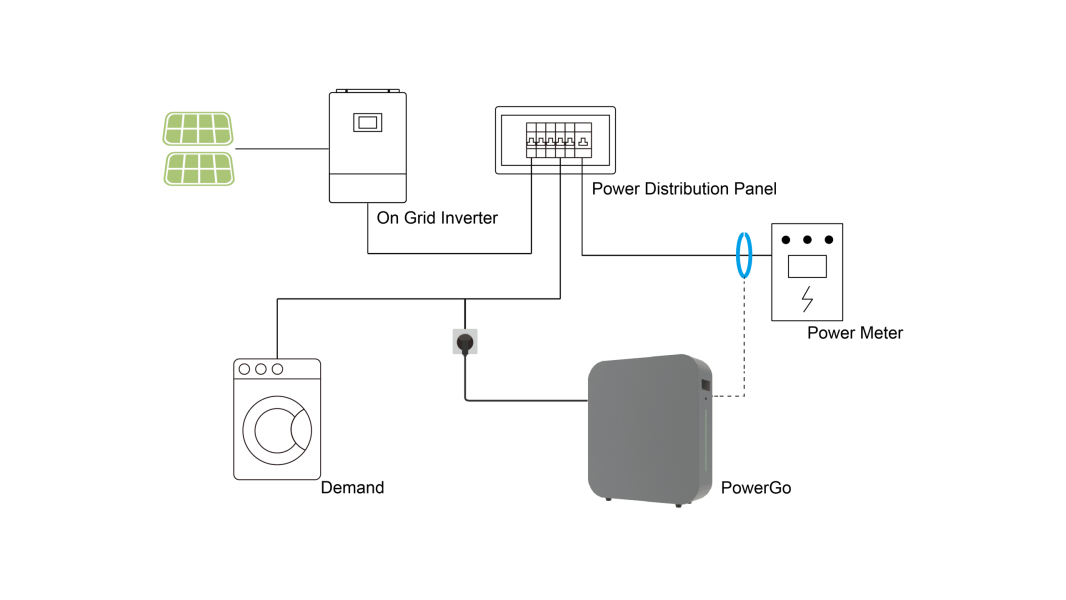
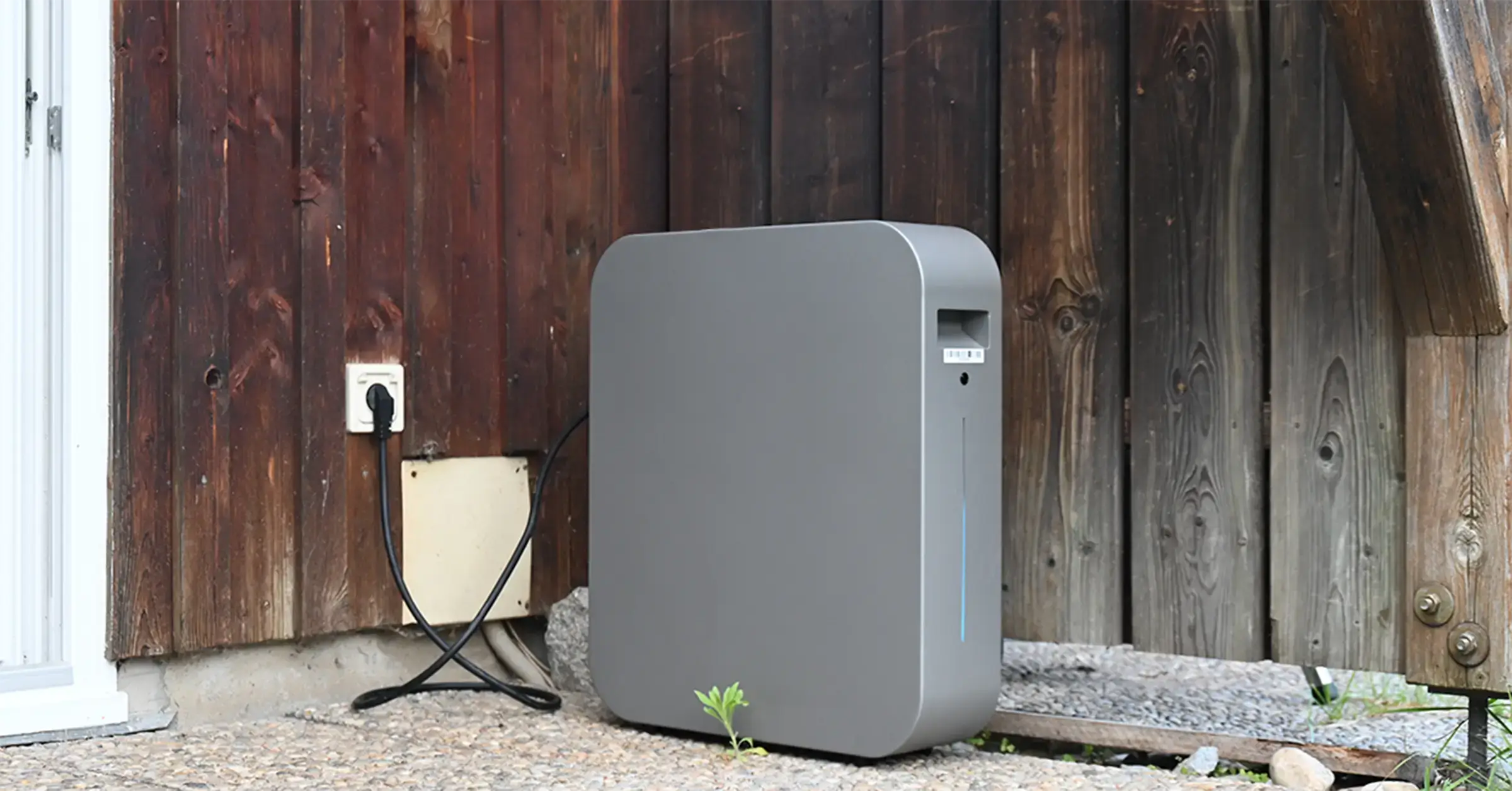
For households with an existing solar panel system, the unit conveniently connects through a standard Schuko plug, serving as a practical energy hub that interfaces with the household grid without requiring electrical modifications. Through the PowerGo APP, users can conveniently monitor energy output, track performance, and receive generation alerts, implementing practical charging and discharging strategies that optimize self-consumption.
3. Practical Connection and Installation
The Schuko plug connection method offers notable installation accessibility. Unlike conventional storage systems that require professional electrical work, this DIY-ready approach enables homeowners to enhance their solar setups conveniently. The system’s multiple connectivity options—including Bluetooth, Wi-Fi, and Ethernet—provide reliable smart home integration and interoperability, particularly useful for optimizing energy use within Germany’s evolving dynamic tariff environment.
Preparing for the German Market: Suggested System Setup
- PV Module: Panels with a capacity of up to 720W, featuring straightforward series connections for accessible installation.
- Micro-inverter: 800W AC output inverters with grid-tie capability, real-time data monitoring via smartphone applications, and integrated protection features.
- Enhanced Storage Solutions: For households with existing solar installations seeking to improve energy independence, all-in-one systems like Batterlution PowerGo offer a practical upgrade path. The integrated AC-coupled inverter and battery design, combined with Schuko plug connectivity, simplifies installation while maintaining full compliance with German solar regulations. The intuitive PowerGo app control transforms basic local energy storage into an accessible communal power solution, enabling homeowners to store surplus solar energy for use during high-rate periods and improve energy efficiency through optimized consumption patterns.
Future Outlook: Toward Smarter Energy Communities
Looking ahead, utility-led pilot projects are exploring how distributed energy resources (DERs) can enhance grid resilience through decentralized architectures. The emergence of microgrids and community-based solar collectives points toward a future in which balcony solar power evolves from individual micro-generation into local energy cooperatives that enhance distribution networks.
The German experience demonstrates significant replication potential for other markets, particularly through EU-wide standardization and regulation. As smart grid technologies advance and smart metering regulations mature, these decentralized architectures are likely to play a crucial role in achieving Europe’s broader renewable targets.
Conclusion
Germany’s national policy development demonstrates a constructive approach to advancing localized solar power. By addressing regulatory considerations, clarifying safety norms, and enabling broader community participation through tax deductions and supportive measures for low-income households, the country is not only expanding distributed energy resources but also cultivating energy awareness and carbon consciousness.
As technology progresses with integrated solutions like the Batterlution PowerGo series, plug-in solar systems are evolving into practical energy management platforms that broaden energy access while supporting grid resilience. This harmonious integration of accessible installation with user-friendly control sets a positive example for EU-wide standardization and regulation, supporting continued progress toward renewable energy objectives through mass adoption and energy democratization.