
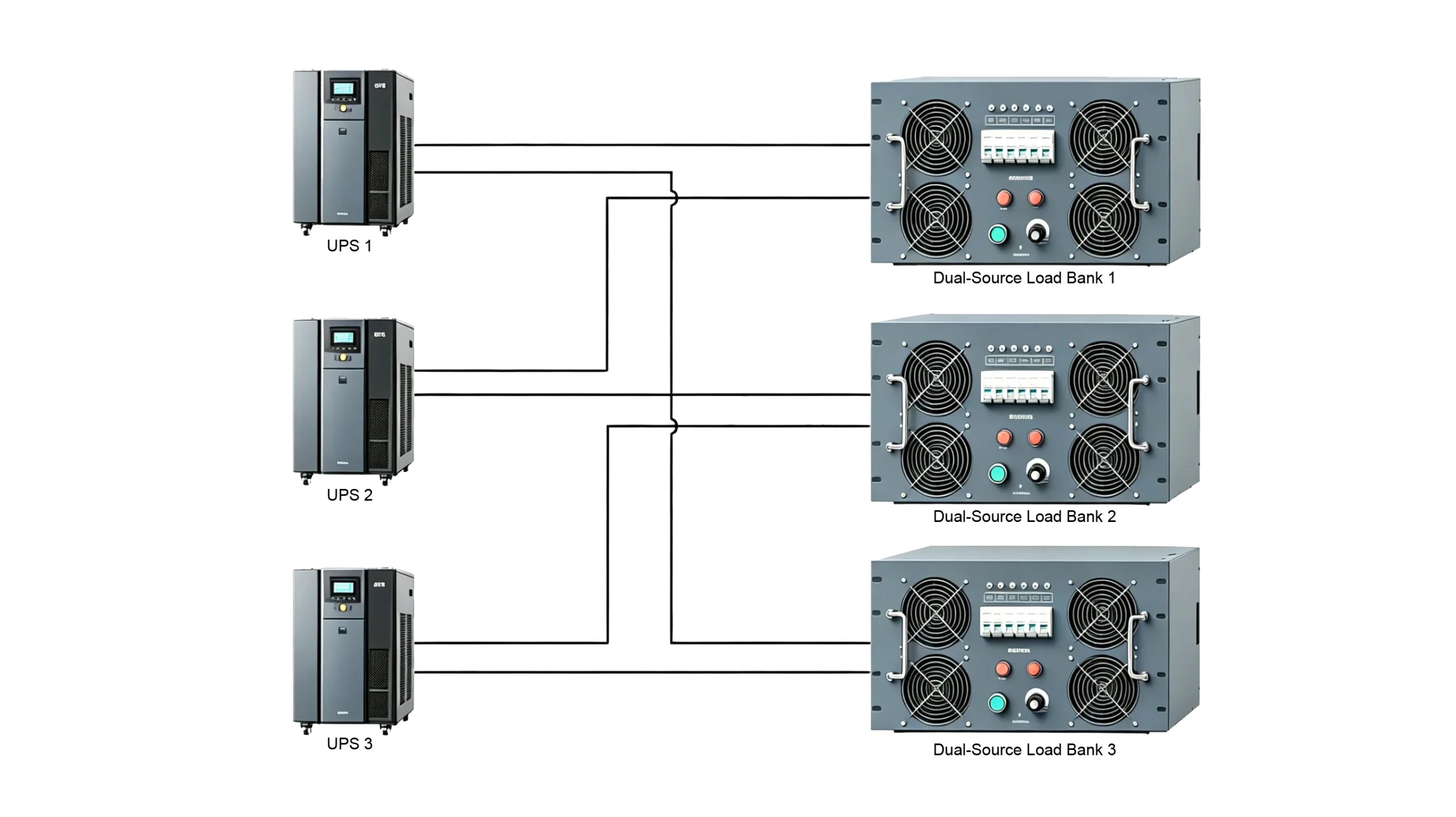
Rack-Mount Dual Source Load Bank for Data Centre
Purpose-built for dual power system commissioning with true A+B channel isolation and partial load transfer capability.
What Is a Dual-Source Load Bank?
A dual-source load bank is a resistive AC load testing device equipped with two independent power input channels — Source A and Source B — that are mechanically and electrically interlocked to prevent simultaneous closure. It is designed to simulate real-world IT or industrial loads while validating the seamless transfer between primary and backup power paths, making it essential for commissioning dual-fed critical power infrastructure.Important: Dual-Source is a power architecture, not a cooling method. A load bank can be: • Dual-Source + Air-Cooled (e.g., MS-R-7kW-D) • Dual-Source + Liquid-Cooled (e.g., MS-RL-42kW-D) • Single-Source + Air-Cooled or Single-Source + Liquid-Cooled"Dual-Source" defines how power enters; "Air-Cooled / Liquid-Cooled" defines how heat exits.
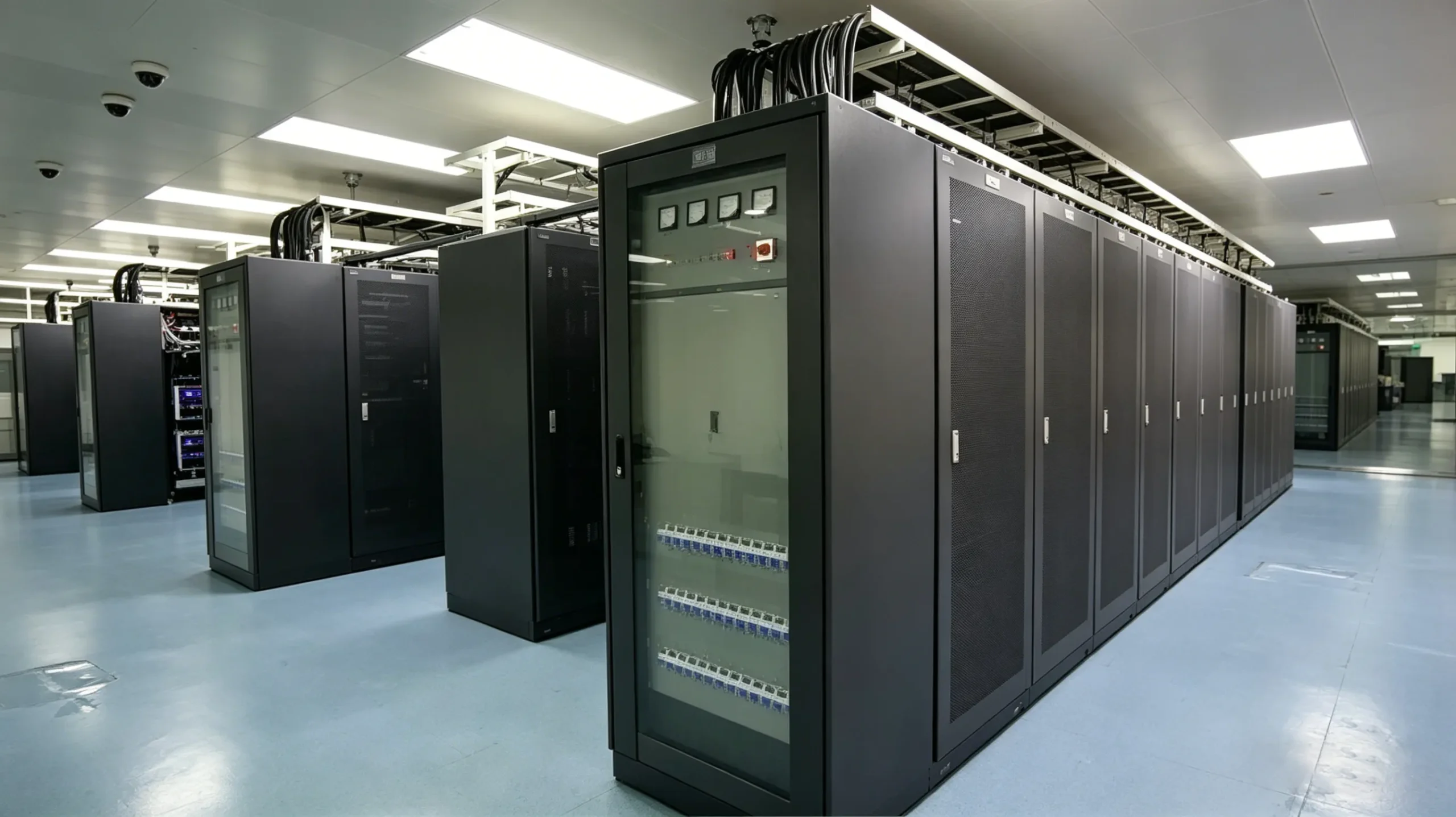
Dual-source load banks operate through four sequential stages: independent power connection, precision load configuration, automated source transfer, and real-time data logging. Every step is monitored and validated for commissioning documentation.
Batterlution dual-source load banks are engineered to order across four configurations: rack-mounted air-cooled, rack-mounted liquid-cooled, standalone liquid-cooled, and containerized. Standard configurations cover 7 kW to 500 kW, with extended ratings available on request.
Every unit is built to your exact power, form factor, and integration requirements — no compromise on fit or function.
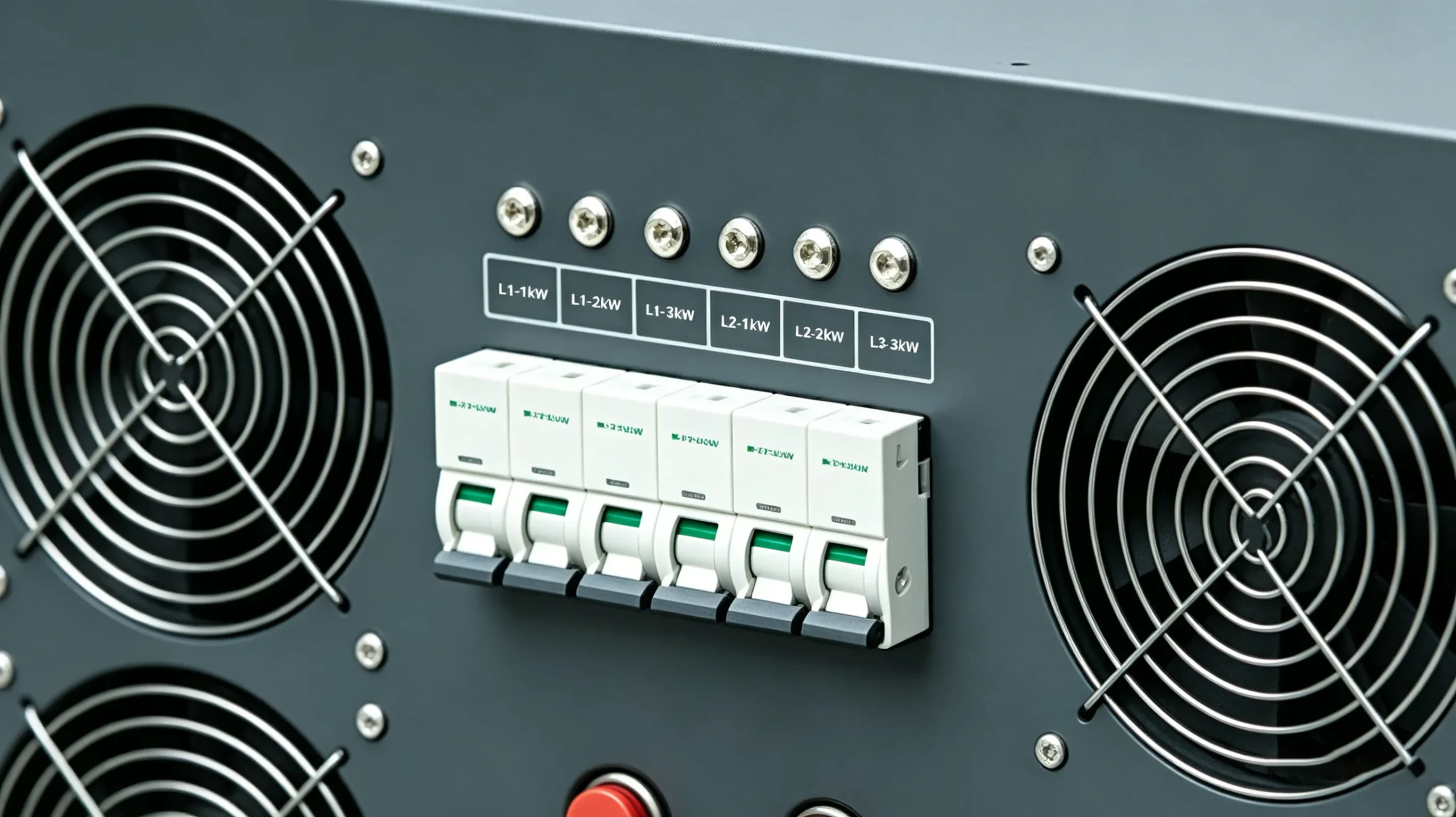
Power Rating
Standard: 7 kW, 10.5 kW, 42 kW, 500 kW Extended: Custom ratings from 1 kW to 20+ MW Voltage: 400/230 VAC 50/60 Hz (standard); 480V, 690V, 10.5 kV (custom)
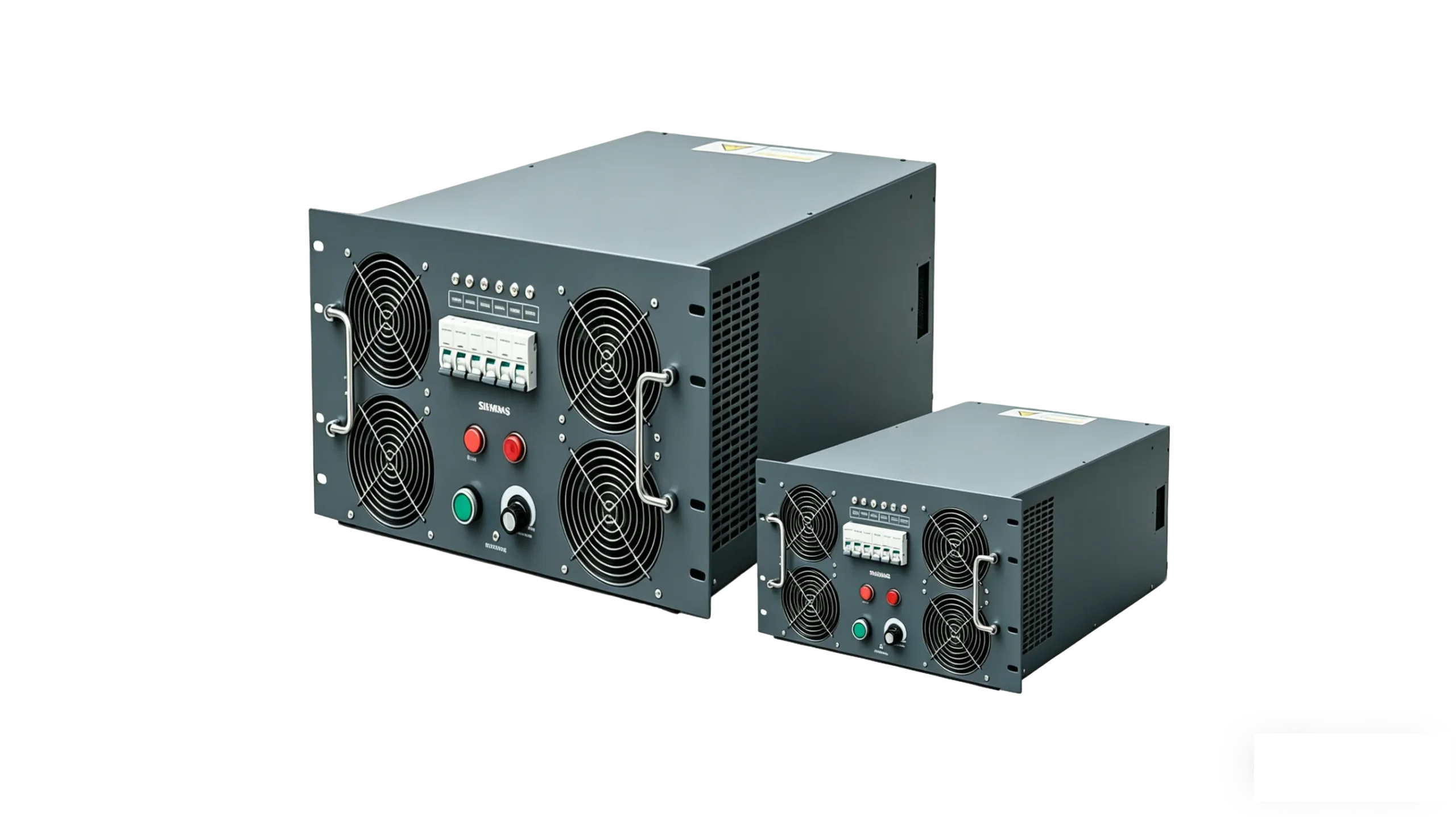
Form Factor
Rack-Mounted: 19" standard, 6U / 10U / 23U heights Standalone: Floor-standing or skid-mounted Containerized: 20 ft / 40 ft enclosure for outdoor deployment Custom: Project-specific dimensions and connector types
Communication Protocol
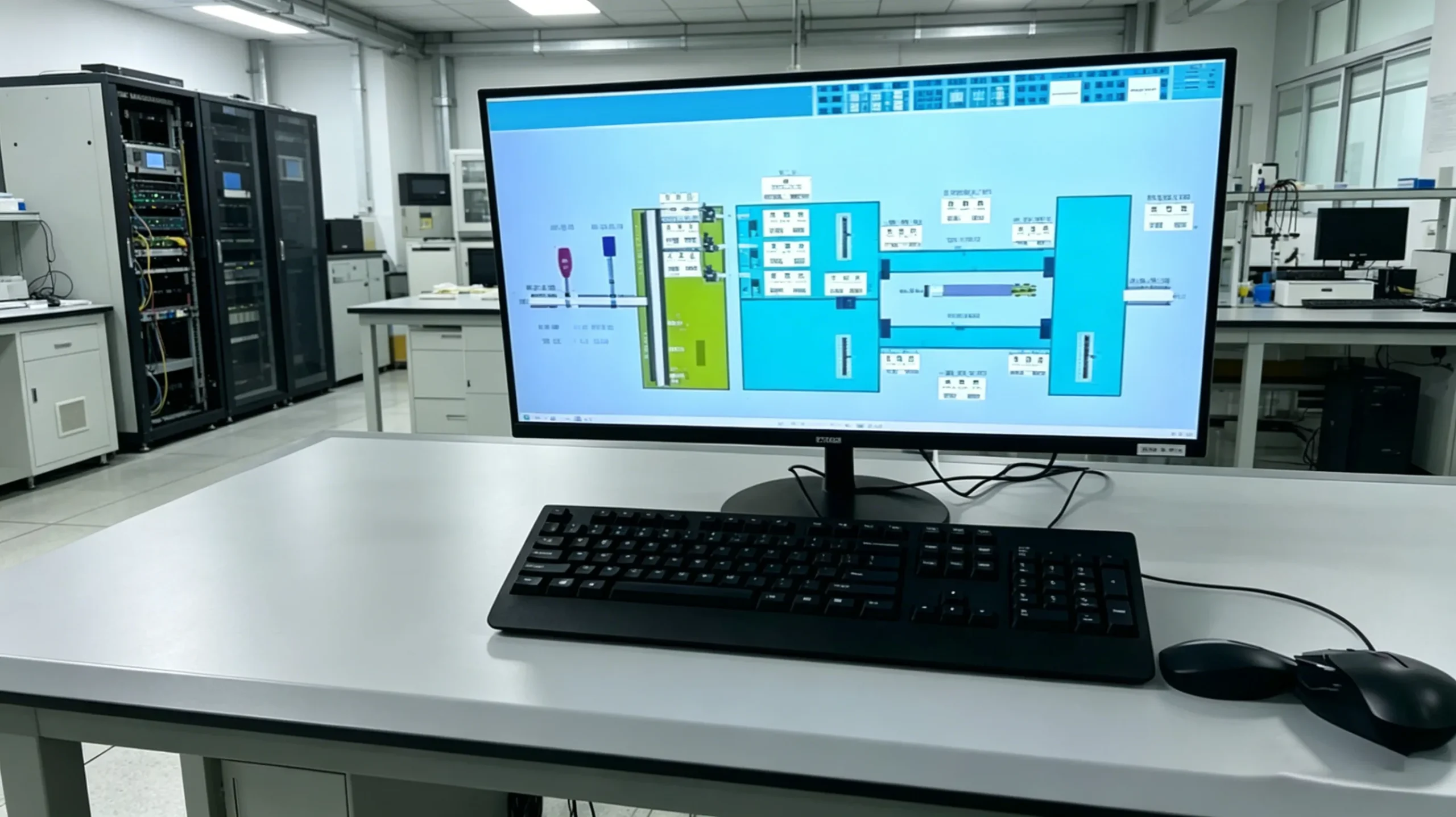
Standard: Modbus RTU RS-485 Optional: PROFINET, CANopen Custom: OEM proprietary protocols, custom register maps, SCADA/BMS middleware integration Remote: PLC-based control with front-panel HMI and data logging
Power Architecture
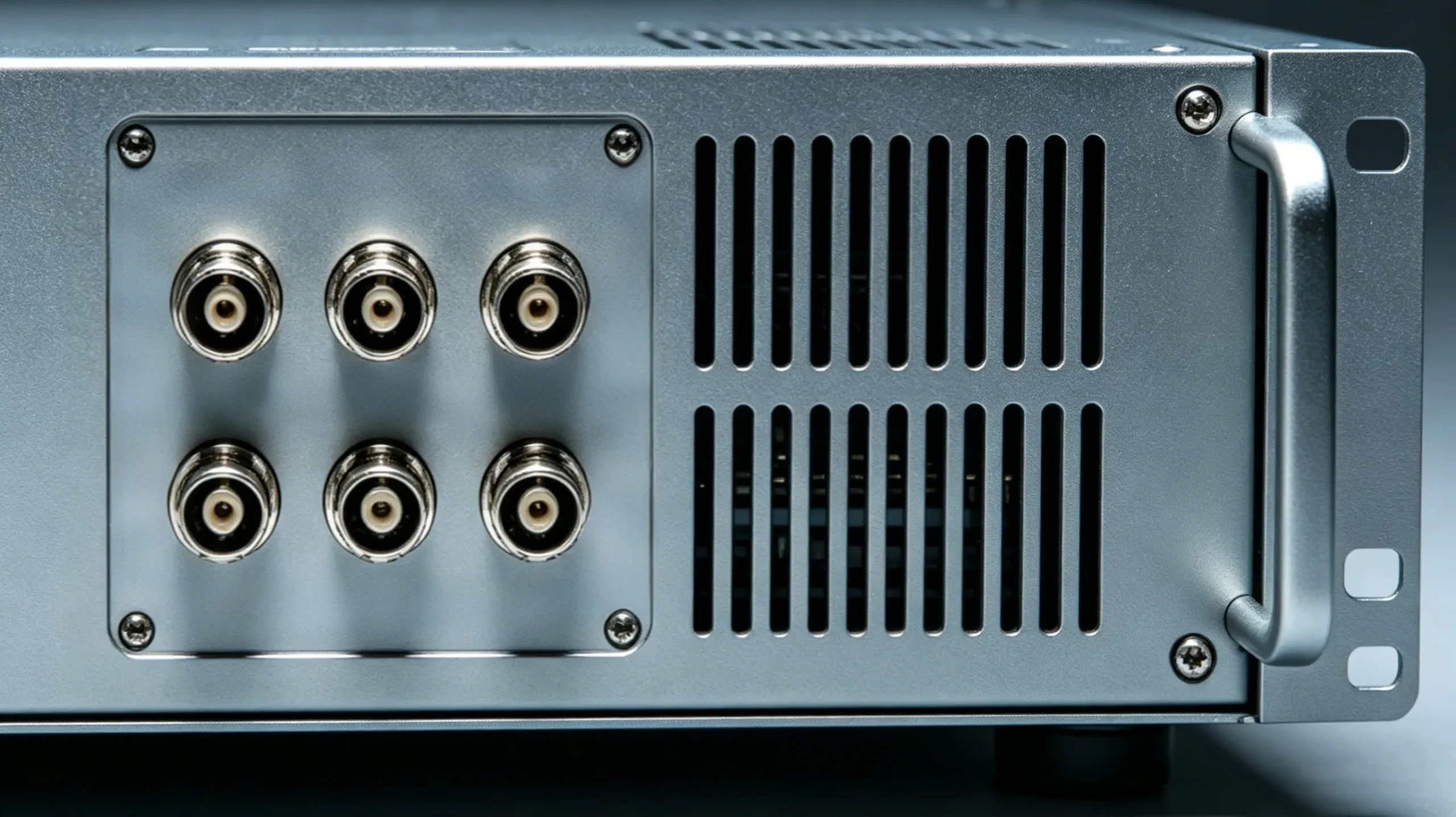
Dual-Source: A+B channels with mechanical + electrical interlock Single-Source: Operable on one channel if dual-feed not yet deployed IGBT Option: ±1% precision load control for step-load and ramp testing Protection: Over-temp, over-current, phase-loss, fuse-protected fans
13+ years of load bank manufacturing with in-house R&D, ISO-certified quality systems, and full commissioning lifecycle support. Every unit is factory-tested before dispatch.
In-House R&D & Engineering
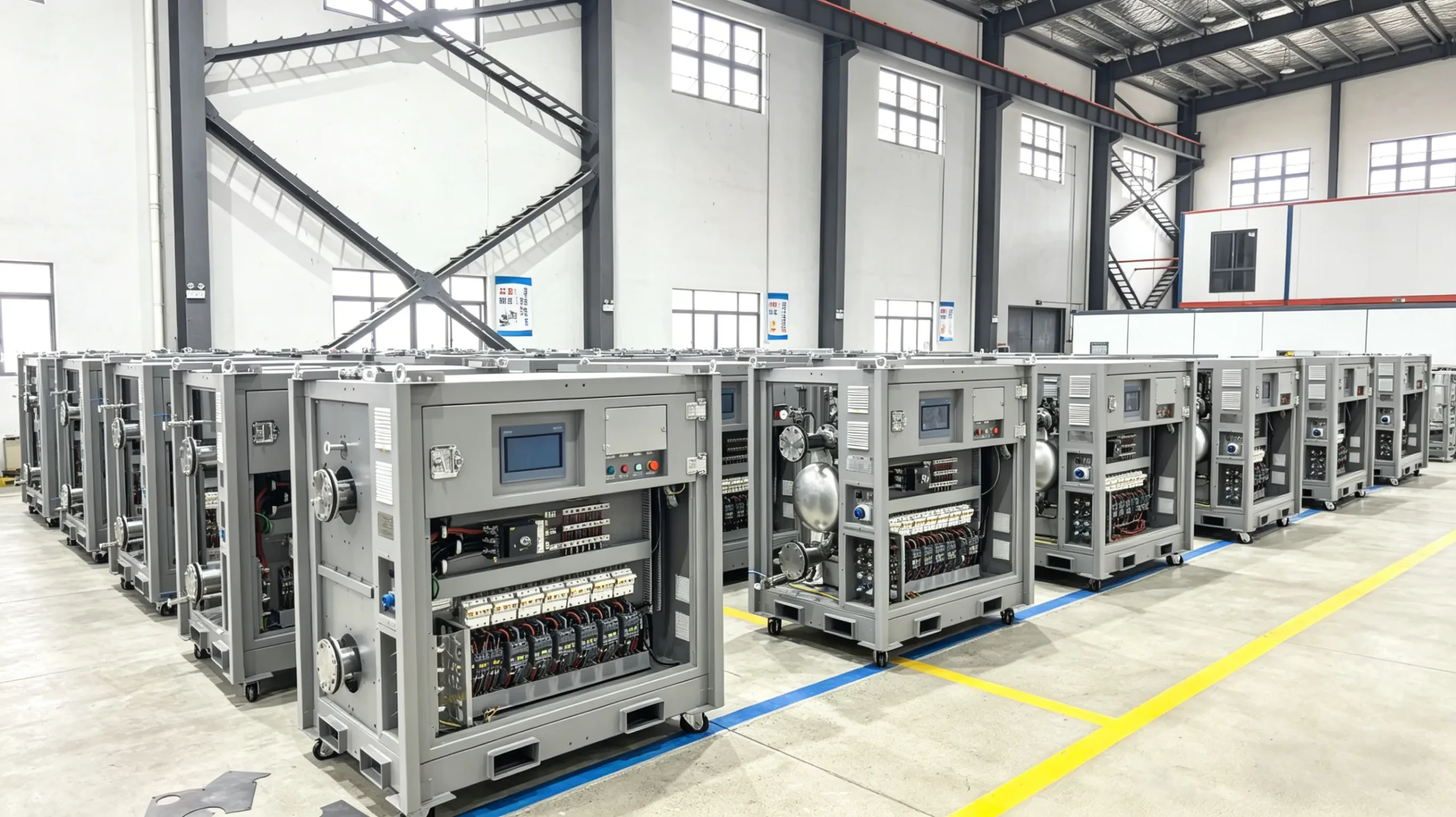
25+ engineers specializing in thermal management, power electronics, and control system integration. Every dual-source load bank is engineered to order starting from your single-line diagram.
ISO-Certified Quality Systems
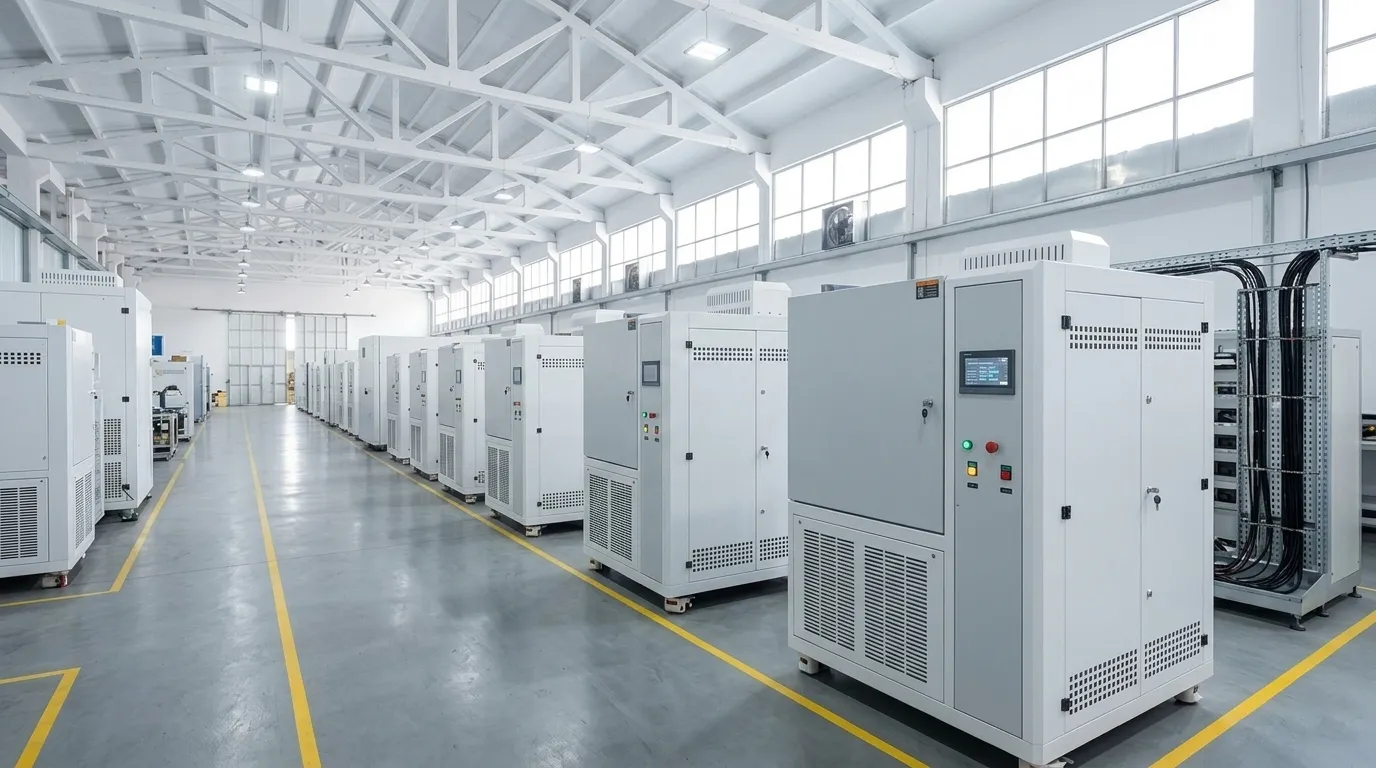
ISO 9001 (Quality Management), ISO 14001 (Environmental Management), ISO 17025 (Calibration Laboratory). Every unit delivered with Factory Test Certificate (FAT / Red Tag) and Calibration Certificate.
Full T&C Levels 1–5 Documentation
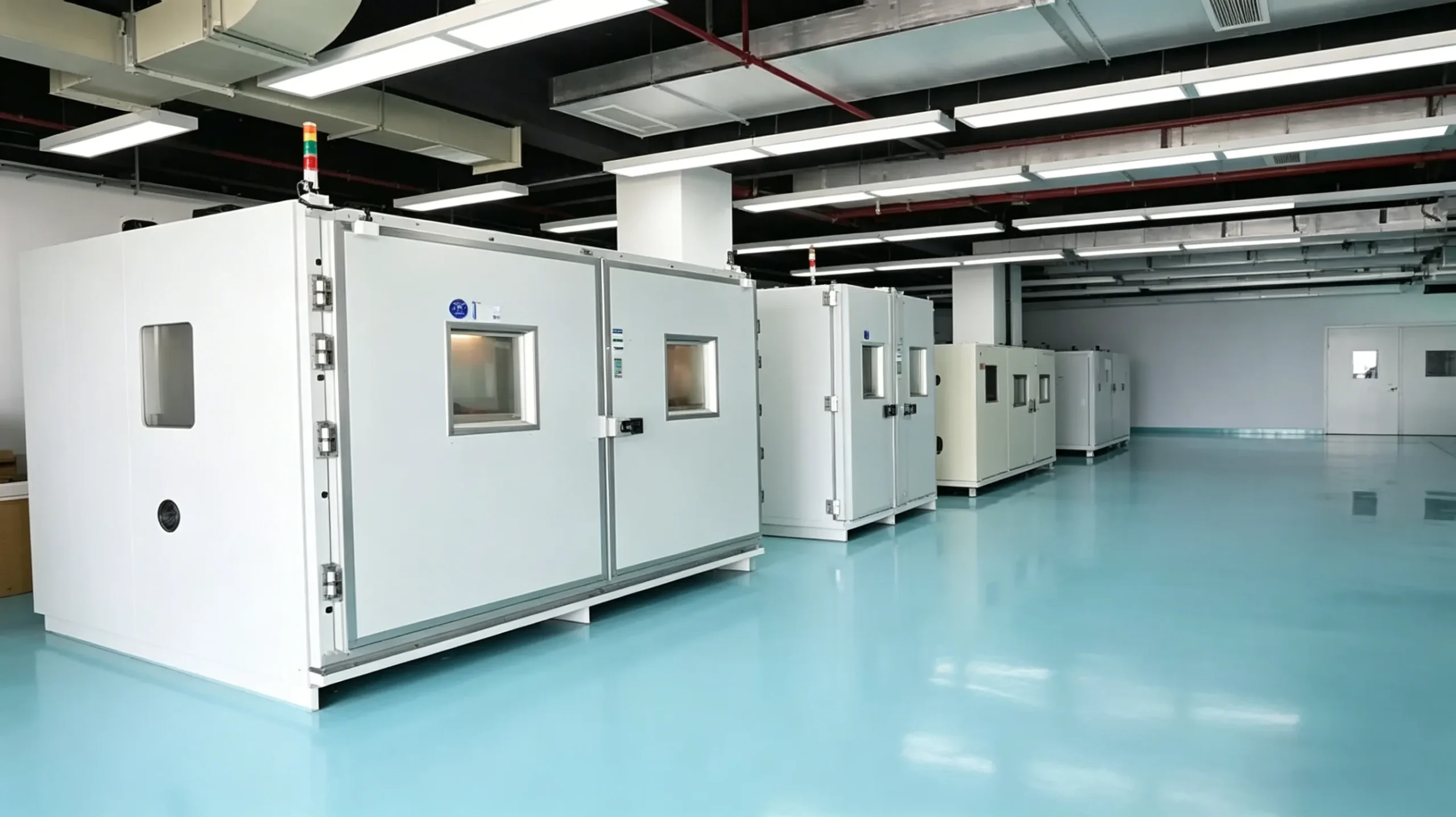
Red Tag (FAT) → Yellow Tag (Installation) → Green Tag (Start-up) → Blue Tag (Functional) → White Tag (IST). Complete traceability from factory to final commissioning.
Global Delivery & 24-Month Warranty
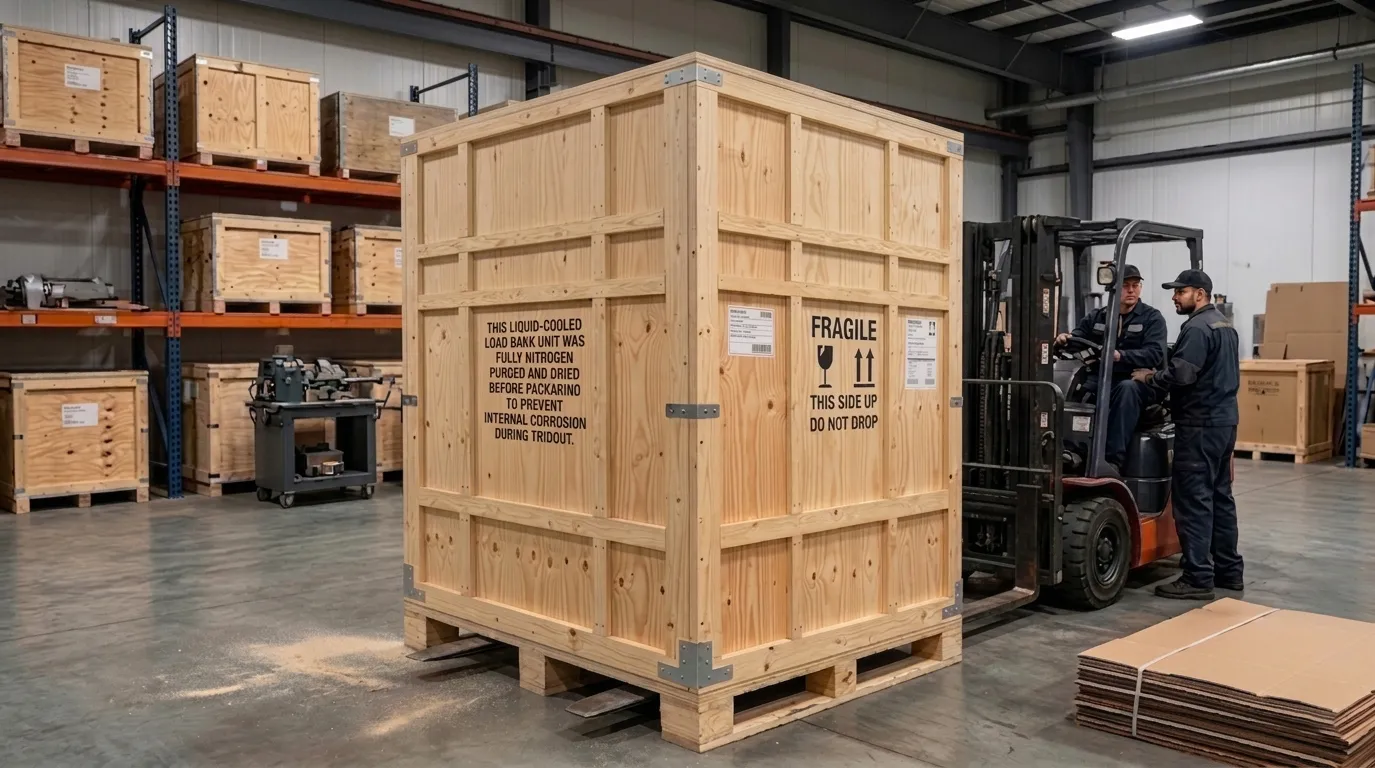
FOB Shenzhen, CIF, DDP options. Plywood crate with vacuum packing. 24-month standard warranty on all components; extended warranty available for load elements and control systems.
Dual Source Load Bank | Intelligent Control Software
PLC-based control system with independent channel management, real-time data logging, and seamless SCADA integration. All data exportable for FAT and commissioning documentation.
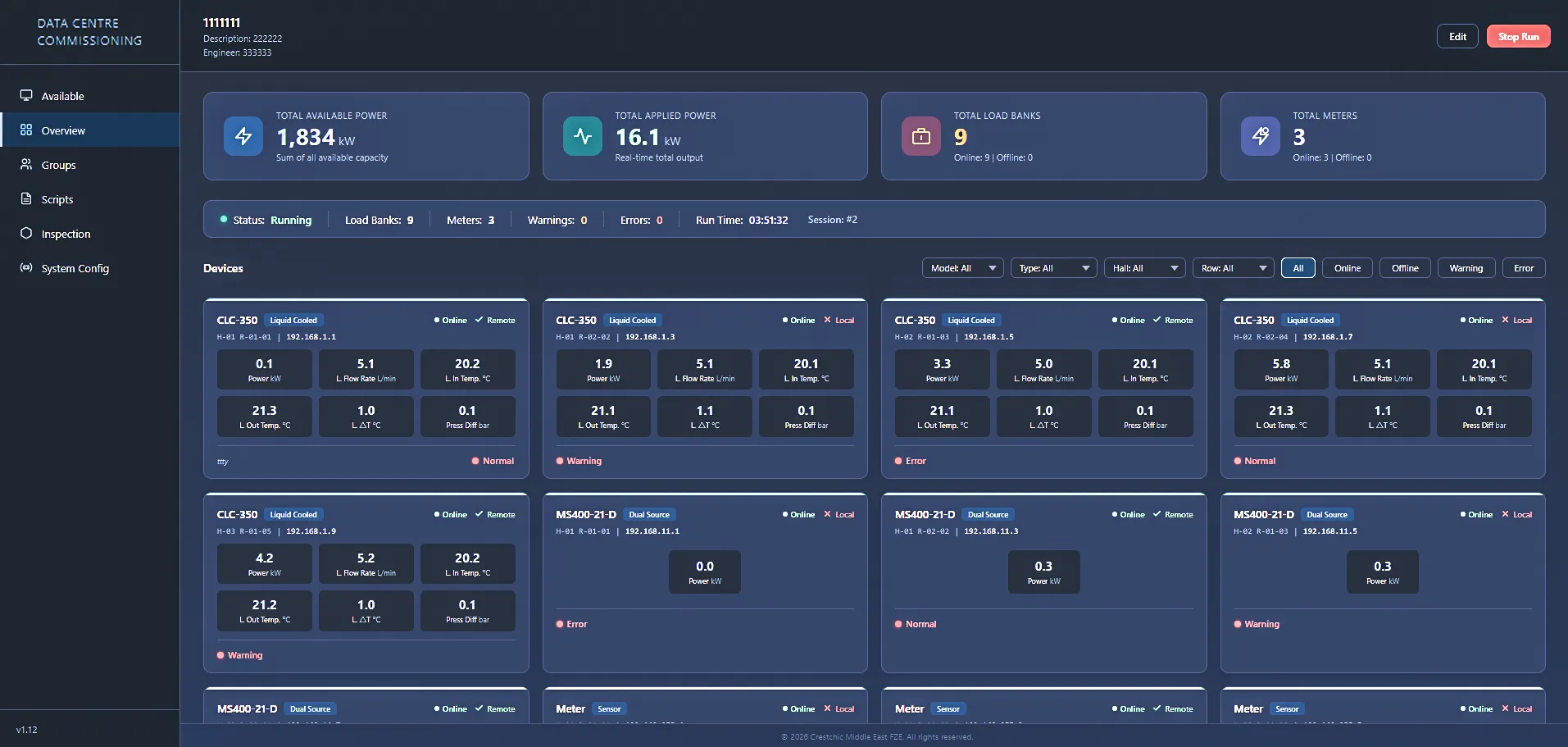
Separate load control for each channel via PLC.
Front-panel mode selector (Auto/Manual), load step buttons per channel, Source A/B indicators (green), fault/over-temp indicator (red). PLC remote via Modbus RTU RS-485. Optional: PROFINET, CANopen.Protection logic: over-temperature (hardware + software), over-current MCB per step, phase-loss detection, fuse-protected fans, mechanical + electrical interlock.Auto data logging & one-click professional report export
Auto timestamped records: voltage per phase, current per load step, power (kW), power factor, temperature, fan/coolant status, event log. One-click PDF/Excel export for FAT report generation. Full data traceability for commissioning records.Applications of Rack-Mount Liquid Cooled Load Bank
Dual-source load banks are deployed across critical power infrastructure worldwide — from Tier III data centers to marine vessels, hospitals, and microgrids.
CDU Acceptance Testing
Validate CDU thermal performance under controlled load conditions. Simulate real server heat load to verify cooling capacity, flow rate and temperature differential before deploying actual IT equipment.
Data Center Commissioning (Tier III)
MS-R-10.5kW-D with dual A+B channels for IST/TCCF Levels 1-5. Validates N+1 and 2N redundancy, ATS transfer < 100 ms, and UPS ride-through under step-load changes.
Tier III Blackout Testing (IST)
Integrated System Testing with controlled blackout simulation: utility failure → generator auto-start → ATS transfer → UPS battery operation → return-to-utility. Full White Tag documentation.
Generator & ATS Acceptance (NFPA 110)
NFPA 110 and ISO 8528-5 compliance testing: 4-hour continuous rated-load runs, ATS transfer time measurement, and emergency power system validation with full FAT documentation.
Dual UPS Redundancy Testing
N+1 and 2N UPS architecture validation: load both channels at 50% each, transfer 50% from A to B, validate system can operate at 150% of single-unit capacity during maintenance or failure.
Microgrid & Critical Infrastructure
Dual-source load banks for microgrid power stability testing, hospital EPSS validation, and substation commissioning. Validates seamless transfer between utility and renewable/backup sources.
From initial inquiry to final commissioning documentation, every dual-source load bank project follows a structured lifecycle with full traceability and FAT/IST certification.
- Level 1: Inquiry & Engineering Review Share your single-line diagram, load requirements, and commissioning timeline. Our engineering team reviews power architecture, voltage, cooling constraints, and protocol needs. Custom proposal delivered within 48 hours.
- Level 2: Design & Production Engineered-to-order: resistor bank design, contactor selection (Schneider/ABB), control logic programming, and enclosure fabrication. Production lead time: 6–8 weeks standard; 8–12 weeks custom.
- Level 3: Factory Acceptance Test (FAT / Red Tag) Every unit tested at rated load: per-channel validation, interlock verification, step-load accuracy, contactor cycle testing, insulation resistance, and dielectric test. Factory Test Certificate (Red Tag) issued. Optional: customer witness at Batterlution facility.
- Level 4: Installation & Functional Testing On-site installation verification (Yellow Tag), start-up & initial load test (Green Tag), and full functional testing (Blue Tag): load profile validation, source transfer test, protection function check, and data logging verification.
- Level 5: Integrated System Testing (IST / White Tag) Blackout simulation, full system integration with BMS/SCADA, redundancy fail-over under realistic load conditions, and final acceptance documentation. Senior commissioning engineer on-site; 24/7 phone support during test window.